
Friday's knife attack in the German city of Solingen that left three people dead has sparked calls by some politicians for a much tougher stance on immigration and asylum. Experts are warning against instrumentalizing the tragic incident.
Two men and a woman were killed in last Friday's attack during a festival in the western German city of Solingen.
Eight other people were wounded, four of them seriously, according to the local police chief. The suspect, a 26-year-old Syrian, has been held in custody since he handed himself in on Saturday, news agency dpa reported.
The federal public prosecutor's office said the man is charged with murder and membership of the so-called Islamic State (IS) terrorist group, among other charges. He is said to have come to Germany as an asylum seeker and evaded deportation by going into hiding.
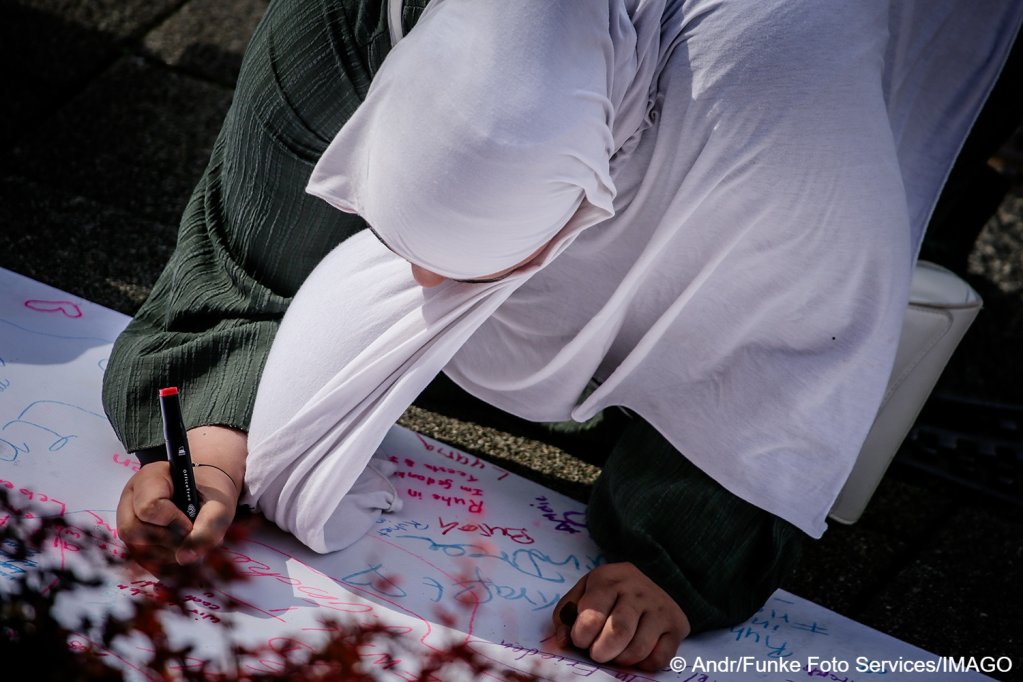
The knife attack on festival-goers caused nationwide horror. It also fueled the perennial debate over asylum, immigration and security policy. Conservative and far-right politicians in particular were quick to call for drastic action.
Friedrich Merz, leader of the conservative opposition CDU faction, for example, renewed his call for deportations to Syria and Afghanistan as well as a ban on immigration from those countries. He also said he wanted to change the right of residence and take "every offender who is obliged to leave the country into indefinite custody pending deportation."
Also read: Deportations of Afghans via Tashkent under review by German lawmakers, report
Demands are 'inhumane and populist'
Kamal Sido, Middle East expert at the human rights organization Society for Threatened Peoples, called Merz' call for a general ban on the admission of Syrians and Afghans an "inhumane and populist" demand that is incompatible with asylum law.
"Reflexive demands for deportations and a ban on accepting asylum seekers from Afghanistan or Syria do not combat Islamism," Sido told news agency epd on Monday.
Echoing Sido's comments, politician Kevin Kühnert also rejected Merz' demand for deporting Syrians and Afghans. Many of the proposals would not work because they are contrary to Germany's constitution, the general secretary of the ruling social democrats told public broadcaster ARD.
"The answer cannot be that we now slam the door in the faces of people who are themselves fleeing from Islamists because they are being persecuted by them for their way of life," Kühnert said.
Expert Sido also criticized Merz for ignoring the fact that the IS is persecuting ethnic and religious minorities. Germany must grant protection to those being persecuted, he said.
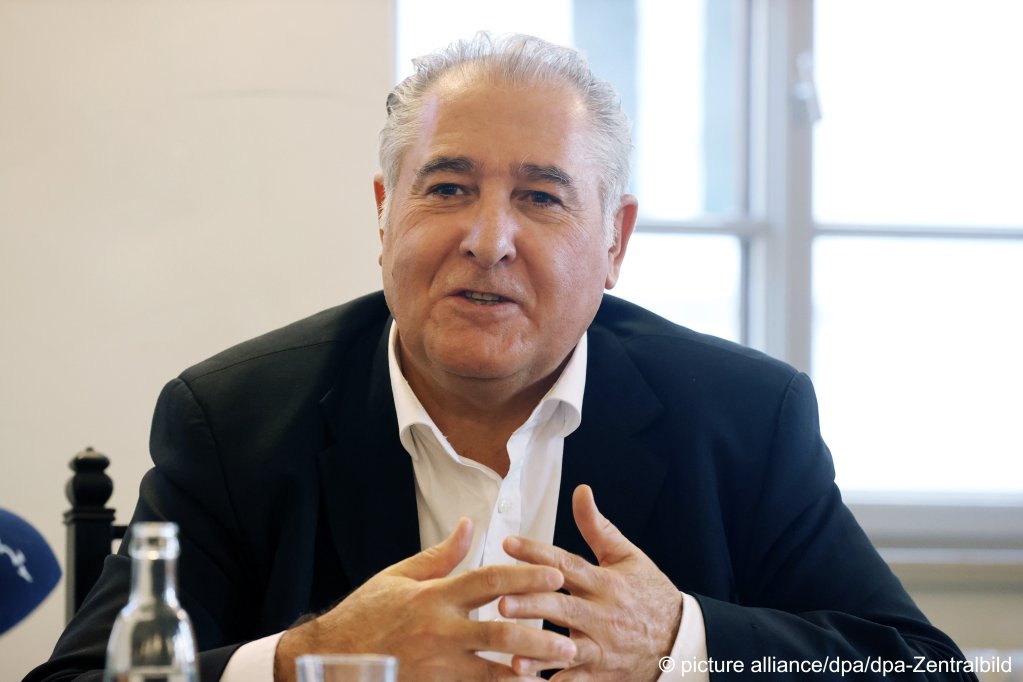
Researcher warns of rise in xenophobic violence
Extremism researcher Andreas Zick meanwhile said unrealistic demands and suggestions from Merz and other politicians would only strengthen populism.
According to Zick, who heads the Institute for Interdisciplinary Research on Conflict and Violence at Bielefeld University, the CDU has been trying for weeks to win over voters with promises of a harsher deportation regime ahead of the state elections in Thuringia and Saxony. The far-right Alternative for Germany (AfD) has been able to capitalize on the issue of migration, Zick told epd.
Migration will be "the number one political issue" not only in the three upcoming state elections this year, he added, but also in the federal elections, which are expected to be held in just over a year's time.
"Migration is more strongly associated with fears, worries and insecurities than with opportunities, necessities and realistic challenges," he explained.
The researcher also warned of an increase in xenophobic violence. "The Islamist terrorist attacks have always been accompanied by an increase in hostility towards Muslims and suspicions such as the denigration of innocent people."
"The people of Solingen in particular know this, as they have already experienced several right-wing extremist, racist and now apparently Islamist attacks," he added, stressing the importance of remaining calm and maintaining a culture of mourning.
In 1993, far-right terrorists killed five Turkish women and girls in an arson attack in Solingen.
Scholz promises more deportations, stricter weapons laws
During a visit to Solingen on Monday (August 26), German Chancellor Olaf Scholz pledged to step up deportations and tighten knife laws.
"We will have to do everything we can to ensure that those who cannot and are not allowed to stay in Germany are repatriated and deported," Scholz told reporters.
Authorities had reportedly planned to deport the Syrian suspect to Bulgaria last year under the so-called Dublin regulation. However, the deportation attempt was unsuccessful because the man had not been present at his refugee accommodation when authorities arrived.
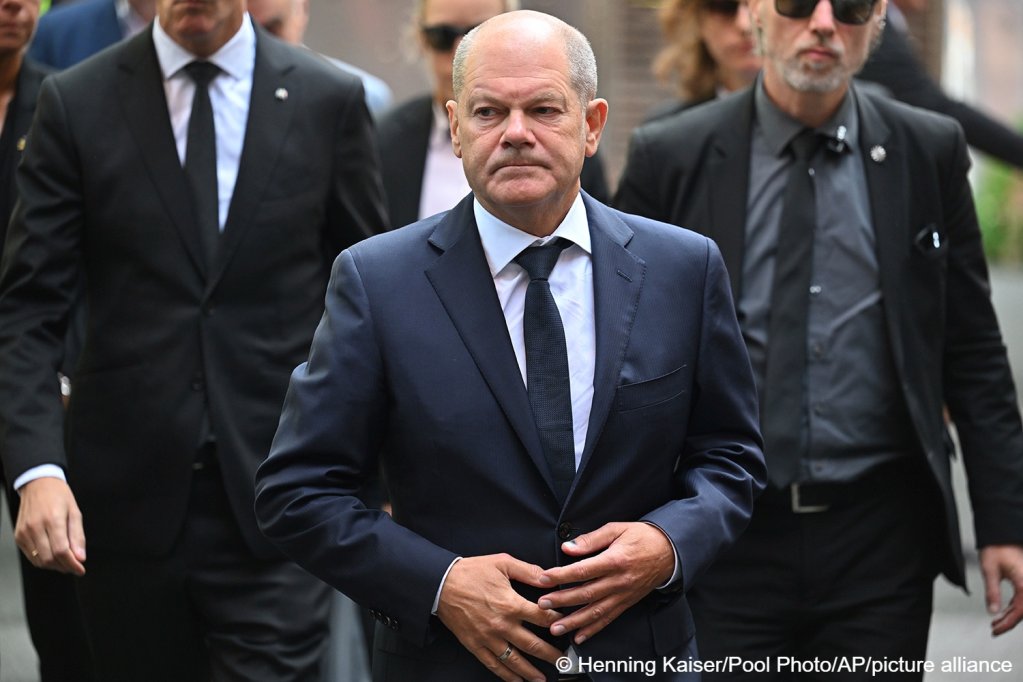
Scholz also vowed to tighten weapons regulations, "in particular with regard to the use of knives. I'm sure this will happen very quickly," he said.
Germany recently debated a possible restriction on the length of knives that can be carried in public from 12 centimeters to 6 centimeters.
with epd, dpa