
The remains found earlier this week are believed to be of people from Senegal and Mauritania who were trying to reach the Canary Islands. At least one of the deceased is thought to be about 18 years old.
Authorities in the Dominican Republic in the Caribbean are investigating the discovery of the skeletal remains of 14 people found aboard a drifting boat off the country’s northern coastline, news agency Reuters reported on Thursday, August 8.
The boat, identified as a wooden canoe (also called a pirogue) typical of West Africa, is believed to have been sailing its way across the Atlantic Ocean towards the Canary Islands.
The human remains, reportedly identified as belonging to individuals from Senegal and Mauritania, were discovered approximately 10 nautical miles off the coast of Río San Juan, according to state media and the Spanish news agency EFE. Authorities said one of the deceased may be a minor.
Local fisherman were reportedly the first to spot the drifting boat about thirty kilometers from the coast. They alerted rescuers who arrived at the scene to find bodies that were said to be in an "advanced state of decomposition".
The remains of the victims were to be transferred to the forensic authorities for further examination. Meanwhile, the Dominican Navy is reportedly working to determine the full details of the incident.
Authorities also reportedly found several personal items on the boat, including national identification cards, cell phones, and suspected illegal substances which are being tested and analyzed.
Most dangerous route in the world
Helena Maleno, of the Spanish migrant rights group Caminando Fronteras, posted on X (formerly Twitter) that the Atlantic Ocean route is the "the most dangerous migratory route in the world."
Despite the peril it poses, the Atlantic Ocean is increasingly being used as a pathway to Europe because of the increased surveillance in the Mediterranean.
Wooden boats are no match for the strong currents and winds that barrel through the Atlantic, causing vessels to veer far off course.
Experts warn that if a boat deviates too much from its initial trajectory along the African coast and drifts into the open ocean, the chances of rescue are slim. The passengers, left adrift without food or water, will face a certain death.
Also read: Bodies of migrants found in Brazil may have been heading for the Canary Islands
A plea to stay
Political and economic instability in Senegal are pushing more people to depart the West African country. Clashes and political violence that erupted in the run up to the elections last year following the conviction of opposition leader and current prime minister Ousmane Sonko, exacerbated economic woes.
The unrest has deepened social divisions, driving more Senegalese to seek dangerous migration routes in search of safety and better opportunities.
Data compiled by Statistica indicate that in 2023, the second highest number of people to arrive in Spain from Africa were from Senegal. Nearly 80,000 people from Senegal arrived in Spain last year.
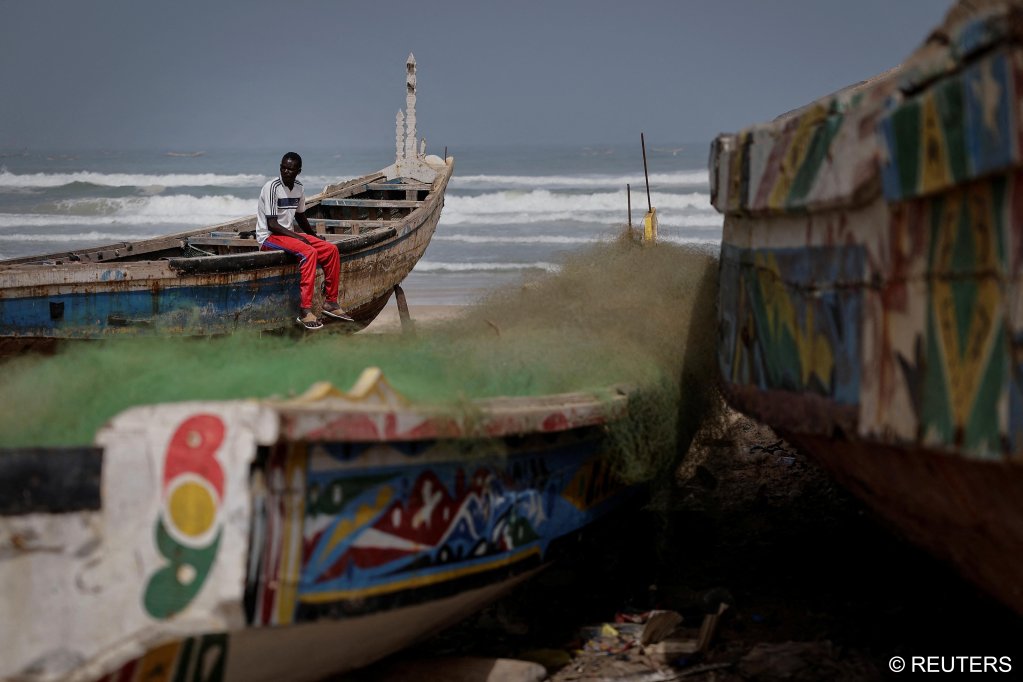
After the bodies of 89 people were found in a large traditional fishing boat that capsized off the Atlantic coast of Mauritania, last month, Sonko pleaded with Senegalese, particularly the youth, not to leave the country.
Read more: Senegal villagers mourn dead after latest migrant shipwreck
"Another shipwreck has occurred off our coast and which would have cost, while waiting for the exact figures, the lives of many young people," Ousmane said. "It's a shame, it's deplorable. I appeal again to the youth: your solution is not to be found in the canoes."
According to Caminando Fronteras, more than 5,000 people died on the route to the Canary Islands in the first five months of 2024.