
Fifty-nine people aboard a small boat were intercepted off the coast of Dakhla in southern Morocco. As other migration routes to Europe become increasingly dangerous, Morocco is emerging as a key transit point for those attempting to reach the European bloc.
Moroccan authorities rescued 59 people off the coast of Dakhla, the North Africa Post reported on Monday (August 5).
The migrants were on board a small boat attempting to reach the Canary Islands when they were intercepted by a Moroccan navy vessel.
Dakhla, a city located in southern Morocco, lies on a narrow peninsula that stretches into the Atlantic Ocean and is geographically positioned to be a pathway for people to reach the Spanish archipelago about 540 kilometers away. Dakhla is closer to the Canary Islands than most other points along the West African coast.
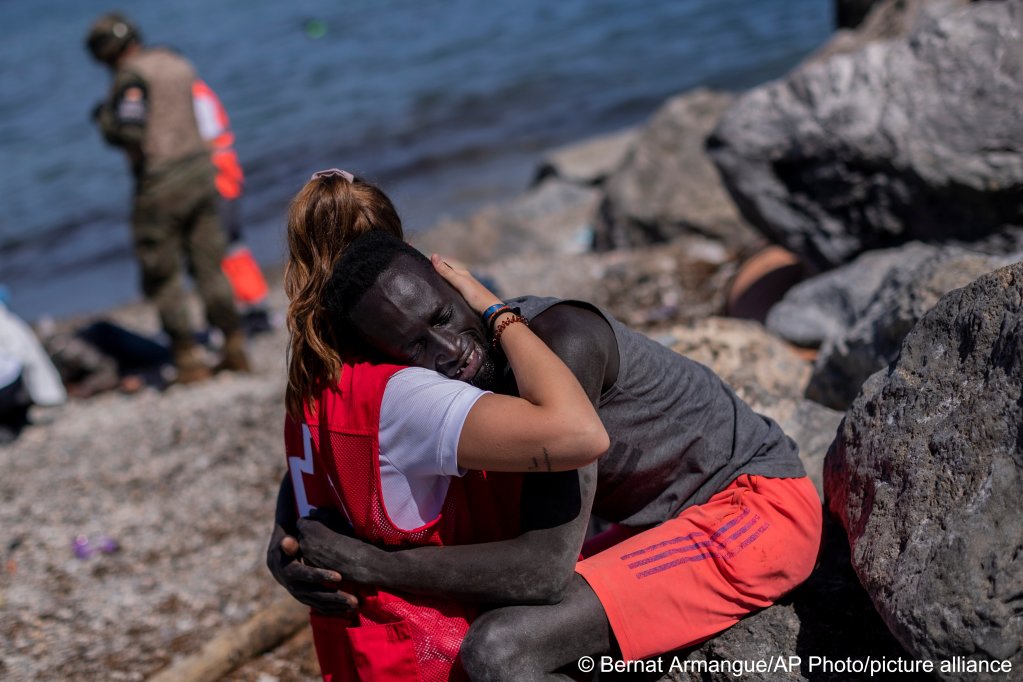
Data from the UN Refugee Agency UNHCR show that there were over 29,000 irregular arrivals into Spain in 2024. Nearly 90 percent of all arrivals were by sea.
The North Africa Post reported that Spanish officials commended Morocco for its "exemplary" efforts to deter irregular arrivals by sea.
Earlier this year, Moroccan authorities reported intercepting over 75,000 people attempting to enter Europe, a 6 percent increase compared to the previous year.
Read more: Morocco curbs migration attempts to Europe in 2023
Morocco guarding the Mediterranean
Rabat has become an ally of the EU in patrolling the seas and preventing people from arriving irregularly into Europe via the Canary Islands.
Last year, Spain and Morocco entered into a migration cooperation agreement with the EU additionally pitching in to provide Morocco with financial support to address irregular arrivals. Between 2015 to 2021, the EU provided an estimated 234 million euros for "integrated border management" initiatives which included a clamp down on smuggling and human trafficking gangs. In 2023, the EU and Morocco also entered into a migration pact.
Rabat’s zealous performance in intercepting irregular arrivals is not only a commitment to the EU but also reportedly a means to coax the EU into recognizing Morocco’s disputed claim to the disputed Western Sahara desert.
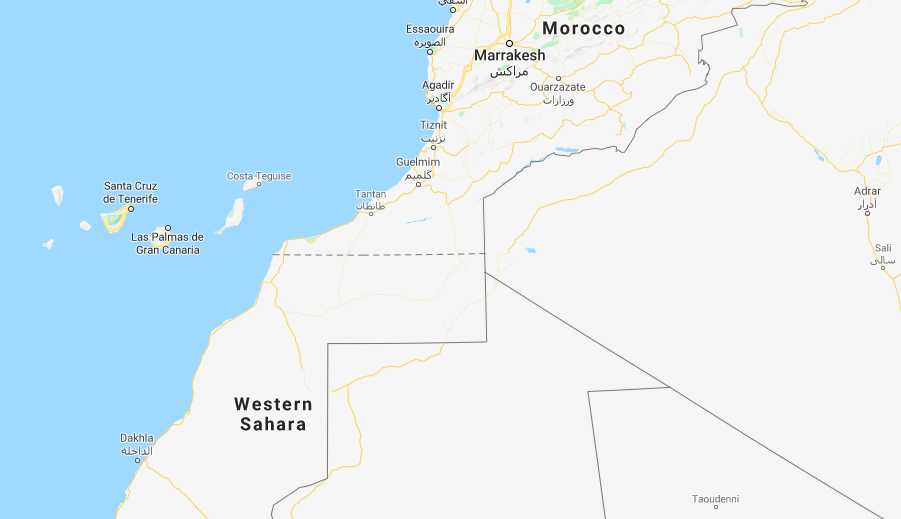
Morocco maintains de facto control over most of Western Sahara, a predominantly desert and arid region said to have rich phosphate reserves, a key ingredient needed in fertilizer production.
The United Nations and most countries have refrained from endorsing Morocco's sovereignty over the Western Sahara region.
Read more: Morocco's mounting role as EU-migration gatekeeper
Keeping people while its own people are fleeing
While Morocco bolsters its position as a border guard, keeping people from entering Europe, its nationals are also leaving the country and making their own bid to enter the European bloc. A June survey by the Arab Barometer institute revealed that 35 percent of Moroccans are considering leaving the country. Young people, between the ages of 18 to 29, were among those most likely to want to migrate.
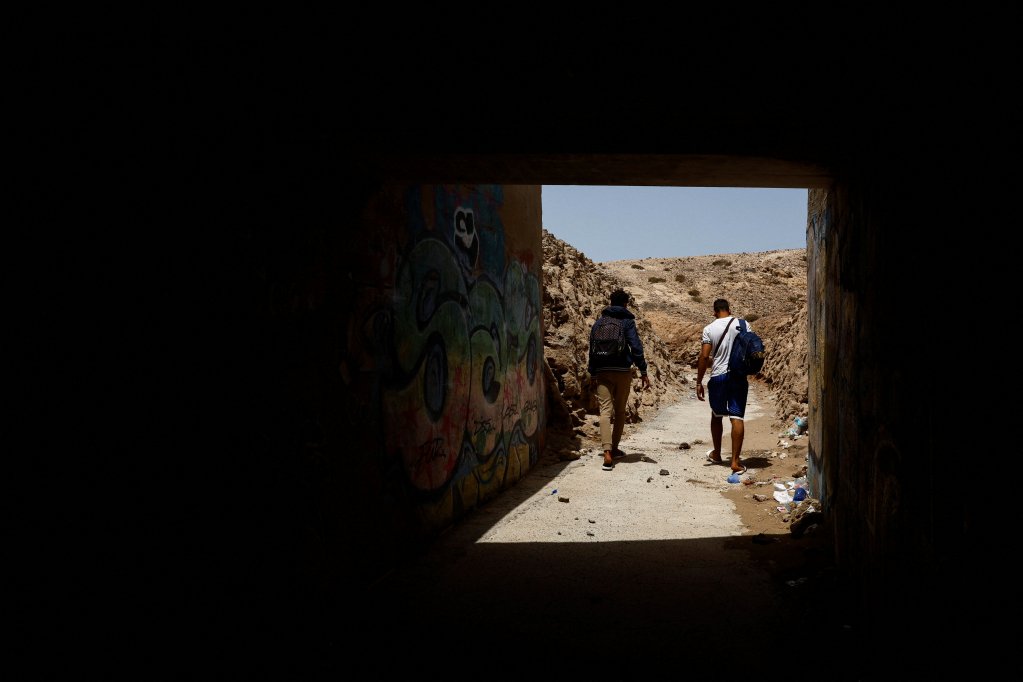
Among the 2,400 Moroccans surveyed, the most common reason for migration were "economic reasons". Morocco's slow economic recovery from the COVID pandemic was further hampered by a 6.8 earthquake that rocked the country last year.
The countries of destination that were most popular among the participants included the United States (26 percent), France and Canada (23 percent each), followed closely by Italy and Spain (22 percent each).
According to the Spanish National Institute of Statistics, in 2023 some 25,800 Moroccans arrived in Spain, ranking as the third highest nationality to arrive behind Colombians (42,600) and Venezuelans (27,300)
Read more: A third of Moroccans want to migrate, according to a recent survey