
Europol and Spanish police have arrested 21 people suspected of belonging to a criminal migrant smuggling network. The gang is said to have profited from transporting mainly Syrian nationals from Algeria to Spain and other destinations.
The migrant smuggling network allegedly smuggled over 1,000 migrants with fast boats from Algeria to the Spanish coastline, the European crime enforcement network Europol said on Friday (August 2).
Those arrested are accused of belonging to an organized crime network that was smuggling the migrants from Algeria to Spain as well as facilitating their further "illegal movement from Spain to other EU countries."
The series of arrests began on June 4 this year, a Europol press release stated. Nine locations were searched, and police made a total of 21 arrests, 13 in the Spanish capital Madrid, five in Almeria, one in Guipuzcoa, one in Málaga and one in Murcia. Police also seized documents, electronic equipment and cash relating to the alleged smuggling operation.
A video of one of the raids, posted on YouTube by Europol, shows Spanish police agents breaking down the doors of properties and discovering piles of belongings, including children's toys in at least one property. Dogs are used to search the premises and agents lay out piles of Syrian and Moroccan passports as well as stacks of cash.
Around 1,000 migrants smuggled to Spain
According to Europol supported investigations, Spanish police believe the network brought in 750 Syrian nationals and over 250 Algerians via this route. They are accused of having facilitated "illegal crossings of Syrian nationals along the route via Lebanon, Egypt, Tunisia or Libya to Algeria."
On arrival in Algeria, the migrants were placed in temporary accommodation until the boats were ready to launch. Europol says members of the Algerian criminal cell facilitated the migrants' stay once they reached Spain "and further illegal movement towards other EU countries."
While staying in Madrid after the crossings, investigators say that the migrants were held in "unsanitary and overcrowded housing while awaiting onward transport out of Spain."
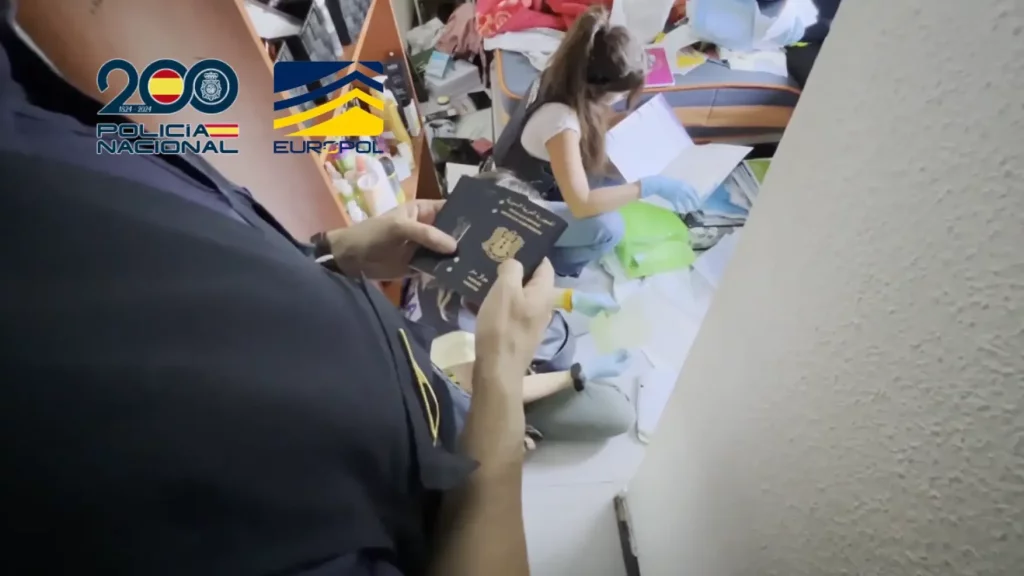
According to investigators two main organizers, one based in Algeria and one in Spain, coordinated the group’s criminal activities. As well as people smuggling, the group is believed to have supplied the migrants with passports and plane tickets to allow them to move across other EU countries.
The group is also accused of having sold information on how to set up a successful network and smuggle migrants to other groups.
Also read: Police break up gang suspected of distributing fake work permits
Departure: Algeria
Most of the fast boats departed from Oran and Mostaganem in Algeria. The gang is said to have operated out of Oran. Investigators say that despite the use of fast boats, the sea crossings were "extremely dangerous" with migrants' lives "put at risk in overcrowded vessels that lacked safety equipment." The boats were also loaded with food and water and fuel canisters.
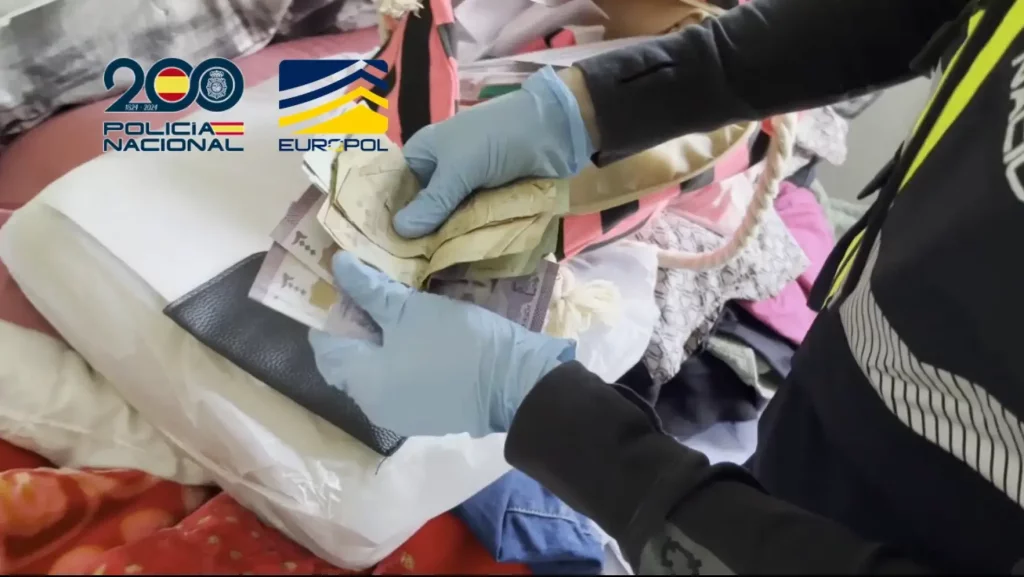
The gang is believed to have charged those smuggled up to 20,000 euros for transport from their home country to their final destination. At each stopping point, migrants would be asked to pay another tranche of the journey cost via the hawala underground financial system, according to Europol.
The gang is accused of having deployed spy cameras and hidden microphones "to guarantee the collection of money."
The French news agency Agence France Presse reports that the network could have made up to 1.5 million euros.
Similar operation broken up last year
In 2023 a similar operation was broken up by Spanish, German, and Norwegian police, also coordinated by Europol. At that time, the police said they had uncovered at least 13 operations involving over 200 migrants. Some of the mostly Syrian migrants who were brought via North Africa to Europe stayed in Spain, while others hoped to move on to France, Belgium, Germany and Norway.
In 2023, that gang offered a special "VIP" route to migrants willing to pay over 20,000 dollars (around 18,000 euros). The migrants taking the more costly route were offered a different location to stay in Spain and were allegedly picked up by luxury car with heightened security.
In last year’s operation, Spanish authorities seized two speed boats, six vehicles, electronic equipment, drugs, fuel, phones, documents and over 500,000 euros in cash, reported the Organized Crime and Corruption Reporting Project OCCRP.
Also read: Tens of thousands of testimonies reveal dangers of African land routes