
Britain’s new Home Secretary has condemned the scrapped plan by former Prime Minister Rishi Sunak to deport migrants to Rwanda as a "shocking waste" of taxpayer money.
As the UK's new government begins to lay out its migration policy, new Home Secretary, Yvette Cooper, criticized plans by former Prime Minister Rishi Sunak to deport migrants to Rwanda, calling it a "most shocking waste of taxpayer money I have ever seen." Cooper made the statement on Monday (July 22), as she put the cost of the plan at 700 million pounds (832 million euros) in public funds.
The new prime minister, Keir Starmer, a human rights lawyer, scrapped the controversial plan as soon as his Labour government came to power earlier this month, declaring the policy "dead and buried."
His predecessor took a hardline stance on migration, making "stopping the boats" a central policy for the previous Conservative government. However, this approach failed to reduce the number of migrants making the journey across the English Channel from France. In addition, his plans to outsource the UK's asylum to Rwanda were stalled by legal challenges and were widely criticized by human rights groups.
Also read: UK's Starmer says Rwanda deportation plan 'dead and buried'
Savings in asylum costs
Cooper said the costs of the shelved Rwanda policy included 290 million pounds in payments to Rwanda, plus "chartering flights that never took off, detaining hundreds of people and then releasing them and paying for more than a thousand civil servants to work on the scheme."
Rwanda's government however, said it is not obliged to refund the money.
"The previous government had planned to spend over 10 billion pounds of taxpayers' money on the scheme, they did not tell Parliament that," Cooper told lawmakers.
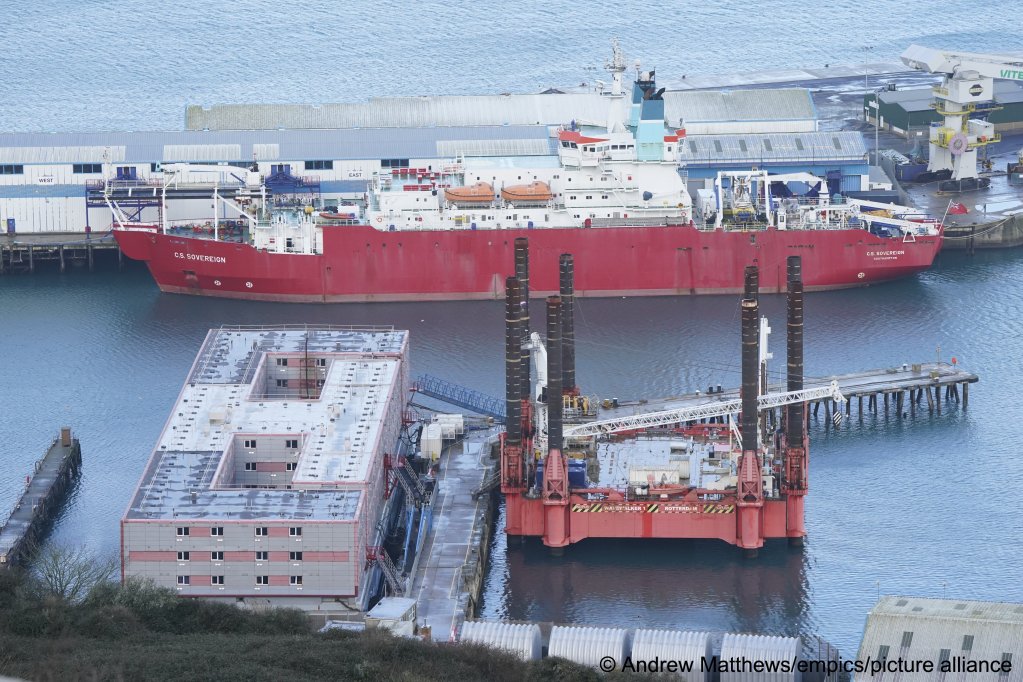
Among other changes to the UK's migration policy is the closure of the Bibby Stockholm, the controversial barge housing 400 asylum seekers in January 2025. The Home Office announced on Tuesday (July 23) that this would lead to an expected 7.7 billion pounds (about 9.1 billion euros) of savings in asylum costs over the next 10 years.
Angela Eagle, the minister for border security and asylum, said: "We are determined to restore order to the asylum system, so that it operates swiftly, firmly and fairly."
"The home secretary has set out plans to start clearing the asylum backlog and making savings on accommodation which is running up vast bills for the taxpayer," she added.
Also read: UK: Asylum seekers on Bibby Stockholm barge protest
Small boats
The home secretary said the high number of small boat crossings will likely persist through the summer months, when the weather is warmer. She also acknowledged that more needs to be done to tackle people-smuggling "upstream," but did not set out any details.
The rhetoric of the new government has emphasized a focus on criminal smuggling networks and foreign aid to address migration challenges.
Official figures showed that nearly 1,500 migrants had arrived in the UK on small boats across the English Channel in the past week alone. The French coast guard said at least three rescue operations ended in fatalities within the last couple of weeks.
Sunak’s plan sought to address the growing number of migrants from around the world — reaching a high of 46,000 in 2022 — who cross the English Channel. Most who arrive by sea apply for asylum on reaching Britain.
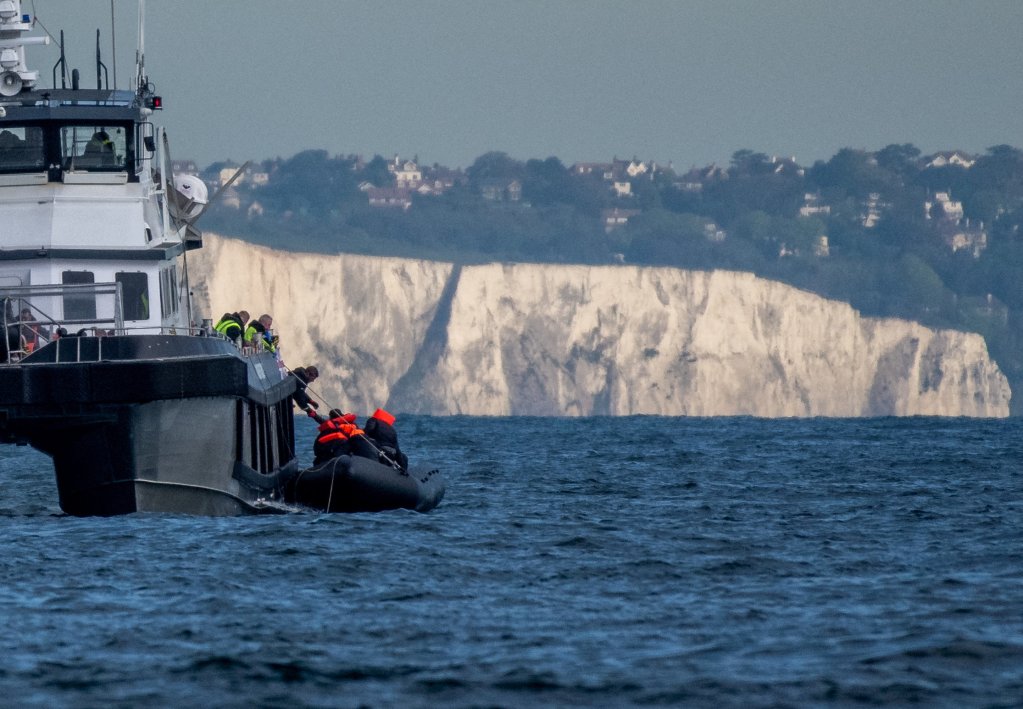
The Conservative government argued that migrants who arrived by small boat should not be allowed to apply for asylum in Britain, because they did not claim asylum in another safe country they reached first in order to make the crossing.
However, the previous policies were ineffective in reducing the number of crossings and came at a significant human cost.
Also read: Migrant dies in Channel as crossings continue
Legal challenges
The UK struck a deal with Rwanda in 2022 to send migrants who arrive in the UK as stowaways or in boats to the East African country, where their asylum claims would be processed and, if successful, they would stay.
Human rights groups and other critics of the plan called it unworkable and unethical to deport migrants to a country 4,000 miles (6,400 kilometers) away that they don’t want to live in.
The plan was challenged in UK courts, and no flights to Rwanda took off under it. Cooper said that just four people have been removed to Rwanda — and they went voluntarily.
Britain’s Supreme Court in November ruled that the policy was unlawful because Rwanda is not a safe third country, with five justices unanimously saying that "the removal of the claimants to Rwanda would expose them to a real risk of ill-treatment" because they could be sent back to the home countries they had fled.
Also read: Rwanda unscathed in failed UK migration deal
Outsourcing migration policy
Rwanda's government has faced criticizm over human rights abuses and the targeting of journalists, including allegations of torture and disappearances.
However, the UK was not the first country to attempt to outsource its asylum system to East Africa. Between 2013-2018 Israel sent some 4,000 Eritrean and Sudanese asylum seekers to Rwanda and Uganda between 2013 and 2018, before the policy was abandoned.
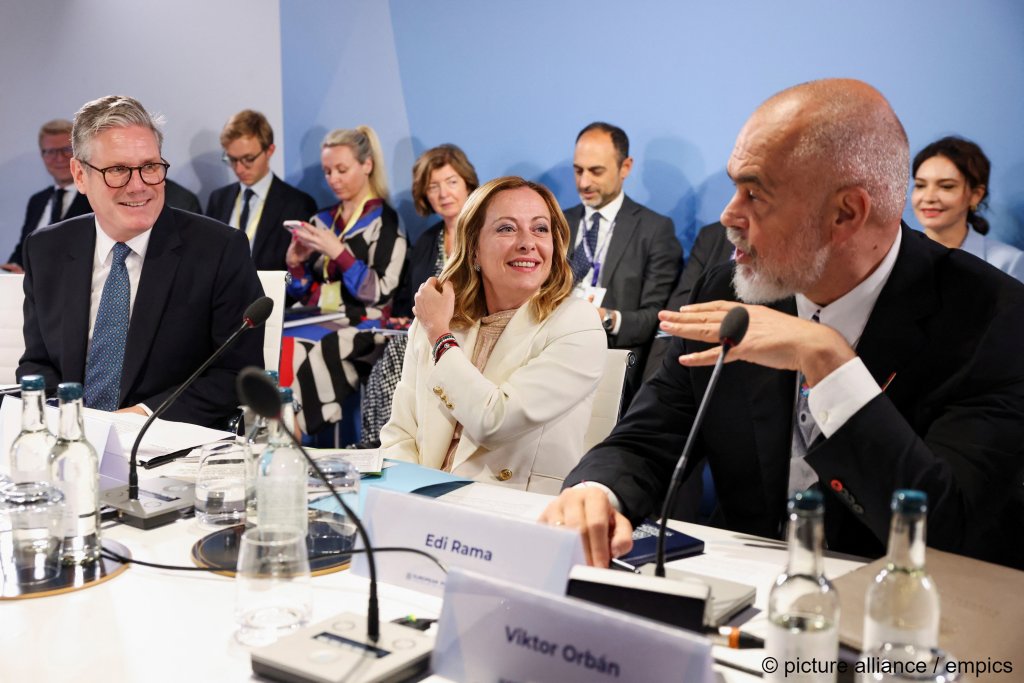
A recent agreement between Italy and Albania to process asylum claims outside the EU, was finalized in February. It involves building two centers in northern Albania. The deal is expected to cost 653 million euros over five years, according to a report by the Italian research institute Openpolis.
Countries like Denmark are also seeking to outsource their asylum system to third countries. In May this year, Denmark led a group of 15 EU member states, who issued a joint call to develop the outsourcing of migration and asylum policy, arguing the "unsustainable" increase in irregular arrivals in recent years justifies thinking "outside the box."
Also read: Italy-Albania asylum-seeker deal to cost €653 million, report finds
A new approach to migration?
Prime Minister Sir Keir Starmer has pledged 84 million pounds to projects in Africa and the Middle East to tackle irregular migration "at source." This funding aims to address the factors driving migration by improving education, employment opportunities, and humanitarian support. At the European Political Community summit on July 18, Starmer and French President Emmanuel Macron agreed to focus on practical measures and cooperation to combat smuggling gangs.
However, despite the change in government, Starmer has also said that he is open to processing claims offshore, stating "I’m a practical person. I’m a pragmatist. And I’ve always said we'll look at what works and where cases can be processed closer to origin, then that is something which of course ought to be looked at."
Starmer emphasized tackling people-smuggling gangs and improving border security, announcing new initiatives with Slovenia and Slovakia to tackle organized crime and highlighted the creation of a Border Security Command to enhance security at Britain's frontiers.
The new government also aims to link skills training more closely with migration policies. Labour's plans include creating a new government body, Skills England to address skill shortages, potentially reducing the need for overseas hires.
Skills England will work with migration advisers to develop sector-specific training plans. Starmer emphasized moving away from relying on imported skills and providing local workers with better job opportunities.
Also read: Can Labour repair the United Kingdom’s fragmented asylum system?
With AP and Reuters