
A two-year-old girl died in hospital hours after crossing the Atlantic from the coast of West Africa to the Canary Islands. A young 20-year-old who had crossed in the same boat also died.
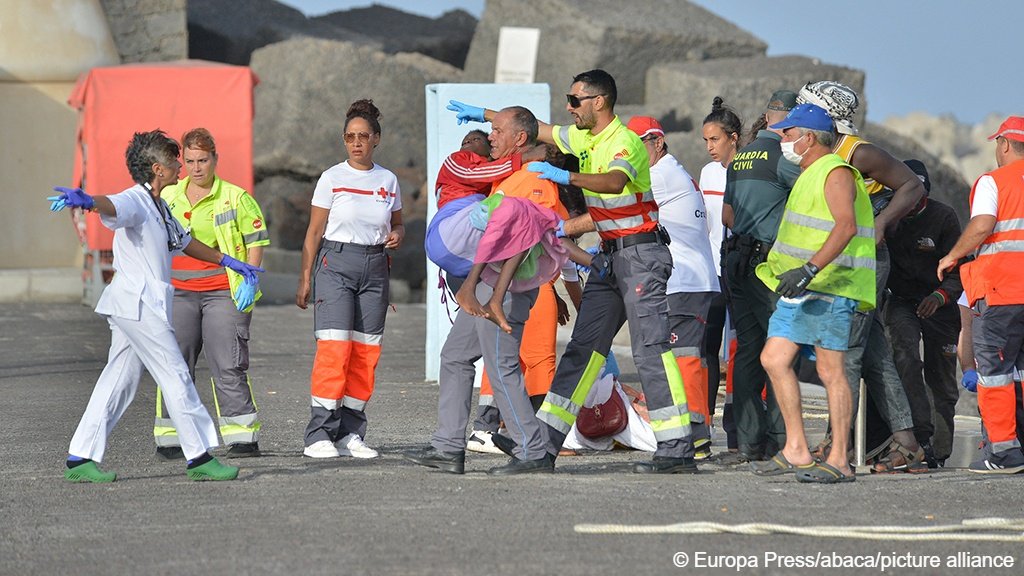
On Tuesday (July 16), a two-year-old girl was pronounced dead in hospital just hours after crossing the Atlantic in a small boat from Senegal. The Spanish rescue authorities brought the boat, on which the little girl had been traveling, to the small island of El Hierro in the Spanish Canary Islands archipelago on Monday evening.
The boat was met about two kilometers from the coast, reported the local news portal Canarias 7. According to reports in the local press, there were six women and four minors -- two boys and two girls -- on board the boat.
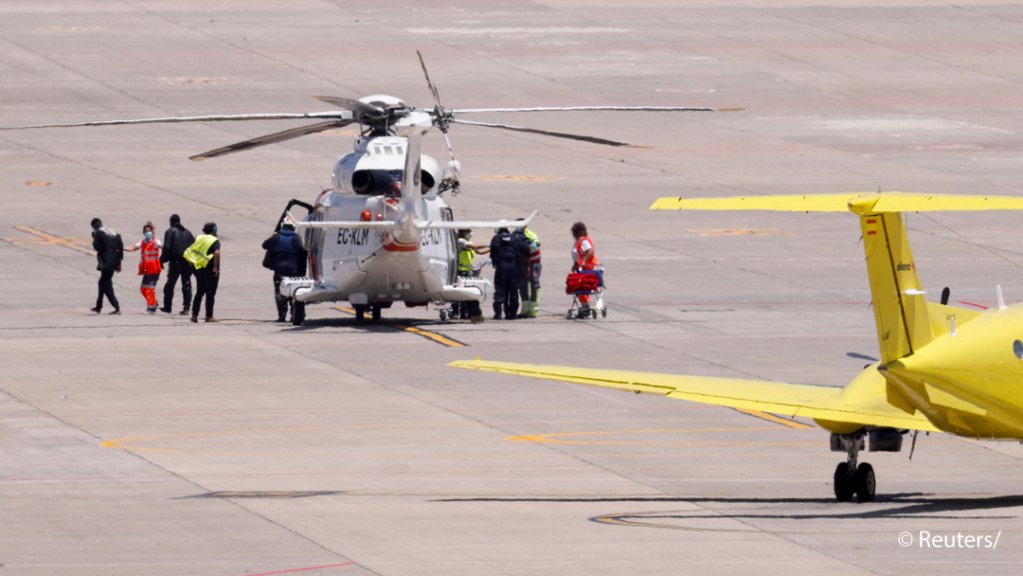
When the boat came into port in El Hierro the little girl was judged to be in a "critical condition" and was flown by helicopter to Tenerife. Sadly, she could not be saved. A 20-year-old man in the same boat also died in hospital on El Hierro.
Also read: A Senegalese fisherman haunted by migrant boat disaster
Seven people hospitalized for dehydration
Seven people, including two children, had to be hospitalized after suffering from dehydration. One little eight-year-old boy was also judged to be in a serious condition, said Spanish medics, but doctors were able to stabilize him. A one-year-old baby remained in a "serious state" on Tuesday, reported the Tenerife newspaper El Día.
On board the boat were nationals from Senegal, Mauritania, Mali and Guinea Conakry. They told the authorities they had left the coast of Senegal a week before they were eventually found near the Canary Islands. They are estimated to have traveled more than 1,500 kilometers, reported the news agency Europa Press.
Also read: Bodies of migrants found in Brazil may have been headed for Canaries
Canary Islands President calls for change in migration law
The President of the Canary Islands, Fernando Clavijo, told local press: "Just imagine what that little girl, just two years old, must have thought, how she must have suffered, how scared she must have been. Only to arrive, and then die."
He added: "We have to continue to win this battle and modify the laws surrounding immigration," to help respond to this "emergency on the Canaries."
Since the beginning of the year, more than 19,000 people arrived on the Canary Islands, representing a 167 percent increase in arrivals compared to the same period in 2023. Many of those arriving are unaccompanied minors. The Canary Islands authorities have to offer them special accommodation, while they wait to be transferred to the Spanish mainland.
The Canary Islands authorities have repeatedly called on the central government in Madrid to offer more support, saying that their islands are "overwhelmed" and cannot cope with supporting the number of people who arrive.
Nearly 6,000 unaccompanied minors are being accommodated in structures on the Canary Islands, but they are only really prepared for about 2,000 say the authorities. On July 10, the Spanish government decided to transfer 400 unaccompanied minors off the archipelago and to mainland Spain, to try and ease the situation.
Dangerous crossing
The Atlantic crossing is extremely dangerous. Strong winds and currents blow boats off course. In the middle of June, a boat was found that had been adrift for 17 days and was still more than 800 kilometers away from the Canary Islands. Six bodies were found on board and around 60 migrants saved. But 80 were reported missing.
According to figures from the UN Migration Agency IOM’s Missing Migrants count, almost 365 people have died on the Atlantic route since the beginning of this year. The actual figures could be much higher because it is believed that some migrant boats drift off in the open sea and remain unrecorded. Moreover, many migrants keep their departure secret to try and evade the authorities.
The Spanish NGO Caminando Fronteras estimates that the actual number of deaths for the first five months of 2024 could be nearer to 4,800 on the Atlantic route, and 5,054 for all routes to Spain.
Caminando Fronteras' estimate is based on distress calls and reports from families who haven’t yet heard from their loved ones. The IOM's figures instead are based on deaths that they can 100 percent confirm.
IOM spokesperson Flavio di Giacomo told InfoMigrants at the beginning of this year that it was difficult to ascertain deaths on the Atlantic route because the journey is much longer and the area where a boat might get lost is so much wider. He conceded that although his organization prefers to remain with only facts they can confirm, it is likely that there are "many more deaths that no one has ever mentioned."
In the last 30 days, reported Canarias 7 on Tuesday, eight migrant boats have arrived on or near the coasts of El Hierro, five of them had dead people on board, a total of eight people. Survivors on board those boats claimed they had had to throw the bodies of a further seven migrants overboard during their journeys.
Also read: Senegalese navy stops hundreds of migrant boats in May