
The new Dutch prime minister, Dick Schoof, has promised to work hard at one of his government’s main aims: reducing immigration. Addressing parliament on Thursday, he was forced to deny accusations that his new cabinet is racist.
Addressing the parliament for the first time on Wednesday (July 3), the Dutch leader said asylum and migration were "the biggest concerns" to be tackled by his new cabinet.
"Migration puts too much pressure on social services and social cohesion. The asylum and migration figures are high and so is the pressure on society," the 67-year-old said.
A former head of the Dutch intelligence agency AIVD, Dick Schoof formally took over as prime minister on Tuesday, replacing Mark Rutte.
The parties making up the new coalition government are the Party for Freedom (PVV) led by Geert Wilders, Rutte’s center-right People’s Party for Freedom and Democracy (VVD), the populist Farmer Citizen Movement (BBB) and the centrist New Social Contract party (NSC).
Schoof is not a member of any of the four parties.
Also read: Incoming Dutch right-wing government takes aim at migration
Inner circle of Islam opponents
Five ministers in the new cabinet are from the PVV, the far-right, anti-Islam party that finished first in elections last November.
They include the migration and asylum minister, Marjolein Faber, who once publicly used the term "repopulation" ("omvolking") and Trade Minister Reinette Klever, who has referred to the Great Replacement theory.
Both terms have been used by far-right conspiracy theorists who claim that white European populations are being demographically replaced by non-whites through mass migration.
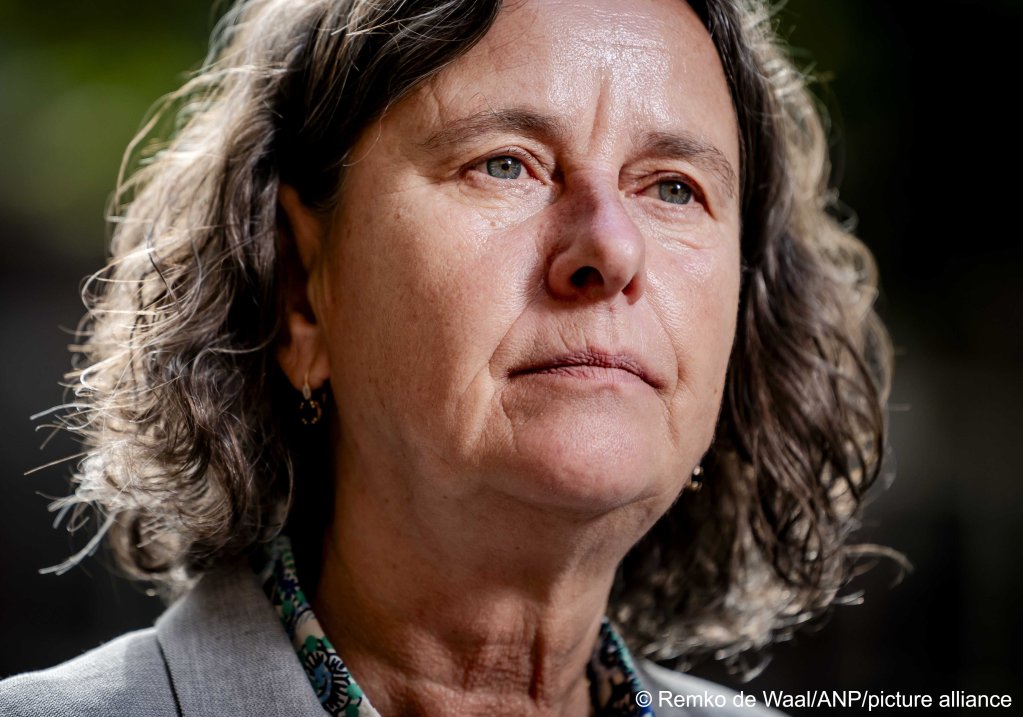
Last week Faber admitted that omvolking had "terrible connotations" and was inappropriate, but she insisted that it is legitimate to have concerns about what she called "changing demographics" in the Netherlands.
Faber has also been accused of spreading hate speech and fake news over a post on X, in which she claimed that a man who stabbed three people in the northern city of Groningen in 2019 had "a North African appearance (according to a reliable source) and apparently hates beer," even after the victims had said the attacker was white.
She acknowledged last month that the post had been incorrect.
Faber also wrote on X that she understood the "commotion" over her past comments and would in future "naturally express herself in line with the cabinet agreement and the rule of law."
As the debate continued in Parliament on Thursday, Prime Minister Schoof continued to face accusations that he had a racist cabinet as Greens MP, Esmah Lahlah condemned Faber over comments about her wearing a headscarf.
"I know for sure that all members of the cabinet are not racist, don’t talk about omvolking, and that this will never be the line of my cabinet," Schoof said.
Reducing migration
The agreement reached by the four parties, entitled "Hope, courage and pride," lays down the "strictest-ever admission policy for asylum and the most comprehensive package for getting a grip on migration." That includes scrapping family reunification for refugees and reducing the number of international students studying in the country.
Dutch refugee organizations said this week the government's focus should be on solving the ongoing crisis in accommodation and enforcing new rules agreed in January to ensure that asylum seekers are distributed evenly across the country.
In a statement, youth organizations said there was a need for sustainable reception facilities to avoid problems arising from a "rising influx" in the future.
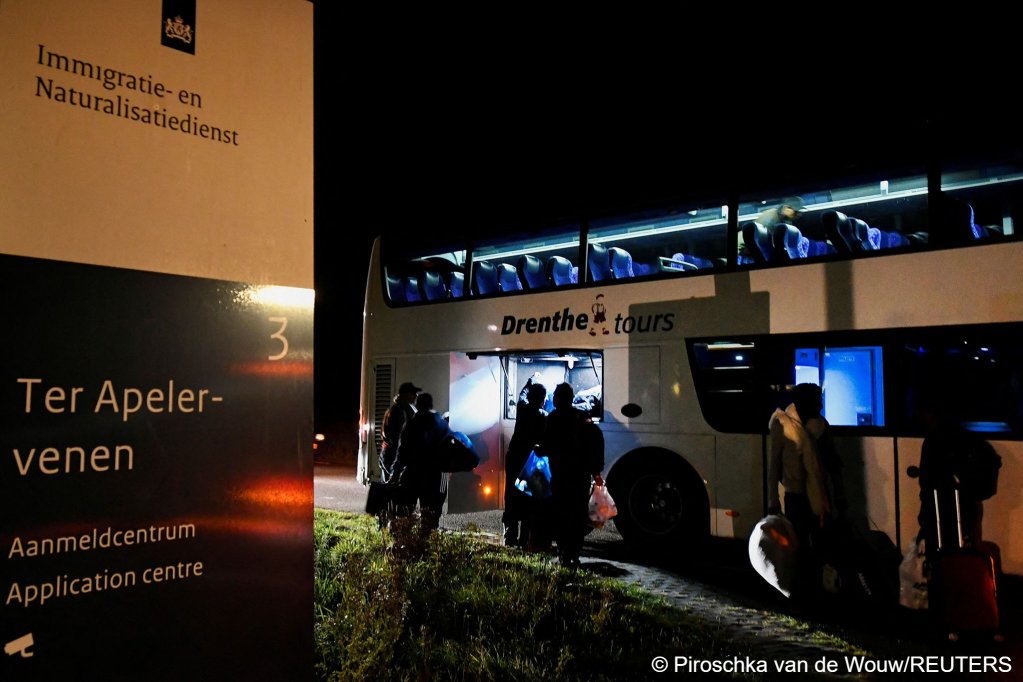
A shortage of accommodation for asylum seekers in the Netherlands has forced hundreds of people to sleep rough, while poor conditions in reception facilities have been subject to legal challenges. In 2022, Doctors Without Borders (MSF) described living conditions at the central registration facility in Ter Apel as "inhuman", after a three-month-old baby died at the camp.
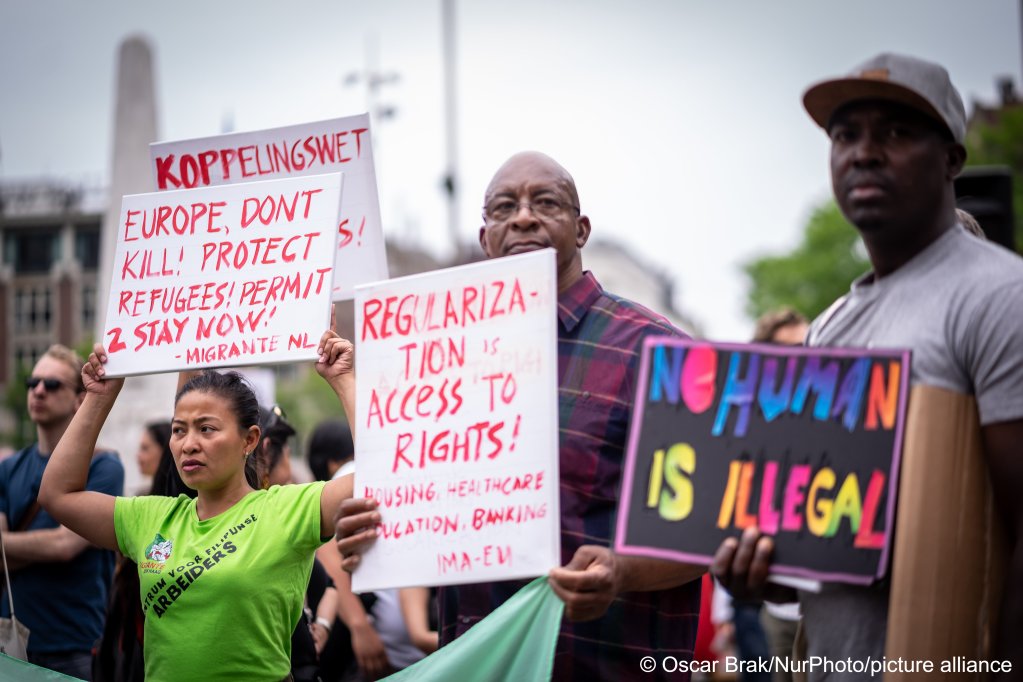
The situation has led to public perceptions, fuelled by the statements repeated by the new government, that restricting asylum will ease the strain on housing and infrastructure.
However, the Refugee Council of the Netherlands stressed this week that asylum seekers must not be seen as the cause of the housing shortage, accusing the coalition government of failing to provide answers.
"The solution for the shortage of housing is more housing," the Council wrote in May. This is more easily said than done, it added. "The housing crisis will continue for a while."
With AP, AFP