
Serbia has signed an agreement with EU border agency Frontex to deploy border guards across the non-EU country's borders. The Balkan state has long been a transit country for migrants hoping to enter the EU.
On Tuesday (June 25), the Serbian government signed a deal with Frontex, the border agency of the European Union, to enhance "operational cooperation" between the federation and the non-EU country.
The deal expands Frontex' ability to launch joint operations on the territory of Serbia and deploy border guards to all of Serbia's borders, news agency AFP reported.
"Reinforcing border management along the whole migration route is essential to reduce irregular arrivals, also considering the evolving modus operandi of smugglers, and the risks of firearms trafficking and organized crime," the European Commission wrote in an online statement published Tuesday.
EU Commissioner for Home Affairs Ylva Johansson and Serbia's Minister of Interior Ivica Dacic signed the agreement in the Serbian capital Belgrade following more than a year of negotiations, AFP reported.
"Every additional policeman from the EU who joins our border police will help in a comprehensive response to the challenges of the fight against irregular migration," Dacic told reporters.
On her X (formerly Twitter) account, Johansson wrote she also "presented 56 patrol vehicles" in Belgrade.
Also read: German Interior Minister visits Bosnia to talk migration
Balkan route
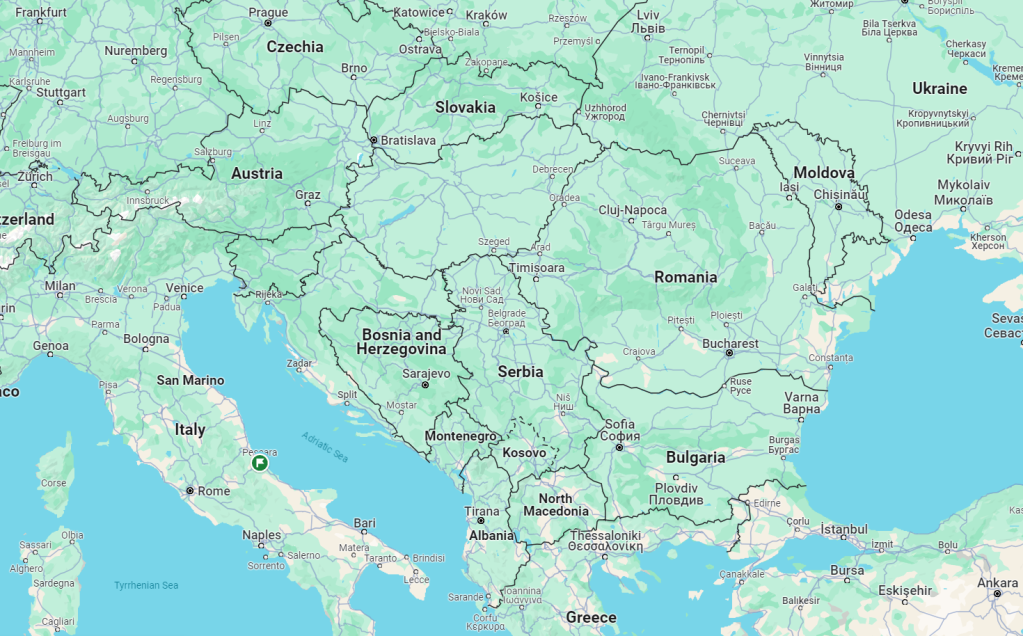
Serbia lies along the so-called Balkan route, which is used annually by thousands of people from the Middle East, Afghanistan, Pakistan and North Africa to transit to Europe, according to news agency Reuters.
Generally speaking, the often shifting route runs via Turkey, Bulgaria, North Macedonia and Serbia towards the European Union.
Frontex, which refers to the route as the 'Western Balkan route', recently said that it detected nearly 100,000 irregular border crossings in the Western Balkans, including Albania, in 2023. The EU agency also noted that over the past year, the route has shifted away from the Serbian border toward the EU's border with Bosnia and Herzegovina. There, Frontex said it detected around 80 percent more irregular border crossings in the first eleven months of 2023 compared with the same period of 2022.
In the first five months of this year, the overall number of border crossings into the EU via the Balkan route fell by 71 percent to just over 8,900, according to Frontex.
Serbia, officially the Republic of Serbia, borders EU countries Croatia, Hungary, Romania and Bulgaria as well as non-EU countries Bosnia and Herzegovina, Montenegro, North Macedonia and Kosovo, which it does not recognize.
The country of 6.6 million people applied to join the EU in 2009. It has been a candidate for membership since 2012.
Read more: Migrants 'dying without a trace' on the Balkan route
Agreements between Frontex and Balkan states
According to AFP, Frontex has deployed more than 480 officers through joint operations at the bloc's external borders with Albania, North Macedonia and Montenegro.
Under a 2019 EU regulation, Frontex is able to support countries it signs agreements with throughout their territories. It can also exercise border checks, and registration of persons, among other powers, according to Reuters.
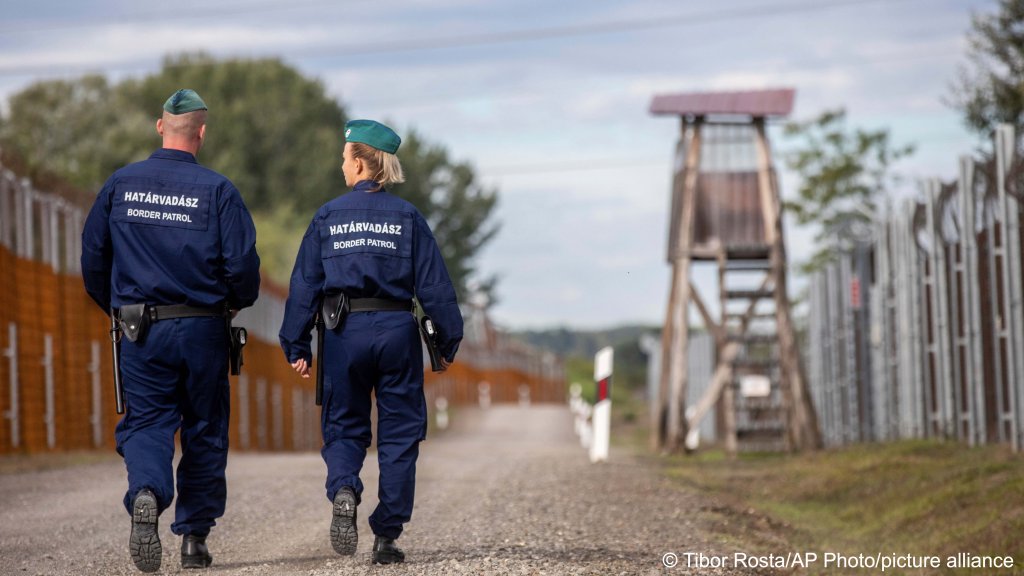
Tuesday's agreement will replace the 2021 arrangement between the Serbian government and Frontex that allowed joint operations at Serbia's borders with its EU neighbors Hungary, Bulgaria, Romania and Croatia, Reuters reported.
In the past, Serbian authorities have been accused of assaulting migrants and using pushbacks to force them back into neighboring countries -- allegations officials have frequently denied.
On Thursday, the Council of Europe anti-racism commission warned that hate speech against migrants is prevalent in Serbian public and political discourse. "Authorities should step up their efforts in encouraging public figures to refrain from hate speech themselves and to condemn its use by others," the commission said in a new report.
According to Reuters, four of six Balkan countries -- Serbia, North Macedonia, Albania and Montenegro -- have so far signed deals with Frontex.
Read more: Serbia police deny beating up migrants at North Macedonia border
with AFP, Reuters