
A June 7 survey conducted by the Arab Barometer institute suggests that 35% of Moroccans are "considering leaving their country." Half of them plan to do so even if they do not obtain the necessary visas to leave regularly.
Achraf, a young Moroccan man who spoke with InfoMigrants in 2022, looked tired as he sat in a square next to the old central station in Belgrade, Serbia.
He was resting in the Serbian capital for a few days with his traveling companions before continuing his journey toward western Europe via the Balkan route.
Like Achraf and his friends, thousands of Moroccans leave the kingdom every year, with or without the necessary visas.
An Arab Barometer survey published on June 7 indicates that many Moroccans still living in the country share this desire to migrate.
Out of 2,400 Moroccans polled, 35% reported they "are considering leaving their country."
The survey conducted by the institute, which is based out of Princeton University in the United States, found that more than half (53%) of those who said they were considering migrating reported they would do so "even if they didn't have the required documents."
Participants said they were considering going to the United States (26%), France or Canada (23% each), Italy or Spain (22% each) or Germany (19%).
Increasing cost of living
The survey found that Morocco's poor, as well as young people aged 18 to 29, were the most likely to express a wish to migrate.
The majority of these people (45%) said they want to leave the country for "economic reasons."
The north African country's economy is strong in comparison with others on the continent. But Morocco is still struggling to recover from the economic impact of the Covid-19 pandemic and an earthquake that killed 3,000 people and left 15,000 homeless last September.
Although Rabat "has demonstrated remarkable resilience in the face of various shocks," Jesko Hentschel, the World Bank director for the Maghreb and Malta, wrote in a November 2023 press release, "the impact of these shocks on the well-being of the population remains significant."
Only a third of respondents believe that the economic situation in their country is very good or good, down from around 66% in 2016, according to the Arab Barometer survey.
Inflation reached its highest level in 30 years in the first quarter of 2023, at 9.4%, up from 4% during the same period in 2022, according to the kingdom's High Commission for Planning (HCP).
This increase in prices primarily impacts vulnerable Moroccans "who are more exposed to inflation in the prices of food, housing and public services," Oxfam reports.
By the end of 2022, an additional 3.2 million people fell into poverty or vulnerability, according to the HCP. That year, "nearly eight years of progress towards the eradication of poverty and vulnerability were lost,” Oxfam said.
The unemployment rate is another factor pushing Moroccans to consider a career outside the kingdom. It increased from 11.8% in 2022 to 13% in 2023. This has particularly affected rural areas, where 198,000 jobs were lost.
'Behind a screen, it looks very easy'
To escape this difficult situation, and due to a lack of visas necessary for emigration, many Moroccans embark on irregular maritime migration routes to Spain, via the Canaries, or the Alboran Sea, which takes them to Andalusia. A few hundred people are also try to swim to reach the Spanish enclaves of Ceuta and Melilla.
In 2023, some 25,800 Moroccans arrived in Spain, marking the third highest nationality to arrive behind Colombians (42,600) and Venezuelans (27,300), according to the Spanish National Institute of Statistics.
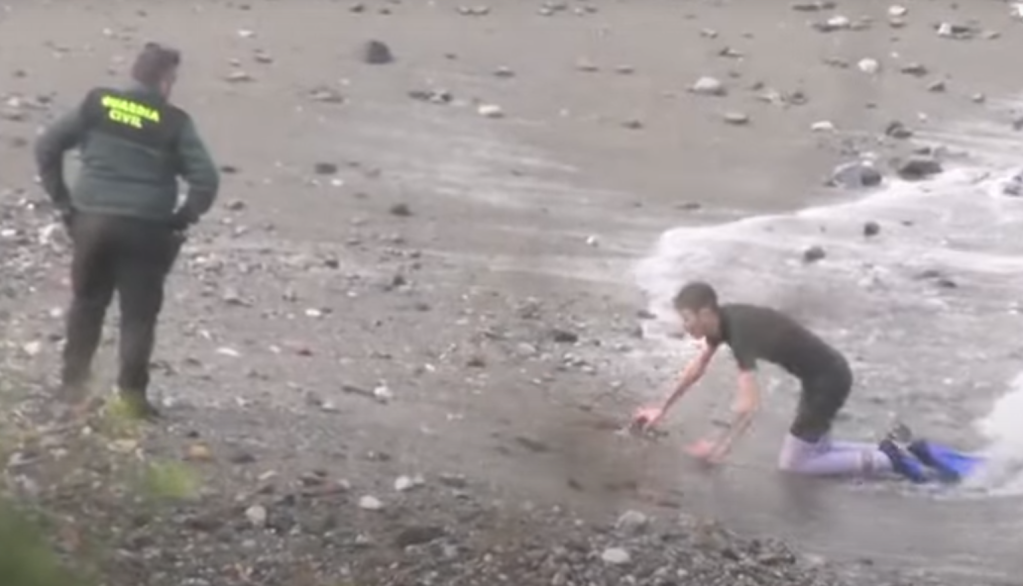
In May 2022, Omar, 21, and Yassine, 24, attempted to cross the Alboran Sea from the Moroccan city of Saïdia. The two brothers “were not very rich, but they were not poor either,” their cousin, Sarah*, told InfoMigrants.
"But they've always seen people coming back from Europe with new cars. They imagine that on the other side of the sea, it's El Dorado,” Sarah sighed. "I think that's what convinced to leave, to see videos of young people on TikTok and Instagram who film their crossing with music, and celebrate their arrival in Andalusia. Behind a screen, it looks very easy.”
Since the publication of a photo of the brothers published just before their departure at sea, Omar and Yassine have never been seen again.
*The name has been changed to protect anonymity.