
Poland will reintroduce a no-go zone at its border with Belarus to fight irregular migration starting June 13. Local business owners fear it will deter summer tourists.
Poland will reintroduce a no-go zone at its border with Belarus starting June 13 to tighten security amid increasing confrontations between authorities and irregular migrants, news agency Reuters reported yesterday (June 10).
Media reports suggest the border fortification could be related to the death of a Polish soldier who was allegedly stabbed at the border by migrants.
"(The regulation) will be signed on Wednesday, we will have time to complete the entire government circulation and it will come into force on Thursday," Secretary of State Czeslaw Mroczek told Polish broadcaster TVN24.
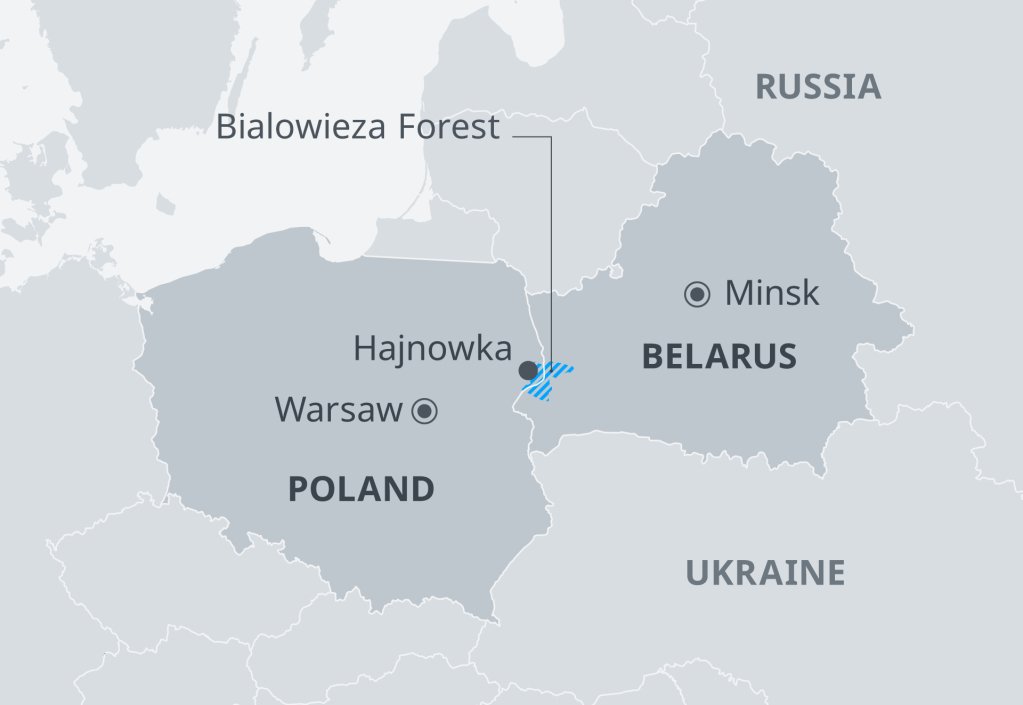
The 60-kilometer border zone will be set up in two sections that observe frequent irregular crossings, extending 200 meters into Poland and up to two kilometers into the Bialowieza forest.
The village area around Bialowieza is reported as the epicenter of migrant crossings. Thousands of border guards and hundreds of soldiers are said to patrol the forest roads every day, making it nearly impossible for people to attempt to cross the border without being arrested.
Read more: 'You shouldn't be attached to life to come here': Tales from the Polish-Belarusian border
The border has been a flashpoint since 2021, when migrants began arriving after Belarus, a close ally of Russia, reportedly opened travel agencies in the Middle East to offer a new unofficial route into Europe. The European Union said this move was intended to create a crisis. Belarus has consistently denied these accusations.
Negative impact on tourism
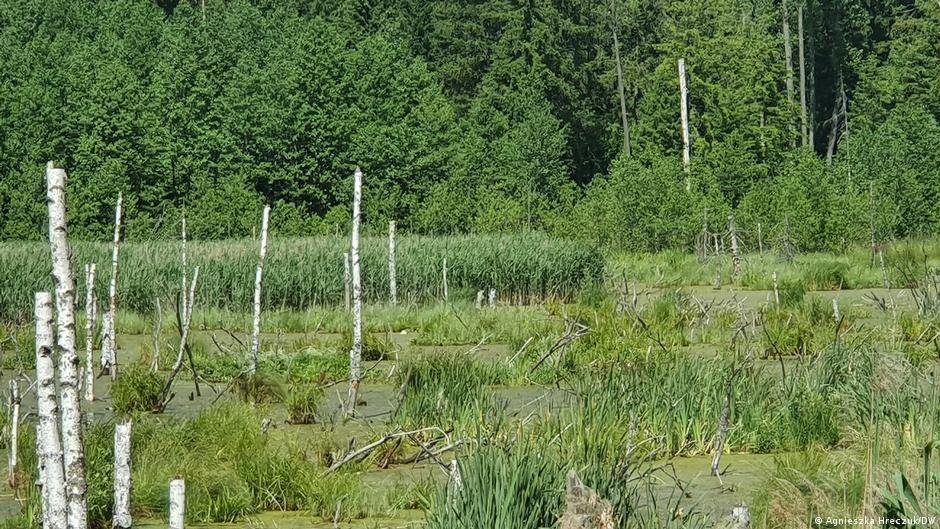
Local business owners worry that the no-go zone will not only deter irregular border crossings but also the thousands of summer tourists drawn to the Bialowieza forest, which is regarded as one of Europe’s last ancient woodlands.
While there are a few more days before the no-go zone is set to go up, hotel owners and tour operators are reportedly already facing cancelled reservations.
Additional border fortifications
Poland’s plans to redeploy the buffer zone on its shared border with Belarus come in addition to the country's Shield-East project.
Coordinated with other eastern NATO allies, namely Finland, Estonia, Latvia and Lithuania, the project includes fortifications along some 700 kilometers (430 miles) of Poland's border with Russian exclave Kaliningrad and Belarus.
The project, estimated to cost 2.35 billion euros ($2.55 billion), is set to be completed in 2028.
Read more: Poland presents plan to fortify border to Russia, Belarus