
Data released by the United Kingdom Home Office indicates that over 10,000 people have crossed the English Channel since the beginning of the year. The numbers cast doubt on the effectiveness of UK policies to curb migration ahead of general elections slated for July 4.
Data released by the United Kingdom Home Office indicate that over 10,000 people have crossed the English Channel since the start of the year, news agency Agence France Presse (APF) reported on May 25.
The number represents a reported 35 percent increase from the same time last year, putting into question the government’s move to deter irregular arrivals through the implementation of its Stop the Boats policy.
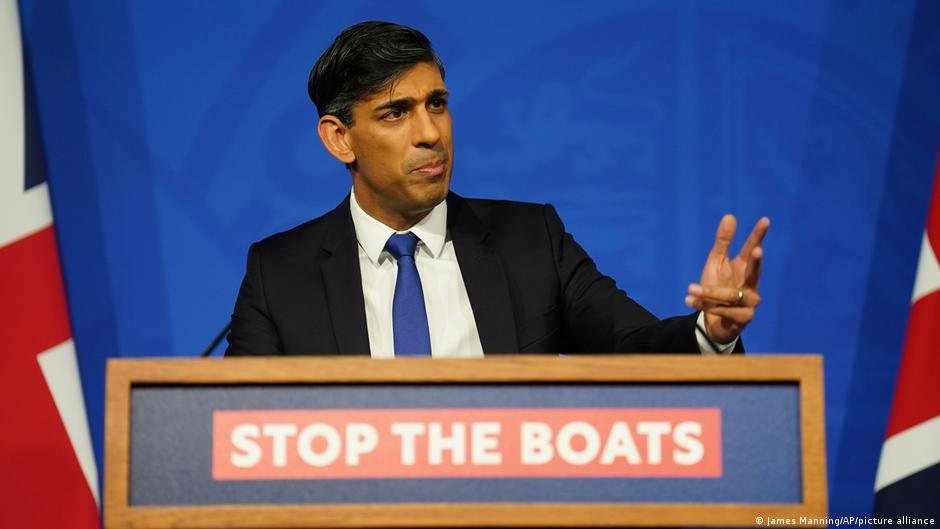
Details of the policy, as outlined in the UK Home Office website, include a crackdown on suspected people smugglers, bolstering border controls with international partners, and limiting the ability of irregular migrants to open bank accounts.
Read more: Are UK migration policies having the desired deterrent effect?
Political challenge
Ahead of the UK general elections scheduled for July 4, the increase in the number of irregular arrivals poses a significant challenge to Prime Minister Rishi Sunak, who has made stopping small boat Channel crossings a cornerstone of his administration.
The current situation also poses questions on the financial obligations of the UK under the controversial Rwanda Deal, one of the programs intended to counter irregular migration. Under the program, the UK will send people seeking asylum to Rwanda where their request for international protection would be processed.
Read more: Almost as many Afghans arriving across English Channel as in official schemes

In return for the outsourcing of its migration processing, the UK government will provide 370 million pounds in development funding to Rwanda. An additional 120 million pounds is reportedly earmarked to be paid out once 300 people have been relocated to Rwanda. To date, the UK government has reportedly released an estimated 240 million pounds to the government of Rwanda. The Rwanda Deal was ratified last month despite a Supreme Court ruling in November saying that Rwanda was unlawful.
Sunak has postponed flights to deport people to Rwanda until after the general elections.
In a report by the German news agency dpa, Home Secretary James Cleverly reaffirmed the government's determination to curb irregular arrivals and defended the government’s current initiatives. Cleverly suggested that people smugglers have adjusted their tactics to evade the government's current efforts to close borders.
The UK has attempted to forge migration schemes similar to the Rwanda deal with the African countries of Ghana and Botswana. Both countries reportedly declined to enter into such agreements.
Read more: UK: Government considers 'Rwanda-like' deals with four other countries
Rwanda: a litmus test for other migration policies
On its website, the UK Home Office described the UK-Rwanda deal as paving the way for "an innovative new model" for managing irregular arrivals. Other countries across Europe exploring similar agreements include Austria, Germany, and Denmark.
Italy, with the current government pursuing a hardline stance on irregular migration, has entered into a deal with Albania to transfer migrants to centers there for processing their asylum claims.
Read more: Italy-Albania asylum-seeker deal to cost €653 million, report finds