
New accusations have emerged that Russian authorities are 'recruiting' migrants and sending them to the EU. The claims by Poland – an EU border state – were also made in German media reports.
After a lull over the northern hemisphere winter, the number of migrants entering the EU across its eastern borders is rising once again, causing concern in the frontline nations. In Poland, which shares a border with non-member state Belarus, more than 13,000 attempts to enter by migrants without documents have been detected this year, according to Polish border authorities.
The prime minister, Donald Tusk, this week accused Russia of being behind the growing number of migrants, saying he had secret intelligence to back his claims.
"It is the Russian state, not some murky business, that is behind the organization of the recruitment, transport and attempts to smuggle thousands of people" into Europe, Tusk said.
"More than 90 percent of those who cross the Polish border illegally are people with Russian visas," he added.
Media reports of hybrid war
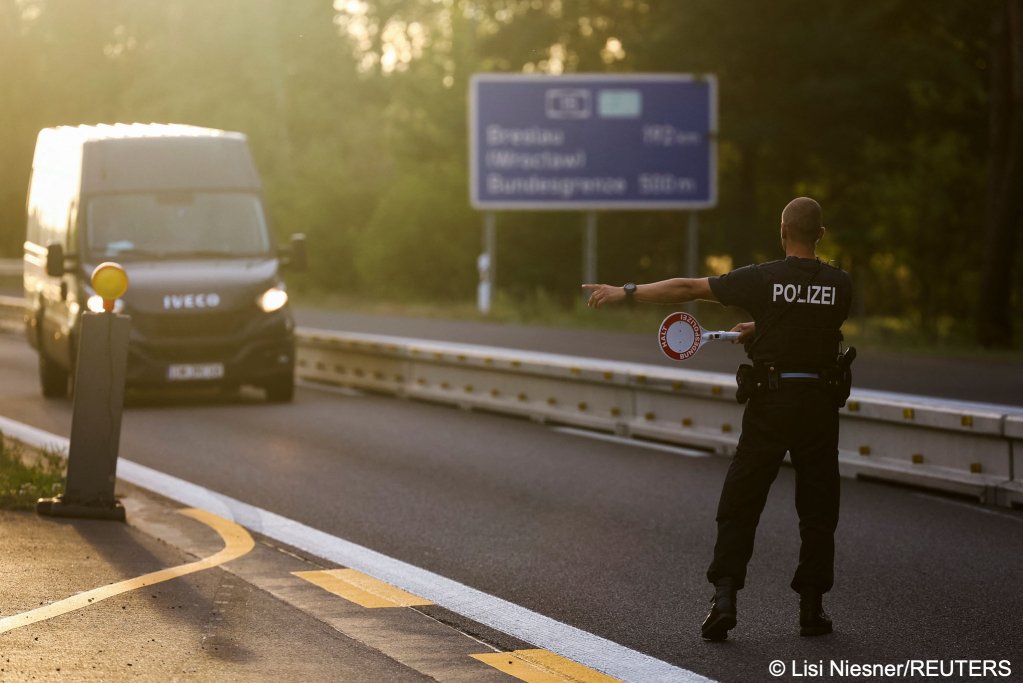
On the heels of Tusk’s claim that Russia is recruiting migrants and sending them to the Polish border, several German media organizations on Wednesday published similar allegations that Belarus and Russia appear to be waging a so-called "hybrid war".
According to the report by public broadcasters WDR and NDR, and the newspaper Süddeutsche Zeitung, the effects are being felt not only in Poland, but also in Germany, where national police figures show the number of of irregular arrivals has risen from 30 detected crossings in January and February, to 670 in April.
Most of the migrants arriving at the German-Polish border come via the Balkan Route, Slovakia or Czech Republic, the report notes. But it is the smaller proportion said to be traveling via Russia that is of greater concern to the European Union – which sees the weaponization of migrants as a new strategic threat.
Also read: Barbed wire borders increase in Europe
Echoing Donald Tusk’s claim that Russian authorities are orchestrating the situation, the media organizations say surveys of migrants on the Russian route revealed that around half had received visas from Russian missions in their home countries. The documents – often short-term tourist, business or student visas – allowed them to fly to Moscow or St. Petersburg, and from there to travel by land to Belarus and the EU.
State smuggling
In 2021 countries at the EU’s eastern external borders, Lithuania, Latvia and Poland, began reporting that migrants were arriving from Belarus who had been brought, or encouraged to come to Minsk with the aim of forcing the EU to change its policy towards Belarus.
As a result of Belarus’s instrumentalization, more than 8,000 irregular border crossings from Belarus were detected in 2021, an increase from the previous year of over 1,000 percent. Thousands of people became trapped at the border, and at least 21 died.
There were accusations then that Russian intelligence and security services were cooperating with Belarus to bring migrants, mainly from Iraq, to the EU's doorstep.
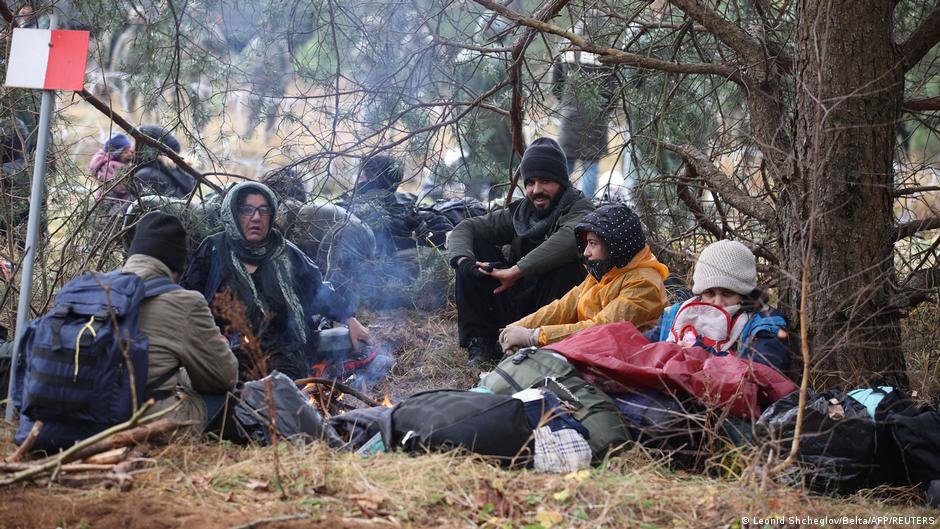
This time the main countries of origin of those arriving via the new route from Russia are Syria and Afghanistan, with some also coming from Somalia, Yemen and Eritrea, according to German police.
Concerns about the use of migration as a hybrid weapon have been growing across the bloc in recent years, but particularly among EU countries that want to see stricter limits on migration. A letter to the European Commission signed by 15 member states last week proposes that measures in the New Pact on Migration and Asylum should be strengthened even further to allow countries to "act swiftly to counter instances of instrumentalization – such as the hybrid attack orchestrated most recently by the Belarusian and Russian regimes – in order to provide for the national security of the Member States."
Also read: Migrants attempt risky Kaliningrad route to Europe
There are also fears that other countries could follow the lead of Russia and Belarus: The German broadcaster ARD says that experts from the EU border agency Frontex believe migrants could be used by states such as Serbia, Turkey, Libya and Morocco to exert pressure on the bloc's external borders.
In the meantime, the member states bordering Russia and Belarus are erecting higher physical and legal barriers in response to the threat.
On Saturday, Poland announced plans to spend more than 2.5 billion euros on strengthening its eastern border, a move Tusk described as "a strategy to push back the war at our frontiers."
And in Finland, where a rise in the number of attempts by undocumented migrants to enter from Russia led the government to seal the border last year, the government in Helsinki has proposed a new law that would allow authorities to turn away asylum seekers at the border.
With AFP