
Italy has announced that planes used by charities to track migrant boats in difficulty in the central Mediterranean will no longer be able to fly from airports on the islands of Sicily, Pantelleria and Lampedusa.
Planes used by non-governmental groups like Sea Watch to track migrant boats in distress in the central Mediterranean will no longer be able to fly from airports on the Italian islands of Sicily, Pantelleria and Lampedusa, news agency Reuters reported on Tuesday (May 7), citing Italian authorities.
The decision, reportedly announced by the Italian Civil Aviation Authority (ENAC), will make it much harder for charities to use its small planes to look for and find boats in need of rescue.
"The flight ban is politically motivated and legally untenable," NGO Sea-Watch said in a press release from Wednesday afternoon. "In the middle of the European election campaign, Italy is trying to get rid of the last witnesses to European crimes in the Mediterranean. We will not be intimidated by this."
The NGO added that it wasn't stopping its monitoring flights, stating that one such flight took off from Lampedusa airport in the early afternoon.
Flavio Di Giacomo, a spokesman for the UN's International Organization for Migration (IOM), said the Italian decision "may hinder life-saving efforts", adding that his agency was "waiting to understand its actual implementation."
Read more: Italy's new sea rescue law: NGOs file complaint with EU commission
Too close to shipping routes?
ENAC said in a written ordinance that the islands are close to shipping routes, according to Reuters. It also reportedly said the planes were "unwarranted," represented a burden for the official rescue teams and risked compromising the safety of undocumented migrants.
Sea-Watch said the ordinance was aimed at preventing the world from witnessing migration events on the Mediterranean, calling it an "attack" that "tramples international law".
NGO spotter planes like the ones Sea-Watch operates regularly find boats in distress and typically alert maritime rescue coordination centers to their location. They have also documented so-called pullbacks by Libya's coast guard, which receives EU funding to prevent migrants from reaching European shores.
Late last month, Sea-Watch warned Italian authorities it was unwilling to take orders from the Libyan coast guard; it also lost a legal battle against EU border agency Frontex concerning access to documents in the EU's Court of Justice.
Read more: Italy's top court: Handing over migrants to Libyan coast guards is illegal
NGOs vs Meloni
Since Italian Prime Minister Giorgia Meloni came to power in 2022 promising to clamp down on irregular migrant arrivals from Africa, her government has made it increasingly difficult for charity ships to operate in the Mediterranean. Among other things, she limited the number of rescues they can carry out and often forced them to make substantial detours to bring migrants ashore.
Earlier this year, fellow NGO SOS Humanity published data it said shows that rescue ships in the Mediterranean lost 374 days making long journeys to reach Italian disembarkation ports last year.
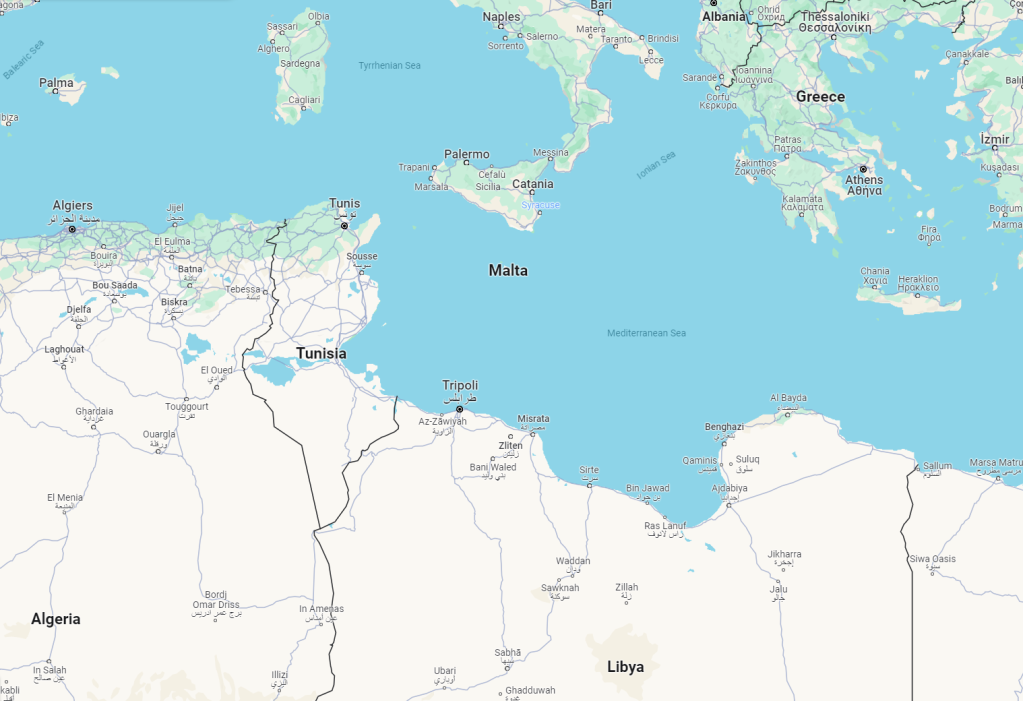
Meloni has also worked with the European Union to try and persuade both Libya and Tunisia to slow the arrivals. The government in Rome says its measures are working and therefore reducing drownings during the dangerous crossing.
Over the first four months of this year, more than 700 migrants died or went missing in the Mediterranean. The vast majority took place in the central corridor between Tunisia, Libya and Italy. By comparison, 1,126 and 785 migrants died or went missing in the same time periods in 2023 and 2022, respectively.
Last year, around 40 percent of all deaths and disappearances globally occurred in the Mediterranean.
In terms of migrant arrivals, 17,609 migrants have reached Italy by sea so far this year. By comparison, 44,684 arrived in the same period of 2023, Reuters reported, citing official data.
Also read: Prison, punishment and pushbacks: From Eritrea to Libya to Italy
with Reuters