
UN migration agency IOM has published its flagship report about global migration trends. The analysis reveals shrinking regular pathways from developing countries, a major growth in international remittances and an unprecedented level of forced displacement.
The International Organization for Migration (IOM) published its bi-annual World Migration Report on Tuesday (May 7).
The 384-page document offers a comprehensive analysis of global migration trends and developments as well as challenges impeding human mobility.
"Migration is an intrinsic part of human history, but it's often overshadowed by sensationalized narratives," the IOM said in a press release. "Most migration is regular, safe and regionally focused, directly linked to opportunities and livelihoods."
First published in 2000, the goal of the World Migration Report is to better "understand migration dynamics" in order to inform "decision-making and effective policy responses."
IOM Director General Amy Pope, who presented the report in Bangladesh's capital Dhaka, said the goal of the research was to "inspire collaborative efforts to harness the potential of migration as a driver for human development and global prosperity."
Also read: 2023 EU migration trends: border patrols, homelessness and offshore detention
Taking stock: Global migration in numbers
According to the World Migration Report, international migrants made up 3.6 percent of the world's population. That's up from around 2.3 percent of the global population in 1970.
Labor migrants, of whom around 42 percent are female, account for around 60 percent of the total number of migrants.
The report's data indicates that around 60 percent of all migration globally is regular in nature.

The report outlines an increasing share of Africa-born migrants living in Europe. In 2020, more African natives resided in Europe (11 million) than in Asia and northern America combined (approximately five and three million, respectively).
Inter-African migration, however, is still greater than migration from African countries to other regions, including Europe.
Moreover, Europe is home to roughly twice as many migrants from Asia than those from Africa (around 23 million compared to 11 million).
Overall, the share of non-Europeans residing in Europe doubled between 1990 and 2020.
"We often read about migration from a national perspective portrayed as a negative, domestic political issue," Marie McAuliffe, editor of the report, told InfoMigrants. "This dominant focus can mask the reality that migration patterns and processes are closely linked to geography. For instance, most international migration across Africa and Europe is predominantly intraregional, for which free movement arrangements have been pivotal."
The IOM report also analyzed country-to-country migration corridors, whose size is measured by the number of people born in one country who now stay in another. In 2020, by far the largest such corridor was the one from Mexico to the US. Türkiye, which is home to roughly four million Syrians, comes in at number two.
The two largest corridors from a non-European to a European country are Türkiye to Germany and Algeria to France.
Also read: Migration routes to EU shift, as arrival numbers down 12%
Lack of regular pathways
Regular migration pathways for people from developing countries have been narrowing in recent years, according to the report.
The authors outlined four main regular pathways for would-be migrants: labor migration, family migration, international protection and international student mobility.
A person's ability to enter a country with relative ease is in many respects determined by nationality, the authors explained.
"Over the years, border control and entry policies have generally become stricter for people from least developed countries," report editor McAuliffe said. "This divide risks exacerbating poverty and inequalities when it comes to mobility, ultimately making it even harder for people from low development countries being able to migrate out of poverty."
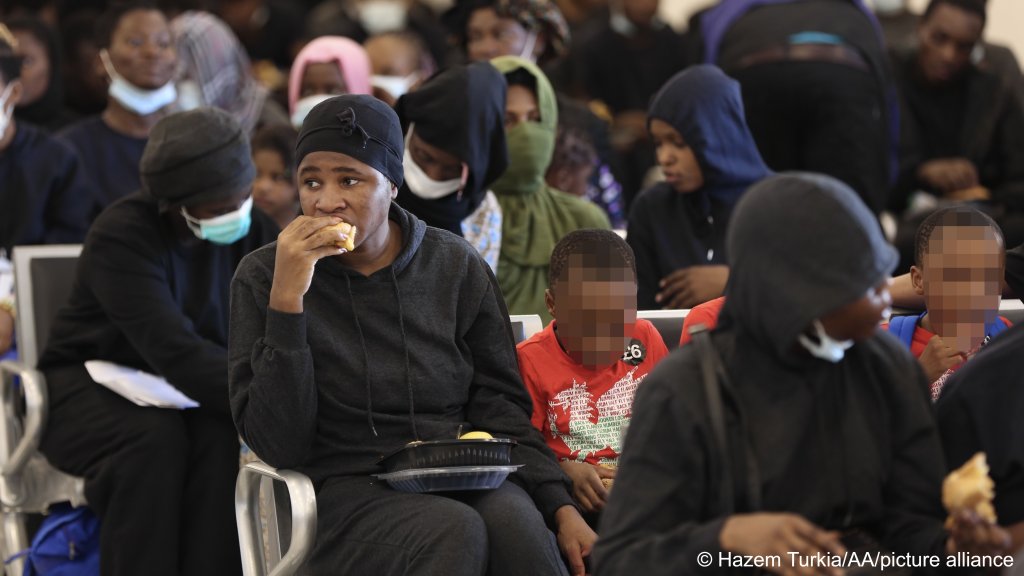
According to the report, many migrants are "locked out of regular pathways" altogether, which means they sometimes resort to "extremely hazardous" irregular means of migration.
The authors stress, however, that "wherever possible, migrants will opt to migrate regular pathways on visas."
Read more: Is migration the EU's biggest challenge in 2024?
Uptick in remittances
According to the report, migrants sent an estimated 831 billion dollars in remittances to their home countries in 2022, the vast majority received by low- and middle-income countries.
In 2021, the remittance flow stood at 791 million dollars, up from 717 billion in 2020. While remittances already overtook the official development assistance in the mid-1990s, they also recently surpassed foreign direct investment (FDI).
"While the cost of sending remittances has gradually declined over the last few years, it still remains high, particularly for those remitting to sub-Saharan Africa," McAuliffe told InfoMigrants. "It's also still far from the Sustainable Development Goal target to reduce it to less than 3 percent the transaction costs."
In 2022, India was by far the country with the world's largest remittances inflow, followed by Mexico, China, the Philippines and France. (The majority of remittances to France relate to salaries of cross-border workers who work in Switzerland.)
International remittances have increased close to seven-fold since 2000, the year the IOM first published the World Migration Report.
Read more: German government mulls limiting migrant remittances
Unprecedented level of displacement
According to the World Migration Report, forced displacement is the highest on record in the modern era.
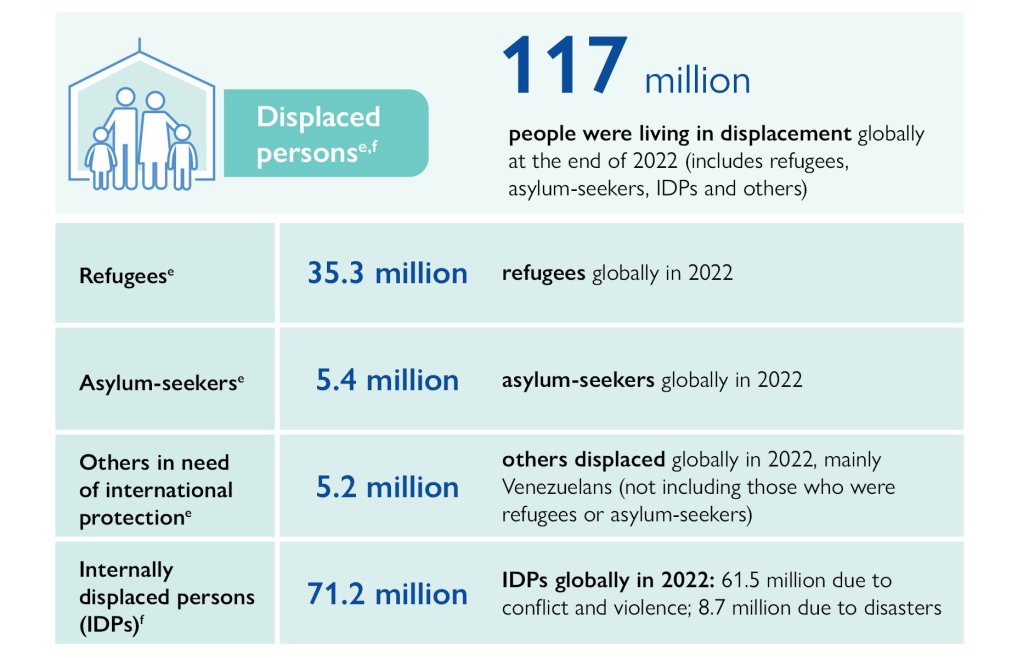
117 million people, or around 40 percent of all migrants, were living in displacement in 2022. Roughly one third of them had refugee status. The reasons include natural disasters, conflict, violence, persecution and human rights violations.
"The situation is further exacerbated by environmental impacts and climate change, which some scientists are predicting will force more than 216 million people across six continents to be on the move within their countries by 2050," the IOM said in a press release.
In terms of countries with the greatest number of refugees and asylum seekers, South Sudan topped the list in 2022 with more than 2.5 million, followed by Sudan, Democratic Republic of the Congo (DoC), Uganda and Ethiopia. Some of these countries -- particularly Sudan, DoC and South Sudan -- were simultaneously origin countries and host countries, meaning they both produced and are home to large refugee populations.
Moreover, the number of refugees in need of resettlement has almost doubled over the last ten years, while resettlement has not kept up with the pace of resettlement needs, according to the report.
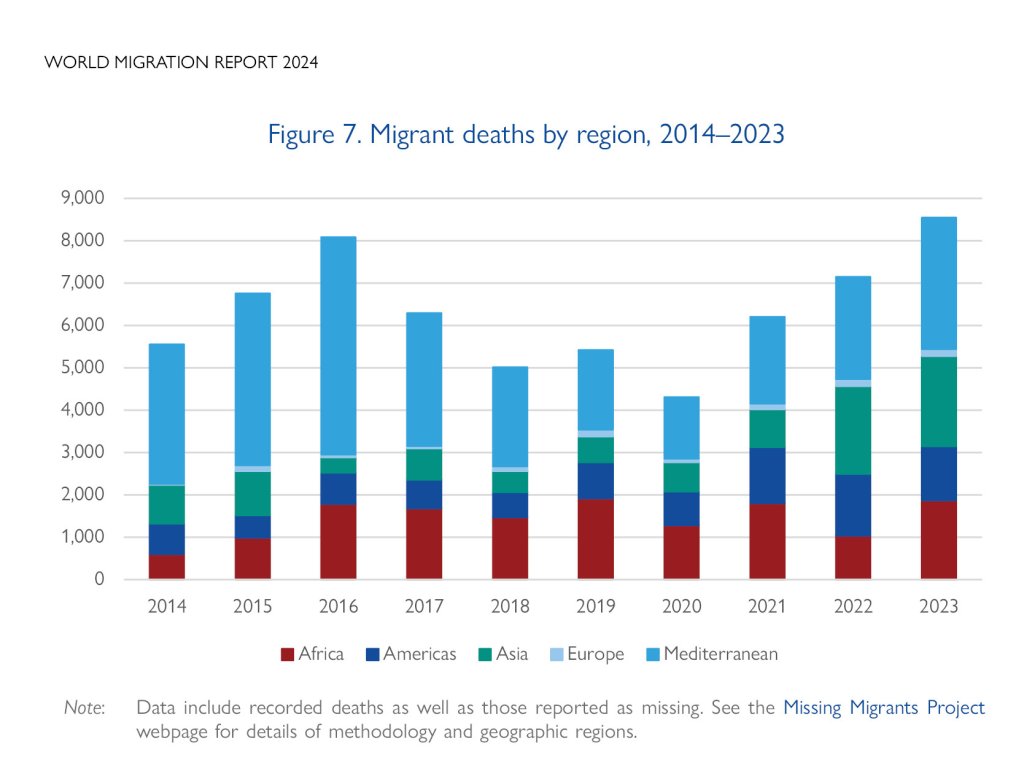
Globally, around 8,500 migrants either died or went missing in 2023, the highest number since the IOM's Missing Migrants Project was launched in 2014. Around 40 percent of last year's deaths and disappearances occurred in the Mediterranean, and its share has steadily grown since 2020.
Read more: The heat is on: how climate change and migration trends do – and do not – overlap