
The Irish government has announced it will send asylum seekers who arrive over the border with Northern Ireland back to the United Kingdom by the end of May. The British authorities have said they do not want to accept returns.
Ireland plans to enact a law by the end of May so that it can deport asylum seekers to the United Kingdom. The announcement comes amid protests in Ireland about the government's migration policy and whether or not the country is able to support the numbers of migrants, asylum seekers and refugees who are arriving.
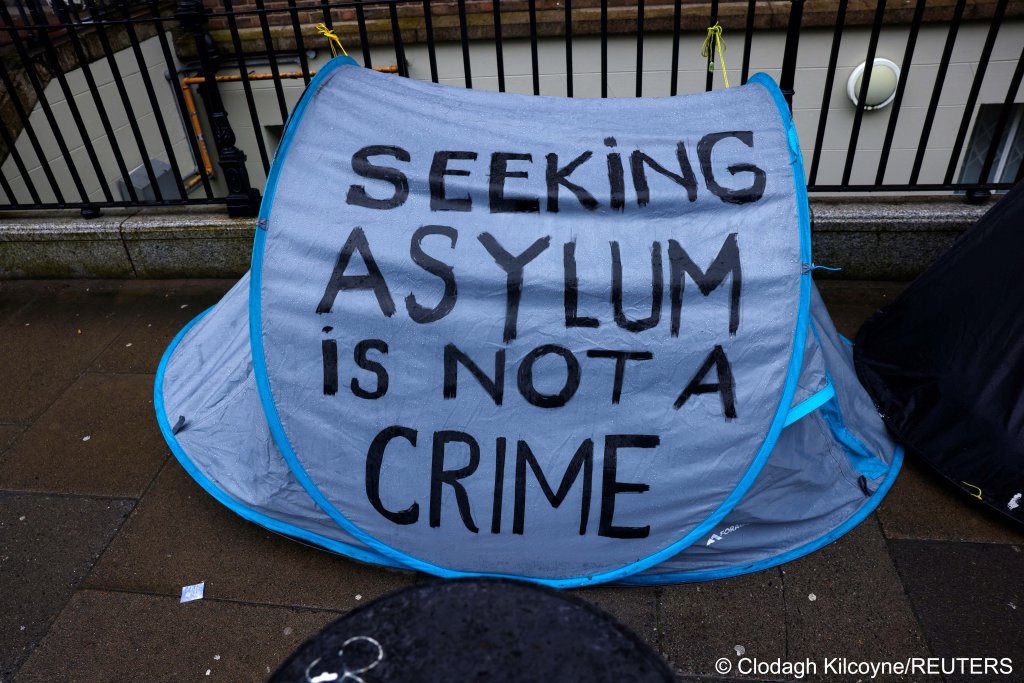
Earlier this week, police in Dublin cleared a makeshift camp that had been set up outside the International Protection office in the Irish capital, and moved those resident there to alternative camps in more rural locations.
Britain and Ireland signed an agreement for asylum seekers to be returned in either direction in 2020, but according to the Irish government, they had not yet taken advantage of the agreement -- partly because of restrictions placed by the COVID-19 pandemic, and then subsequently the agreement faced a legal challenge, reported the news agency Reuters.
In fact, the Irish High Court ruled that Ireland could not return people who arrive from the UK seeking asylum because the Irish government had not said whether they could be at risk on their return. However, now the Irish government is looking to enable legislation to overcome these challenges. An announcement that has not been welcomed in London or Belfast.
The Northern Ireland Secretary and the Irish deputy prime minister held a phone call on Wednesday evening amid diplomatic tensions after Dublin said there had been a rise in asylum seekers crossing the border following the passing of the UK's controversial Rwanda policy (which aims to send some asylum seekers arriving in Britain on a one-way trip to Rwanda).
Tensions sparked
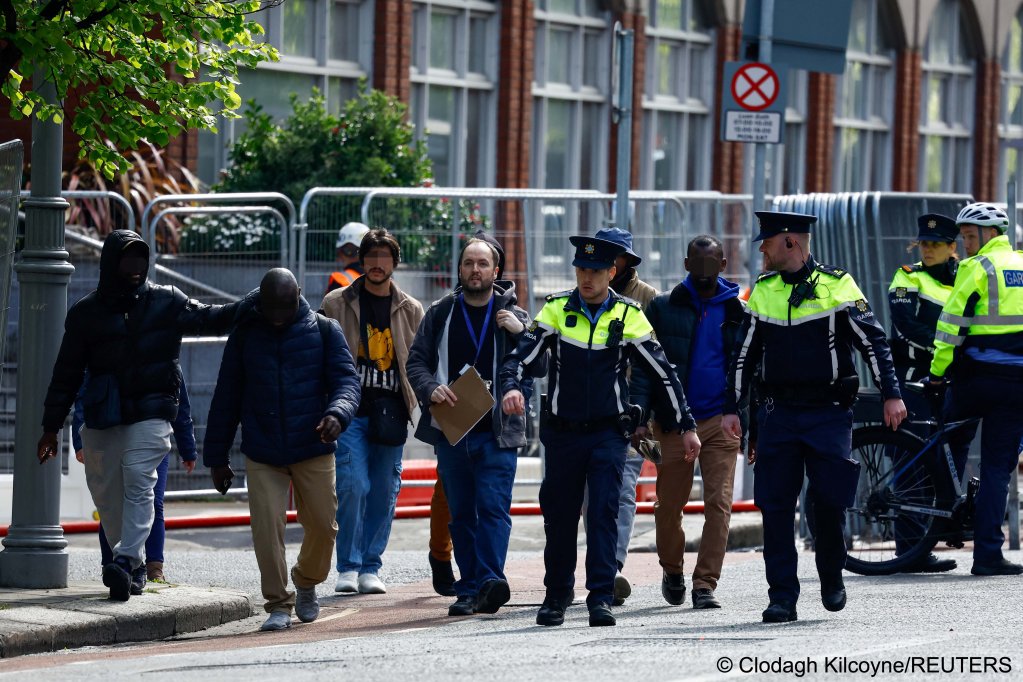
Tensions were sparked after Irish Justice minister Helen McEntee, who explained the emergency returns legislation would allow for faster processing of migrants, said her department was planning to make 100 additional police officers available for frontline enforcement work.
Although the border now marks the dividing line between the UK and Europe, it is also highly sensitive because of Irish history and particularly following the period of intense conflict known as 'the Troubles' --which stretched from the late-sixties to the late-nineties. Unionists in Northern Ireland --who want to remain part of the UK, clashed violently with Republicans --who would like to be part of a united Ireland.
Those clashes resulted in numerous deaths, disappearances, attacks and bombings on both sides and were only calmed, for the most part, by the signing of the Good Friday Agreement in 1998, which set up a new government in Northern Ireland that endeavored to represent both sides in a power sharing framework. Even today, any suggestion of police being deployed to that border from either side is liable to reawaken these sensitivities and is highly contested.
Following McEntee's comments, the Irish government confirmed there would be no Irish police deployed at the border on the island, the Northern Ireland Office (NIO) said.
British Prime Minister Rishi Sunak responded by telling the House of Commons he wanted urgent clarification about any possible checkpoints at the border.
Sunak insists UK won't accept migrant returns from the EU via Ireland
The number of undocumented asylum seekers arriving in Ireland, mainly through the open border with Northern Ireland, which is part of the United Kingdom, has increased significantly recently, according to the Irish government. According to media reports, more than 6,700 people have applied for asylum in Ireland since January. That's almost 90 percent more than in the same period last year.
Britain's Prime Minister Rishi Sunak has said he is not interested in accepting returns from Ireland, and that it was up to his government to decide who is allowed to enter. He said that he hoped the British and Irish governments could work together to strengthen the external borders to the Common Travel Area, an open borders agreement that includes the UK, Ireland, the Isle of Man and the Channel Islands.
"We're not going to accept returns from the EU via Ireland when the EU doesn't accept returns back to France, where illegal migrants are coming from," Sunak said on Monday (April 29).
Sunak claims that the rise in migrants crossing into Ireland from the UK shows that his Rwanda pact is working.
With Reuters and dpa