
Despite the implementation of Rishi Sunak's 'stop the boats' policy, the UK is experiencing increasing small boat arrivals this year. As the government's deterrent policies are pushed harder, is UK migration policy really working and having the government's desired effects?
On Wednesday (May 1), 711 migrants crossed the Channel in 14 small boats from France to the UK. In the first four months of the year, government data shows over 7,500 migrants arrived in this way.
Recent figures indicate that an additional 268 individuals arrived on five boats on the last day of April, bringing the month's total to 2,132. The total number of arrivals by small boats in 2024 now stands at 7,567.
The latest crossings took place in the same week that the UK government has been busy trying to underline how effective its migration policy actually is in the wake of the passing of the Safety of Rwanda Act.
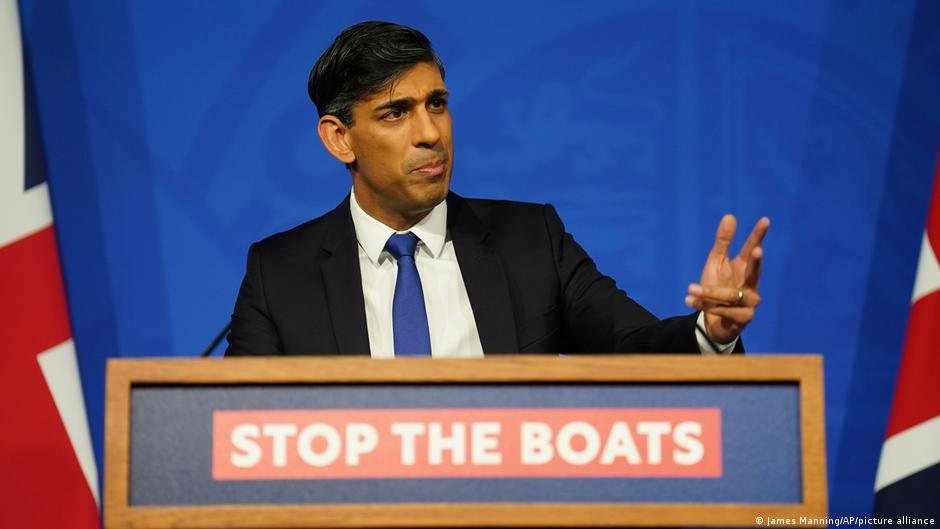
Several communications this week from the British government have underlined the deterrent effect of the passing of the Rwanda act and Rishi Sunak's trademark "stop the boats" policy, and yet the boats have not stopped.
On Wednesday, the British government also announced it had begun detentions of those it intends to send to Rwanda. The Home Office Director of Enforcement Eddy Montgomery said:
"Our specialist operational teams are highly trained and fully equipped to carry out the necessary enforcement activity at pace, and in the safest way possible." He added that they needed to keep "detail to a minimum" to ensure "we can deliver this large-scale operation as quickly as possible."
IOM: 'No discernible effect of being exposed to warnings against migrating'
But despite the tough talk, the UN Migration Agency IOM found in a policy paper published in March this year that in fact, although many migration campaigns globally tend to focus on deterrance, when these messages are diffused in people's home countries, there is actually "no discernible effect of being exposed to warnings against migrating, nor of the number of channels through which respondents have been exposed to warnings." So it is questionable whether deterrence really works in general.
The policy paper found that: "Even when respondents were exposed through five channels, there is no effect on their migration aspirations. Both the preference to migrate and the readiness to migrate are unaffected."
Also read: UK: What will the Rwanda Act mean for Afghan asylum seekers?
Despite these kinds of findings, the British government is determined to press ahead. Britain's recent passage of the Safety of Rwanda Act reflects a contentious move to redefine Rwanda as a "safe" country, enabling the deportation of asylum seekers to the East African state. Despite legal challenges and concerns raised by human rights groups, the government persists in its pursuit of the policy.
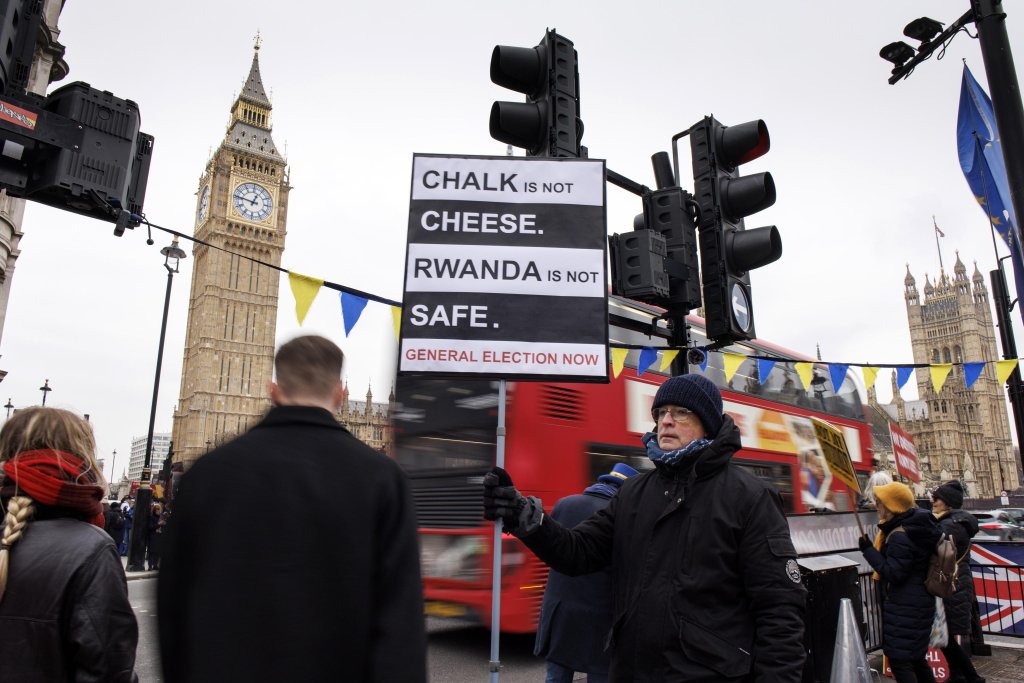
Politically, the policy serves as a potential win for Prime Minister Rishi Sunak's Conservative government, facing electoral pressure and seeking to demonstrate resolve on immigration issues. Britain's approach, marked by punitive measures and media spectacle, has drawn considerable criticism globally. The stark realities of this policy are highlighted by recent events, including the deaths of five people while crossing the Channel last week and the precarious situation faced by migrants, asylum seekers and refugees already in Britain.
Government pushes for Rwanda plan
Nevertheless, the government remains convinced that once the Rwanda policy is properly up and running, the hoped-for deterrent effect will kick in. A Home Office spokesperson emphasized the urgency of initiating deportation flights to Rwanda as a deterrent.
"The unacceptable number of people who continue to cross the Channel demonstrates exactly why we must get flights to Rwanda off the ground as soon as possible."
Also read: UK: Civil servants appeal Rwanda law as 66 migrants rescued
"We continue to work closely with French police who are facing increasing violence and disruption on their beaches as they work tirelessly to prevent these dangerous, illegal and unnecessary journeys," the Home Office spokesperson added.

The Rwanda scheme, which has been estimated to cost £1.8m for each of the first 300 migrants deported, also prompted criticism from the UN high commissioner for refugees, Filippo Grandi, who called on Sunak to reconsider the plan, saying it not only undermines international cooperation but also sets a "worrying global precedent."
NGOs call for safe passage
Last week's deadly incident in the Channel has highlighted, once again, the perilous nature of these journeys, with five individuals, including a seven-year-old girl, losing their lives in a crush on a boat crossing the Channel.
Wanda Wyporska, chief executive officer at Safe Passage International, told the UK's The Guardian newspaper, "news of men, women and a child dying in such a harrowing way is devastating. This was entirely preventable."
Also read: French police rescue more migrants trying to cross Channel to UK
The British government has repeatedly stated that it is only by stopping the boats that deaths like these can be prevented. The Home Office stated that it remains "committed to building on the successes that saw arrivals drop by more than a third last year, including tougher legislation and agreements with international partners, in order to save lives and stop the boats."
However, government critics disagree.
Speaking to The Guardian, Enver Solomon, the chief executive of the Refugee Council, stated that "the only sustainable way to reduce dangerous journeys … is for the government to reduce the need for desperate people to take desperate actions."
"Instead of hostile, headline-grabbing legislation, we need to see safe routes for those fleeing conflict and persecution, including more options for family reunion, refugee visas, and cooperation with our European neighbors,” he added.
Curbing regular migration
And yet safe and legal routes also don't seem to be the current government's priority. On April 30, the Home Secretary, James Cleverly, announced a decrease of almost 80 percent in student dependant applications in the first quarter of 2024 compared to the same period in 2023. Measures such as tightening student visas and preventing family members from accompanying international students have been introduced by the government in an attempt to curb "unsustainable" (legal) migration levels.
"This data shows a significant fall in numbers on the first of our measures to take effect whilst underlining why necessary action was taken to cut unsustainable numbers of care worker dependants."
Also read: Foreign nurses leaving UK for better pay and conditions
The government says it is committed to attracting top talent while reducing overall legal migration, exemplified by restrictions on care worker dependants. It has also introduced reforms, including an increased oversight of care providers to combat worker exploitation and raising salary thresholds and reviewing immigration routes.
Some sectors have already seen a significant decline in skilled workers. Currently a high number of foreign healthcare workers are leaving the UK for better opportunities abroad. Many are moving to other English-speaking countries such as the US, New Zealand, or Australia, for higher pay and better conditions.
InfoMigrants contacted the UK Home Office for this article, however it declined to comment.