
At least 51 people died after their boat sank south of Spain's Canary Island El Hierro in the Atlantic Ocean. Nine survivors were rescued by helicopter.
In one of the worst incidents this year, Spanish authorities said on Monday (April 29) that 51 people were dead after their boat capsized about 100 kilometers from El Hierro.
The boat had already begun to sink when it was spotted by an oil tanker en route from Brazil to Cartagena, on the Spanish peninsula.
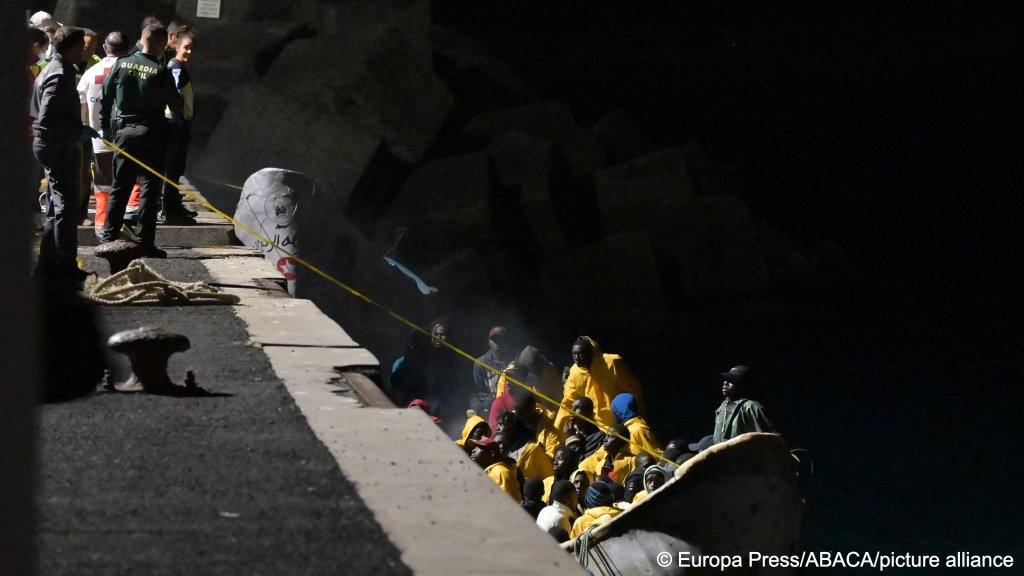
Rescue services in the Canary Islands were immediately deployed and managed to rescue nine people clinging to the parts of the boat that were still above water.
They were taken to hospital in Valverde, in the north of El Hierro, where they were treated mostly for dehydration and abdominal pain, the news agency EFE reported.
According to survivors, all men, the boat had left nine days earlier, on around April 20, from Mbour in Senegal, with 60 people on board. It had capsized on the seventh day.
Fifty-one bodies were recovered from the water. Marine rescue authorities said Monday that there were no further bodies in the wrecked boat, nor in the water around it.
However, the AP news agency said officials had not confirmed how many people had been on the boat when it set out.
According to EFE, all the migrants were of sub-Saharan origin.
Another record year expected
While the journey is highly dangerous, migrants from sub-Saharan countries in West Africa continue to attempt to reach Spain by boat, most via the Canary Islands in the Atlantic.
Also read: A Senegalese fisherman haunted by migrant boat disaster
A few hours before the wrecked boat was discovered south of El Hierro on Monday, Spanish rescue services picked up 101 migrants, four of them women, who had been spotted by a fishing vessel near Los Cristianos in southern Tenerife.
The interior ministry says 16,621 migrants arrived in Spain by boat between January 1 and April 15, up by 11,681 in the same period last year. The vast majority arrived on the Canary Islands route.
On Tuesday (April 30) the Spanish government delegate in the Canary Islands, Anselmo Pestana, said that more than 2,000 migrants had arrived in the islands in April, a new record for the month.
"A lot of people keep coming, especially from Mauritania and now Senegal," Pestana said.
In 2023, around 40,000 migrants reached the Canary Islands by boat from West Africa.
Pestana said that the increase in arrivals over the past few months indicates that 2024 will once again be a record year on the Atlantic migration route.