
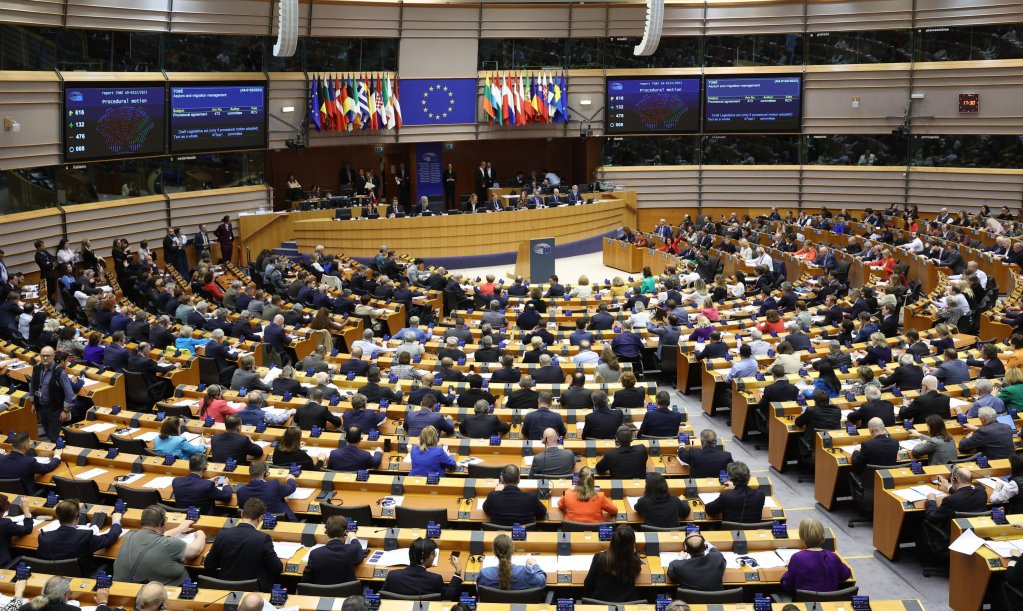
Slovakia has joined Poland and Hungary in expressing opposition to implementing the new EU Migration Pact rules that were voted in last week in the European Parliament.
On Tuesday (April 16), Slovakian Prime Minister Robert Fico declared his country would refuse to implement the new EU Migration Pact rules. This, reported the news agency Reuters, is a sign that tensions around the matter remain, despite the new pact finally being approved by the European Parliament last week.
It has taken years to reach some sort of agreement between EU member states over the divisive pact.
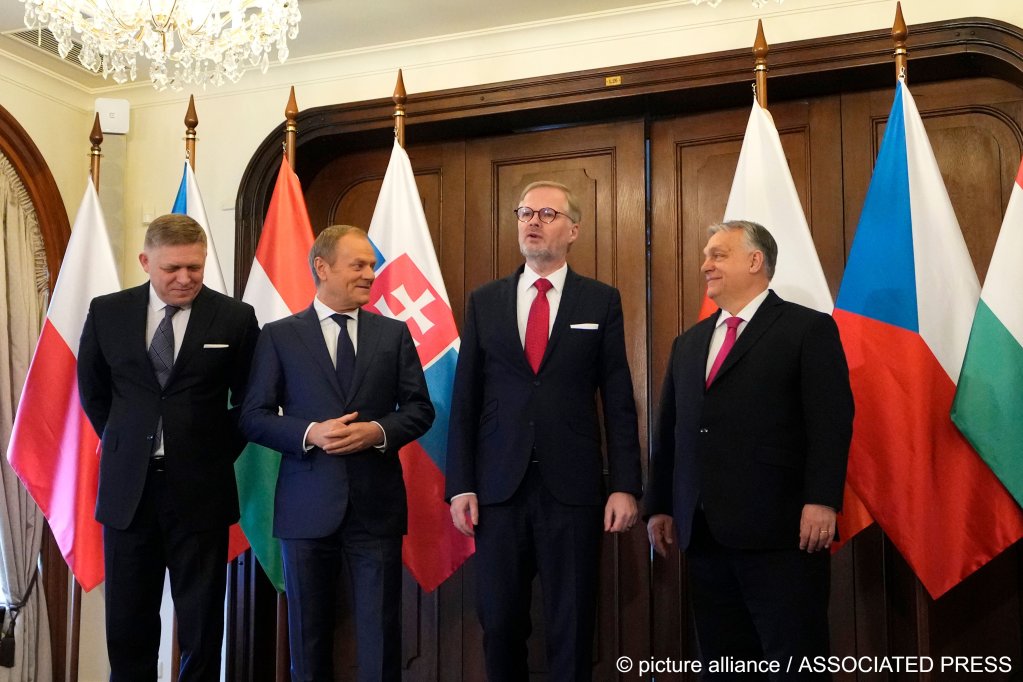
Many countries like Slovakia, Poland, Czech Republic and Hungary -- known as the so-called Visegrad bloc -- have long expressed opposition to being forced to become part of an EU-wide solidarity mechanism, where member states agree to relocate asylum seekers from 'frontline' states, located mostly along the Mediterranean Sea.
Also read: EU approves new migration pact
The stipulations of the new pact were meant to address this long-expressed opposition, by offering various alternatives to countries who wished not to take in additional asylum seekers; these include financial contributions to evade the obligation to accept migrants and refugees as well as bolstering voluntary relocations.
These alternatives were tabled as an attempt to ensure that all member states offered their contribution to relieving the migratory pressure on the first countries of arrival.
'[EU Migration Pact] is a dictate'
However, Fico rejected this principle and said at a press conference on Tuesday: "We are saying unequivocally that you cannot order a country that it must accept, in the Slovak case, up to 300 migrants you know nothing about, or pay 20,000 euros for each migrant."
Fico added: "That is not solidarity, that is a dictate."
Reuters meanwhile reported that his Smer-SSD party and the whole ruling coalition would vote against any related laws to the new pact in the national parliament.
Although the European Migration Pact was approved last week by the European Parliament, each member state has to rubber stamp the agreement first, and would then have two years to implement the various rules.
Also read: 'We have to limit departures and build new legal migration pathways'
Poland also expresses opposition to pact
Poland is another EU country that has expressed doubts about the EU migration pact. It also expressed its opposition to relocating asylum seekers and refugees within its borders.
This is despite the fact that a new government took over in Poland at the end of last year, with a liberal coalition led by Prime Minister Donald Tusk; It is far more pro-European than the former Law and Justice PiS party.
"We will find ways so that even if the migration pact comes into force in roughly unchanged form, we will protect Poland against the relocation mechanism," Tusk said, reported Reuters last week.
Under the terms of the new pact, any member state found to be in violation of the new laws could face fines from the European Commission via the European Court of Justice. All three Visegrad countries with objections to the plan -- Slovakia, Poland and Hungary -- have lost major migration-related cases at this court in the past.
Hungary: Migration pact is 'another nail in the EU coffin'
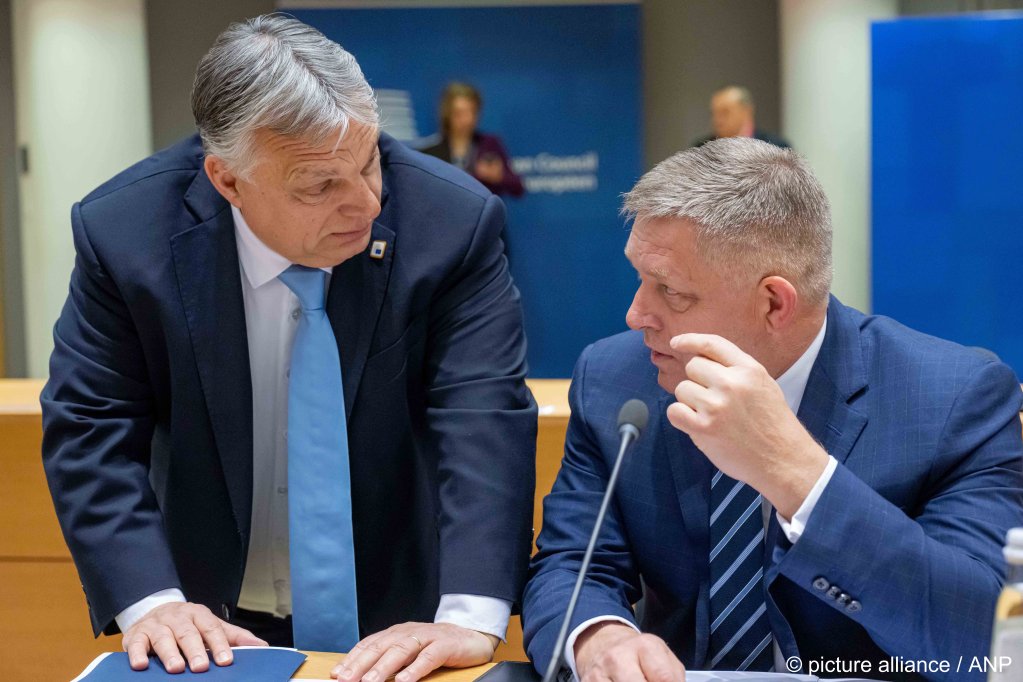
Meanwhile last week, Hungarian Prime Minister Viktor Orban called the pact, "another nail in the coffin of the European Union" on his X page (formerly known as Twitter).
Orban, along with many other right-wing European leaders, is currently attending the National Conservatism meeting in Brussels. Yesterday, Orban called on X for changes in Brussels, marking his X post with the hashtags "#NoMigration #NoGender #NoWar"
Also last week, Hungarian Foreign Minister Peter Szijjarto said ahead of the approval vote in the EU parliament that the new migration pact "practically gives the green light to illegal migration to Europe."
A spokesperson for the Hungarian government, Zoltan Kovacs, meanwhile told journalists that the pact was ultimately "doomed to fail."
Also read: European parliament agrees on new stricter migration rules
In 2015, Hungary set up a border fence along the EU's external border in response to the so-called refugee crisis that year.
Their measures have since been emulated by many other European countries, anxious to control the numbers of migrants attempting border crossings without the correct papers.
Hungary meanwhile has also stated that it will continue to "not allow illegal migrants to set foot in Hungary" -- and by extension the EU.
Doubts in Czech Republic over migration pact
Meanwhile, the daily Pravo newspaper in the Czech Republic wrote on Wednesday (April 17) that the "EU Migration Pact will not be able to fulfil its purpose and therefore will not solve the existing problems."
"If from Afghanistan's Kabul to Guinea's Conakry news finally spread, saying that Europe was effectively securing its external borders, the numbers of those, who wish to come to Europe, would decrease," the daily continued, adding that a lackadaisical response to the EU's migration issue from traditional government-building parties across the bloc was the main reason for growing support on the far-right in the run-up to EU elections.
With Reuters and dpa