
The bodies of four women have been found in a boat off southeast Spain. They are thought to be migrants from North Africa. Meanwhile, the numbers of those arriving across several routes to Spain are increasing, particularly on the Atlantic route towards the Canary Islands.
On Friday (April 12), the bodies of four women, reportedly of North African appearance, were found in a rubber dinghy off the coast of southeast Spain. Coast guards spotted the boat early on Friday morning, reported the news agency Associated Press (AP).
Marine rescue services towed the boat to shore. The Spanish authorities are now conducting autopsies on the bodies to establish the cause of death. No other people were found in the boat, reports AP.
According to Spanish Interior Ministry figures, in the first three months of this year, 15,351 migrants arrived on routes to Spain. That is more than 4,000 additional arrivals than during the equivalent period in 2023.
More than 17,000 migrants arrive in Spain since January
The vast majority of arrivals to Spain now arrive on one of the islands that make up the Canary Islands archipelago in the Atlantic Ocean, off the coast of West Africa.
Also read: Parliament considers regularizing undocumented migrants
The UN Refugee Agency (UNHCR) last updated its arrival data on April 7. Up to that date, they registered 13,773 migrants arriving on the Canary Islands, and almost 4,000 arriving in other parts of Spain, including mainland Spain, the enclaves of Ceuta and Melilla on the African continent and the Balearic Islands in the Mediterranean.
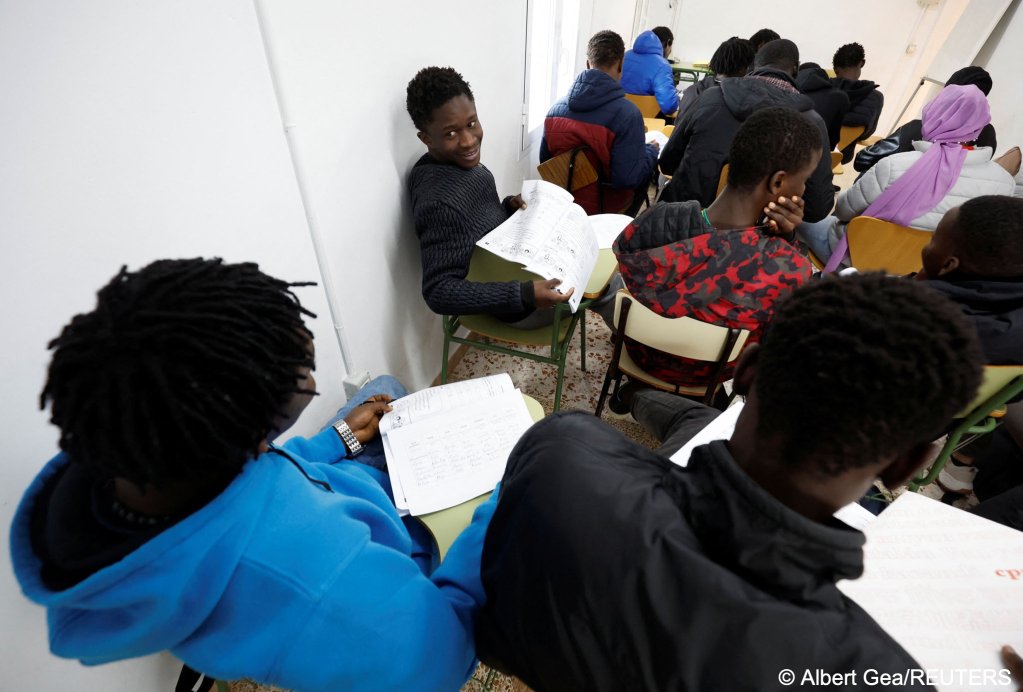
According to UNHCR, arrivals in Spain since the beginning of the year are up 246 percent compared to the same period in 2023. Even the weekly arrival data showed a slight increase compared to the week before (up by 17 percent).
However, it is in particular the large increase in arrivals to the Canary Islands that stands out this year compared to last year. According to UNHCR data, they increased by 452 percent. This has led some news outlets to wonder whether one of the archipelago’s smallest islands, El Hierro, could become the "new Lampedusa" in terms of an apparent sudden increase in the numbers of migrants arriving in a short space of time, on a very small island with little or no infrastructure, as happened on Lampedusa last summer.
El Hierro compared to Lampedusa
The comparison is being used more and more frequently, also by politicians on El Hierro. The island doesn’t have any proper reception facilities and only a tiny resident population. "This is above what we can cope with," says David Cabrera, the Vice President of the Island to the news channel on the German state broadcaster ARD. "We are just not prepared for so many people arriving," added Cabrera.
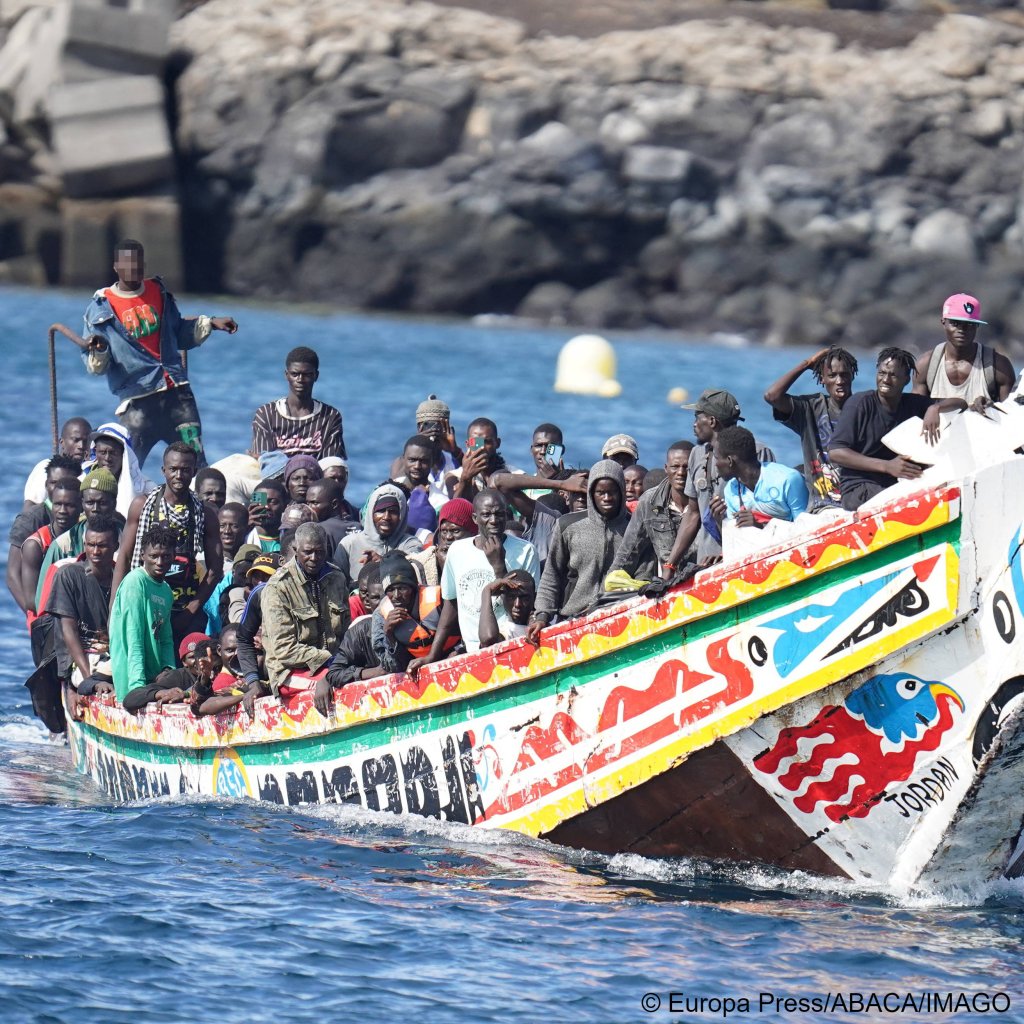
On April 11, Europa Press and regional news portal Canarias 7 reported that a boat carrying 71 migrants landed on El Hiero. According to information from the Spanish rescue services, Salvamento Maritimo, the boat was detected just off the island’s port La Restinga. The boat was accompanied into port and the people on board were seen by the local emergency services and given health checks.
Also read: Identifying dead migrants on Spain's Canary Islands
Regional politicians on the Canary Islands have repeatedly called on Spain’s central government as well as the EU to help them to cope with the increase in arrivals. In order to try and control the numbers of people who might attempt to depart, Spain’s Prime Minister Pedro Sanchez and the head of the European Commission Ursula von der Leyen recently visited Mauritania to sign a deal to increase patrols at the border and offer more funding to Mauritania’s development possibilities.
Unaccompanied minors
Earlier this week, EU parliamentarians also finally voted in the new EU Migration pact, which also promises to strengthen border checks and provide more solidarity to frontline countries like Spain, Italy and Greece.
Most of the migrants arriving on El Hierro leave the island within about 72 hours due to the lack of reception facilities. Some are flown to larger Canary Islands like Tenerife which boasts more infrastructure, or directly to the Spanish mainland. However, unaccompanied minors do stay for longer on El Hierro. There is a special center built to house them and families, reports ARD. At the time of their report a couple of days ago, several hundred migrants were staying at that center.
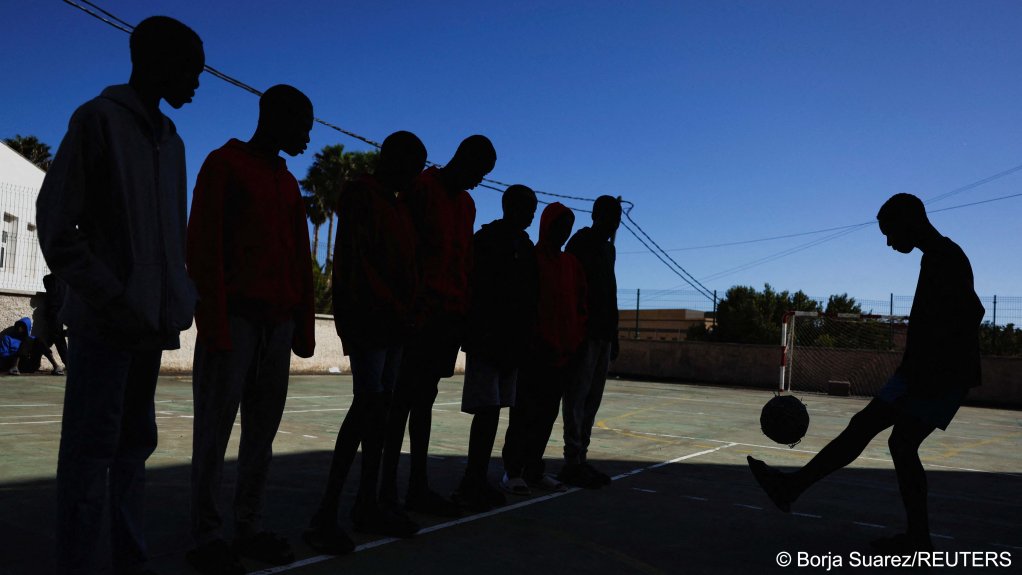
Some of the island’s residents have taken in some of the unaccompanied minors as foster children. Last year, Gilberto Carballo and Teseida Padrón told ARD they had taken in two Senegalese foster children. The two half brothers, named as Adama and Baye in the report came with their father on the boat, their mothers stayed behind in Senegal.
New reception centers opened
Foster care is helping with their integration thinks Padrón. However, she has noticed that some Spanish families at the school have not been quite so keen to embrace the new arrivals. She said sometimes she has overheard other parents at the school whispering that with the new arrivals they are starting to feel as though they were living in Africa and not Spain.
Also read: More than 6,000 die en route to Spain in 2023
Many locals on the Canary Islands have experiences of migration in their own families, not least from the Spanish mainland towards the islands, but sometimes from elsewhere too. Trying to help the new arrivals is generally seen as a good and important thing, claims the Island’s vice president Cabrera, reports ARD. In past centuries, many who had been living on the Canary Islands migrated to Central and South America in search of a better life.
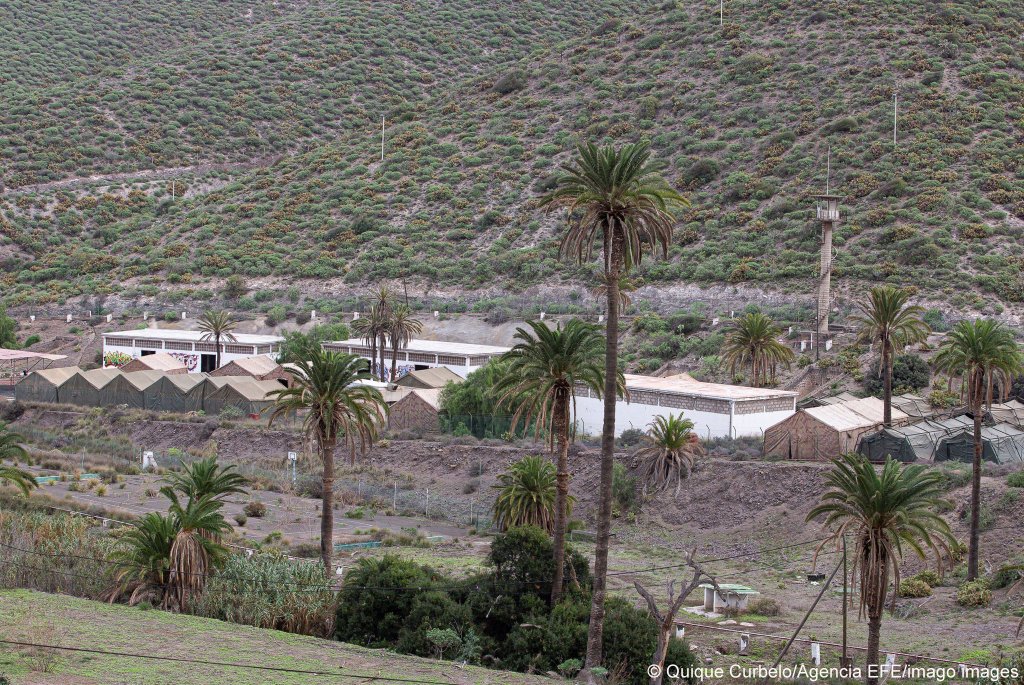
Earlier this week, Euronews reported that Spain had opened several new reception centers, and had also opened special facilities to accommodate the numbers of unaccompanied minors now arriving. One of those new centers is located on Gran Canaria, just outside the capital Las Palmas. At least 80 minors are now housed in a former monastery.
Vocational training, one way to offer alternatives to migration
One of those staying at the monastery, Famara, 17 years old from Gambia, told Euronews that he decided to make the journey after his mother passed away. "My mother took care of my younger brothers and sisters. So I have to be the one to take care of them in the future," he said.
Also read: Spain's struggling fishing industry relies on immigrant work
On April 9, the President of the Canary Islands Council Fernando Clavijo told journalists that he was "satisfied" with how the central government in Madrid was handling the arrivals, particularly with regards to adult migrants, reported Europa Press.
However, in terms of unaccompanied minors, of which there are around 5,500 present on the islands at the moment, he hoped that there would be some regulatory modifications coming soon. Clavijo said that he hoped that they would soon be able to embark on joint projects of vocational training to help offer the young people currently thinking about making the journey a future so they would no longer feel the need to emigrate.