
Asylum seekers in Italy face widespread delays and obstacles in submitting applications for international protection, the International Rescue Committee claims in a new report. Some of the migrants allegedly live rough for up to eight months due to delays and discrimination.
People seeking asylum in major Italian cities have to wait "days, sometimes without water, food or a change of clothes" outside processing facilities for appointments, the International Rescue Committee (IRC) says in a new report published on Thursday (April 4).
The global NGO says it found dozens of people in Rome huddling under makeshift covers made from trash bags outside the capital's police headquarters. And in the northeastern city of Trieste, it reported hundreds of migrants living in "inhumane conditions" in abandoned silos.
The IRC says conditions like these amount to "serious violations of basic rights".
"We argue that access to asylum remains significantly restricted, if not entirely blocked, in various parts of Italy, as the Italian government's focus leans heavily on preventing arrivals in Europe rather than bolstering the reception system," the IRC's Italy Country Director, Susanna Zanfrini, is quoted as saying in the corresponding press release.
Read more: Migrants abandoned in Trieste's 'Silo of Shame'
Criticism of PM Meloni's migration policy
In the report, the NGO accuses Prime Minister Giorgia Meloni's hard-right government of focusing on preventing arrivals into Italy -- often the first point of call for migrants crossing the central Mediterranean from North Africa -- rather than improving the reception system.
The report's findings also raise fresh questions over Italy's controversial deal with Albania, where it plans to build migrant processing centers that will hold 3,000 migrants at a time.
Meloni claims asylum request processing will take a month, allowing around 36,000 people through the centers per year.
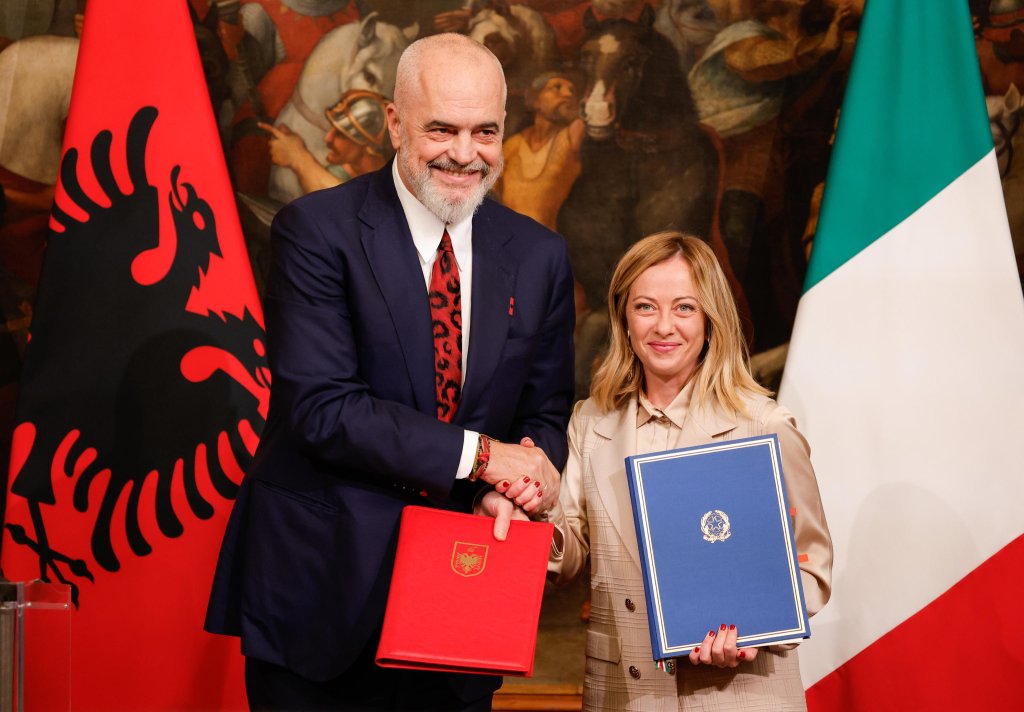
As of Friday afternoon, the Interior Ministry in Rome did not respond to InfoMigrants' request for comment on the IRC allegations.
IOM data shows that between January 1 and March 29 this year, more than 11,000 migrants have arrived on Italy's shores, around a quarter of them from Bangladesh. Last year, Italian authorities registered close to 160,000 irregular arrivals.
Read more: Italian decree curtails rights of unaccompanied migrant minors
'Stuck in an asylum vacuum'
A new online system to apply for international protection police in Milan introduced a year ago did not solve the bottleneck and "introduced new burdens," the IRC says in its 40-page report.
"Today many people in Italy are stuck in an asylum vacuum, without proper documentation, work or accommodation -- caught in a state of limbo that can last for up to eight months," the IRC's press release reads.
According to several sources, including the Asylum Information Database (AIDA), the average processing time for asylum applications in large Italian cities is six to 12 months.
In 2022, the latest figures available according to news agency AFP, Italian authorities examined 58,478 applications for asylum, some of which were submitted in previous years. This was leaving 51,601 applications pending at the end of the year, AFP reported.
For its report, the IRC says it interviewed asylum seekers in Bologna, Florence, Imperia, Milan, Naples, Rome, Trieste and Turin between May 2023 and January this year.

In addition to homelessness, IRC staff allegedly found police demanding documents not required by law, and failure to provide translations. The "sheer volume of asylum applications", with 13,000 filed in January alone, "underscores the pressing need to act", according to the IRC.
Last week, the IRC said 135,820 requests for international protection were filed in 2023 in Italy -- a third of the number of applications Germany saw in the same year.
Founded in 1933 "at the call of Albert Einstein", the IRC currently tries to "help people affected by conflict and disaster" in 50 countries, according to its website.
Also read: 'A predictable failure': New report examines shelter system in Italy
with AFP