
The Irish government has announced major changes to address the critical shortage of accommodation for asylum seekers. It said it will also overhaul its own asylum laws as it opts in to common European standards stipulated in the new migration pact.
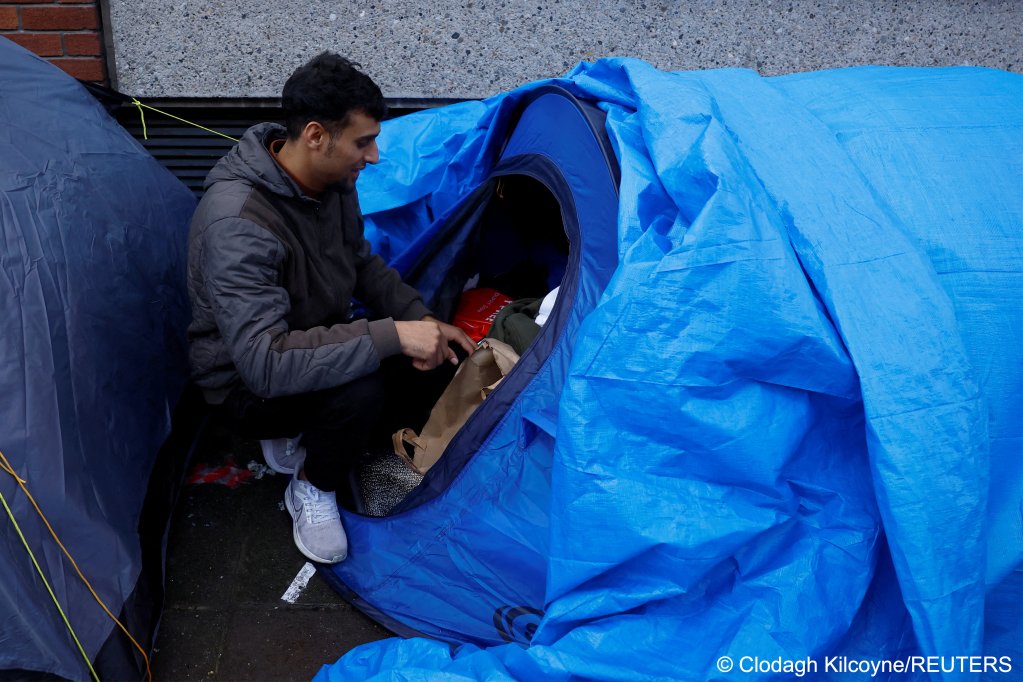
The dramatic shortfall of accommodation for asylum seekers in Ireland has been in the spotlight for some time; on the streets of the capital Dublin and throughout the country, hundreds of people are seen sleeping rough in tents, with 1,517 asylum applicants currently waiting for accommodation, according to the latest government figures.
A general lack of housing, a rise in the number of refugees – most of whom are fleeing the war in Ukraine – and growing xenophobic sentiments have led to a series of anti-migrant protests across the country in recent months, including arson attacks on existing facilities used to accommodate asylum seekers.
The Minister for Integration, Roderic O'Gorman, said this week that the country's inability to accommodate its asylum seekers was a "hugely serious situation."
"It's clear the current system of accommodation isn't working," he announced, adding that it had reached "crisis point."
O'Gorman on Wednesday (March 27) announced a new strategy, pledging to quadruple the number of places in state owned facilities rather than relying on private businesses -- like hotels -- to make up for the shortfall.
The key elements of the government's plan include:
- Prefabricated and modular units on state land
- Commercial buildings to be converted to house asylum seekers
- Private houses and apartments bought by the government
- New reception and integration centers to be built
- Existing 'direct provision' centers to be upgraded
Read more: Ireland: Calls to end controversial 'Direct Provision' system for asylum seekers
More than 90% of accommodation for asylum seekers in Ireland is currently privately-provided, which means the government has little control over the location and quality of facilities.
Upon completion, the changes will see a total of 14,000 beds being provided for asylum seekers in state-run facilities by 2028 -- four times the number previously committed to by the government.
Several sites have reportedly been identified for the new facilities to be built and related assessments have begun, according to local news reports.
Government under pressure
The announcement was welcomed with a mixed reception. Jennifer Whitmore, a Social Democrats MP and spokesperson on integration, doubled down on calls for action from the government:
"We need to see the delivery of those reception centers," she stressed while pointing out that a similar commitment regarding the use of modular homes and other accommodation facilities had already been made several years ago.
Bulelani Mfaco, a former asylum seeker who spent six years in direct provision, said the government failed to deliver on that earlier pledge and he expressed skepticism about whether the newly announced program would make any difference to those living without shelter at the moment:
"I don't really see how the (government's) plan now actually takes the people who are living in tents outside the International Protection Office right now out of the streets," he told the Irish national broadcaster RTE.
Ireland to opt in to EU Migration Pact
Ireland this week separately agreed to sign up to draft changes to EU migration rules known as the New Pact on Migration and Asylum. Ireland and Denmark are the only two countries in the EU with the option to pick and choose from the regulations.
The government said it hopes that opting in to the provisions of the pact will reduce overall numbers of migrants in Ireland, as more asylum seekers will then be subject to accelerated asylum and deportation procedures.
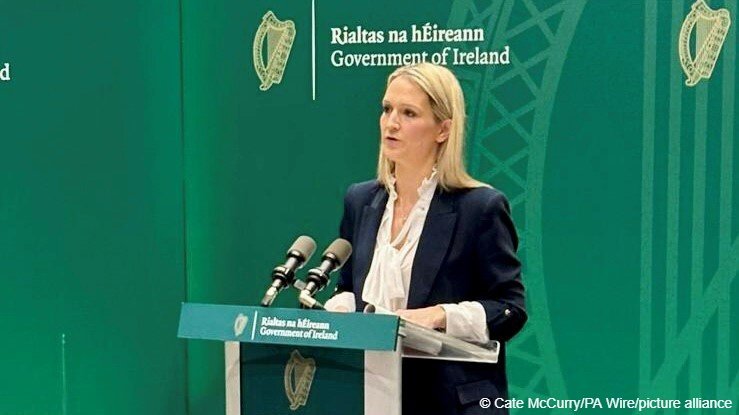
The introduction of the pact also represents the "biggest reform of Irish immigration law in decades," Justice Minister Helen McEntee said during a government press conference, adding that the decision would not affect the right of people in need of protection to claim asylum in Ireland.
"But we do have a lot of people using the international protection system who genuinely do not need it, and we have to make sure that those two are separated," she said.
Read more: Irish PM: 'Push factors' are causing people to migrate
Pact creates fresh concerns
Human rights groups such as HIAS, however, say that according to official statistics, the majority of asylum seekers are indeed fleeing persecution and violence, contradicting McEntee's statement.
The CEO of the Irish Refugee Council, Nick Henderson, said the decision to sign up to the EU pact was "very problematic."
He expressed his concern about a particular provision in the pact, which the government says will be implemented in Irish law: That provision would allow for some categories of asylum seekers to be detained in closed facilities at borders for up to 12 weeks while their claim is being assessed.
"If somebody came to Ireland they would be held in accommodation that they couldn't leave, and then their application would be fast-tracked and they would be asked to leave if they were unsuccessful" said Henderson.

The Irish Refugee Council adds that EU Migration Pact overall has both positive and negative aspects, although the main opposition party, Sinn Féin, has said it was against signing up to the majority of its provisions.
Interviewed on RTE, Sinn Féin MP Matt Carthy said that "(s)etting your immigration and asylum law is a key area of national sovereignty that should be protected," effectively opposing EU-based interference.
He said that Ireland should opt in to just two of the pact's regulations: the ability to return people to the first country in which they applied for asylum, and the expansion of the categories of migrants who will be fingerprinted and checked against the Eurodac database.
However, Justice Minister McEntee has previously criticized Sinn Féin, saying the nationalist party had "no plan" on migration.
The majority coalition government – which believes in the importance of uniform asylum procedures throughout the EU and does not need Sinn Féin's support to commit to the pact – can be expected to implement many of the regulations within the pact in months to come.