
Nearly 9,000 foreign nurses are departing from the UK every year for better-paying opportunities abroad, exacerbating the existing understaffing crisis within the NHS.
The UK is grappling with significant workforce challenges in both the nursing and social care sectors in its National Health Service (NHS), with both sectors relying heavily on migrant workers.
As of June 2023, 18.7% of NHS staff reported a non-British nationality and 25% of care workers were born outside of the UK, according to the Office for National Statistics.
The Guardian daily newspaper now reported that almost 9,000 foreign nurses were leaving the UK annually, exacerbating the NHS's existing understaffing crisis. The largest increase of departures was among overseas-trained nurses with three years or fewer on the UK register.
This trend is now raising concerns about the UK becoming a mere "staging post" in their careers.
Nurses look for better opportunities overseas
The number of UK-registered nurses moving to other countries doubled in just one year between 2021/22 and 2022/23, according to official numbers. The majority of departing nurses are heading to other English-speaking countries like the US, New Zealand, or Australia, where pay scales are substantially higher.
According to OECD data, a nurse in the UK earns on average £36,500 a year (€43,070). While the median annual wage for the equivalent role in New Zealand is $57,000 (€53,100), in Australia $71,000 (€66,463) and in the US $84,900 (€79,060).
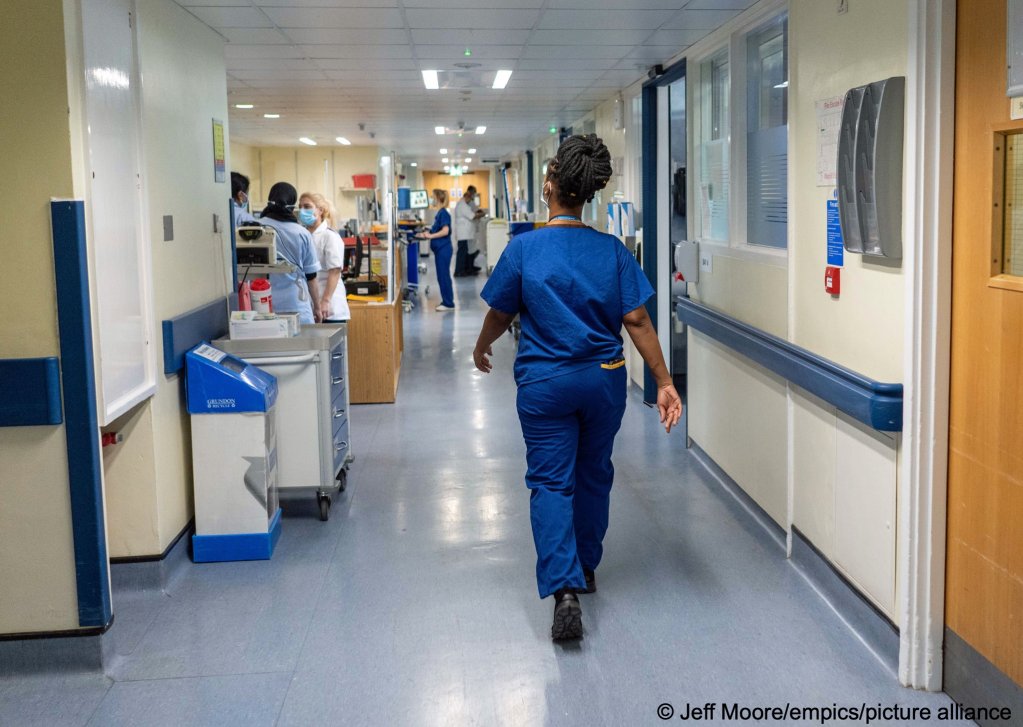
This exodus of healthcare professional is likely the result of a continuous decline in nursing pay in the UK since 2010, rendering the profession less competitive globally.
The Health Foundation report revealed that last year that 12,400 nurses working in the UK sought to obtain a so-called certificate of current professional status (CCPS), which is required to work in another country.
Also read: UK: Visa rules tightened as government pledges to get even tougher on immigration
UK losing ground in attracting skilled workers
Experts have expressed alarm over the NHS losing ground in global recruitment due to these challenges in pay and work conditions. The governmental health service is currently grappling with approximately 40,000 nurse vacancies across the UK and is therefore heavily reliant on international recruitment, but might be losing ground in the global talent acquisition competition.
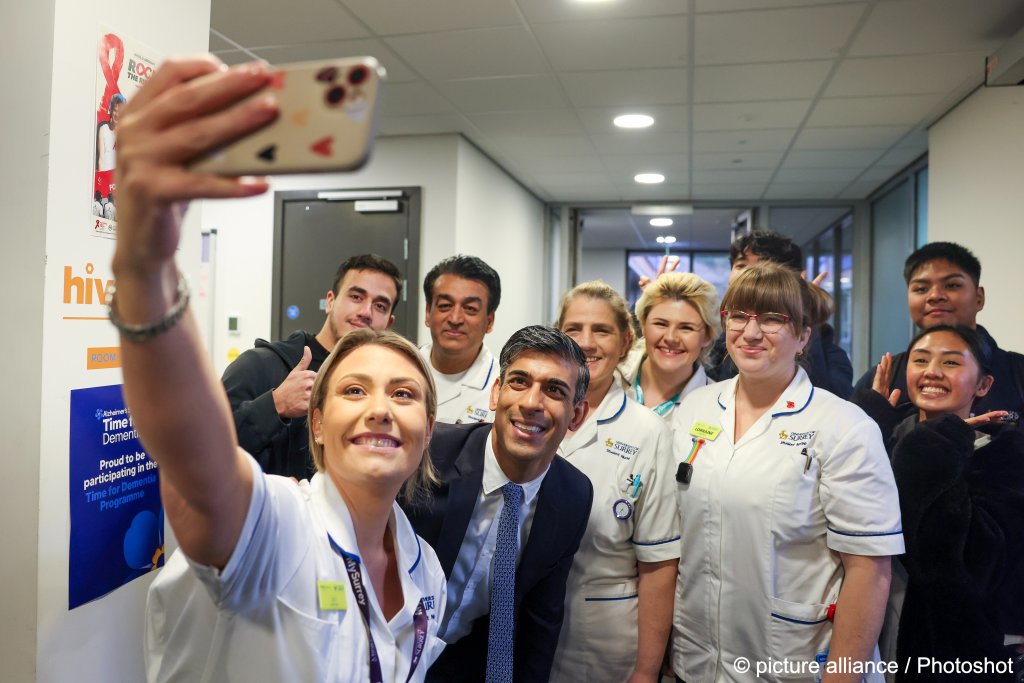
The Health Foundation's report estimates that the financial toll of this brain drain costs the NHS around £10,000 to replace each foreign recruit who subsequently departs.
While the Department of Health and Social Care disputes the Health Foundation's figures, the challenge of retaining nursing talent remains critical to ensure the sustainability of healthcare services in the UK.
Also read: UK bans migrant care workers from bringing family members
Migrant care worker exploitation
The UK's social care sector meanwhile is also facing severe shortages, with an estimated 152,000 vacancies. Like in many other European countries, the sector is struggling to meet rising demands amidst an ageing population.
This has led to an increased reliance on migrant workers to fill essential positions in care homes and other related vital services.
A recent investigation by The Bureau of Investigative Journalism (TBIJ) found that the shortages in the social care workforce are not new, with issues arising from the UK's austerity measures starting in 2010.
These were further exacerbated by the COVID-19 pandemic, including higher workloads and inadequate support for self-isolation or sick leave, according to the report.

A recent report by Skills for Care found that the sector will require an additional 440,000 roles by 2035 to meet growing demand, and that continuing international recruitment drives will remain essential.
Experts caution, however, that the recruitment of foreign workers alone cannot solve the sector's chronic problems, which they say chiefly stem from poor pay and working conditions.
Also read: Quiet exploitation: Foreign health and care workers in the UK forced into silence for visas
Criticism of international recruitment drives
The COVID-19 pandemic has intensified international healthcare recruitment, with many developed countries like the UK, Australia, and the US launching hiring programs due to increasing reports of domestic workforce burn-out and a growing demand for healthcare professionals.
International nursing leaders have criticized wealthy countries, including the UK, for engaging in what they refer to as a "new form of colonialism" resulting from the recruitment of large numbers of nurses from poorer nations.
This practice exacerbates staffing shortages in those countries and compromises patient care.

The UK government says, however, that it follows ethical recruitment practices as well as the World Health Organization rules, which are aimed at preventing staff poaching though experts believe that this cannot stop brain drain in source countries.
The combined challenges of nursing shortages and exploitation of migrant care workers underscore the urgent need for comprehensive solutions in NHS, away from a primary focus on labor migration, which not only is costly and unsustainable but also results in low retention rates.
Also read: UK: Survey of 200 migrant domestic workers reveals extent of employer abuse