
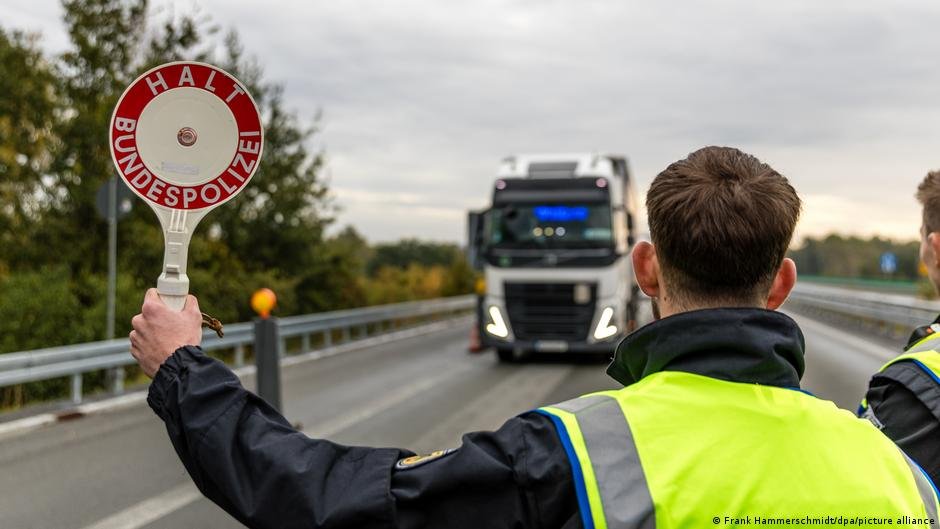
The German Interior Minister has announced that the country will introduce additional border checks at all German borders while it hosts the UEFA Euro 24 football championship this summer.
"We will carry out temporary border controls at all German borders during the tournament in order to prevent possible perpetrators of violence from entering the country," Germany's Interior Minister Nancy Faeser told the regional newspaper the Rheinische Post on Tuesday (March 26).
Germany already has temporary border controls in place at its land borders with Poland, the Czech Republic and Switzerland. These have been in place for some time now, and were renewed on March 16 to continue until June 15.
In November 2023, Germany renewed border controls on its land border with Austria, which will be in place until at least May 11.
France meanwhile has border controls on all its internal and external borders in place until at least April 30, which includes its land border with Germany.
Denmark also has controls in place on its land border with Germany, as well as on its ferry connections to Germany. These are due to last until at least May 11, and were last renewed in November 2023.
Millions of fans and spectators expected to watch matches
The UEFA Euro 24 football tournament is due to kick off on Friday, June 14 with a group stage match between Germany and Scotland. Since this is just two days before the aforementioned temporary border controls are due to expire, Germany decided to renew the controls at least for the duration of the championship, whose final will take place on July 14.
With the summer season also taking place at that time, Germany might keep the temporary border controls in place for several months longer.
The UEFA Euro 24 tournament is set to attract 2.7 million fans to stadiums across the country, reported Reuters, as well as up to 12 million people expected to attend public viewing events in town squares and other venues.
According to European Union rules, the suspension of the Schengen free travel zone is allowed for up to six months at a time due to extraordinary circumstances.
Some countries in Europe, however, have been continually renewing these suspensions for years at a time. Controls between Germany and Austria, for instance, have been continually renewed since 2015.
The suspension of the free travel zone is meant to be applied only as a "last resort," notes the EU's department for Migration and Home Affairs.
However despite this directive, there are currently eight countries in Europe which are operating border controls with their various land neighbors. These are Germany, Italy, France, Norway, Sweden, Austria and Slovenia.
Also read: Germany attributes fall in irregular migration to stricter border controls
Various reasons cited for temporary border controls
Many of these temporary suspensions have been in place for much of the last year; the legal reasons cited by various governments for the border controls include "high level of migrant smuggling activity;" "the impact on security and migration in the Schengen area due to the security situation in the Middle East;" "an increase in apprehensions in the Western Balkans;" "extensive secondary migration;" "pressure on the asylum reception system;" "increased threat of violence within the EU following the attack on Israel;" "threats to public order and internal security in the EU;" and "significant threat to public policy and internal security by terrorists and organized crime."
Interior Minister Faeser said the controls during the tournament in Germany were necessary to provide the best possible protection during such a major international event, reported the German press agency dpa.
Faeser added that Germany needed the border checks to protect itself against extremists, hooligans and other perpetrators of violence, as well as to provide network security against cyber attacks.
Some German states, such as Germany's most populous state North Rhine-Westphalia (NRW), said they would also be upping their own security measures ahead of the tournament.
Herbert Reul, NRW's Interior Minister, told the state broadcaster Deutschlandfunk radio on Tuesday that they would be setting up an international police center in the town of Neuss, located close to the state's political capital, Düsseldorf
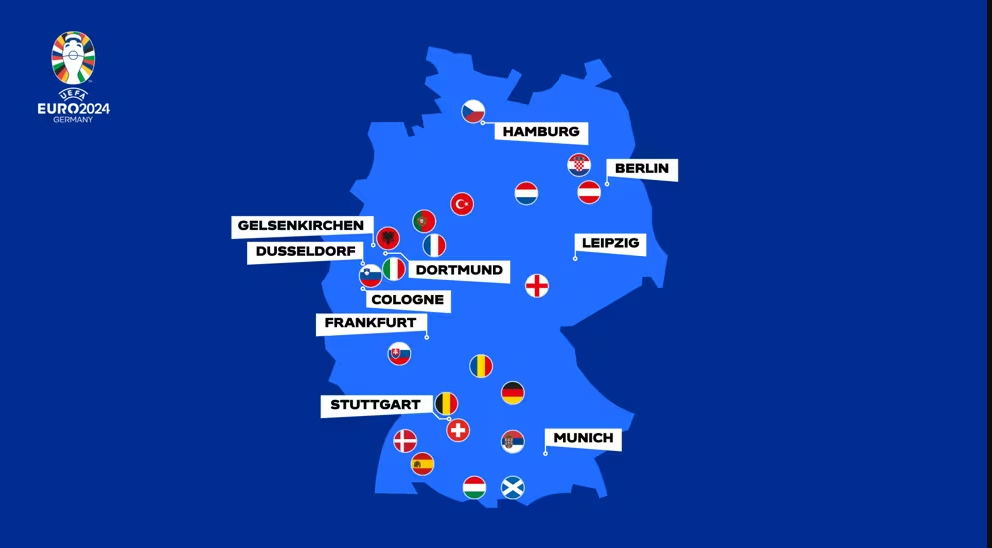
Matches are due to be played in four different stadiums in NRW during the tournament, in the cities of Dortmund, Cologne, Gelsenkirchen and Düsseldorf.
Other state interior ministers, like Armin Schuster in Saxony, told the government broadcaster ARD that he believed his state was well-prepared for any potential threats.
"I don't want to spread alarm," Schuster told ARD, "I would rather say that we have been prepared for such scenarios for some time, including in terms of equipment."
Heightened security
A spokesperson for Germany's federal Interior Ministry told Reuters on Monday that the government had not yet decided on the specific duration of extending temporary border controls once the tournament had finished.
France, which already has controls at all its borders, is expected to instigate similar levels of security during its hosting of the Olympics later in the summer.
Also read: Germany prepares to widen fixed border checks
With Reuters, AP and dpa