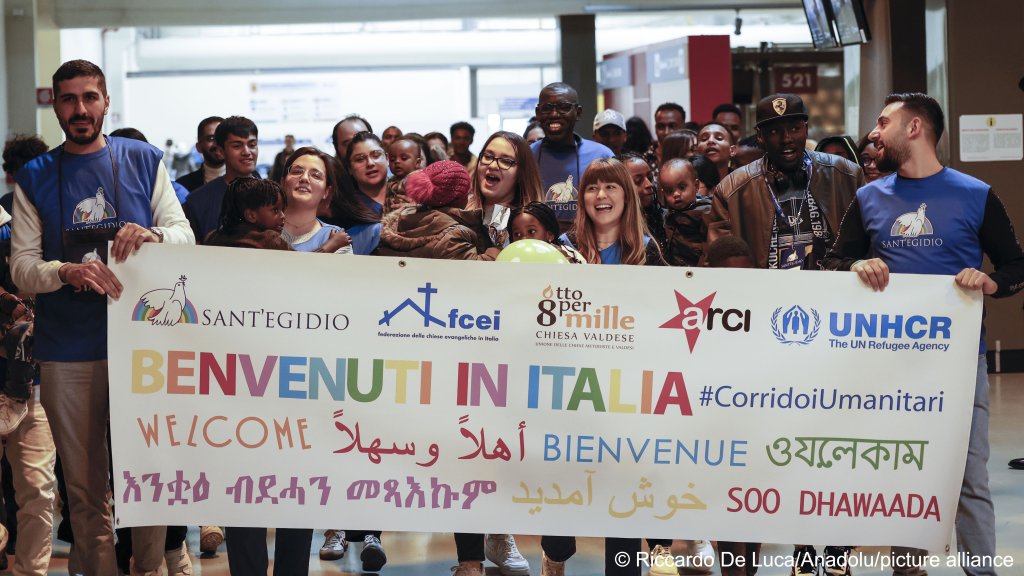
A humanitarian flight landed in Rome on March 5 carrying 97 refugees evacuated from Libyan detention centers, where they suffered abuse and torture.
The transferred migrants, who were of African, Palestinian and Syrian origin, had suffered torture in the Libyan detention facilities. Some were in extremely fragile health condition.
Their arrival was made possible thanks to an agreement signed last December by a number of different Italian religious, cultural and political organizations.
Overall, the agreement stipulates the transfer of some 1,500 refugees in need of international protection from Libya to Italy over three years.
These migrants will be distributed between facilities of Italy's Reception and Integration System (SAI) and associations such as Sant'Egidio and the Federation of Evangelical Churches.
The transfers will be facilitated in accordance with the humanitarian corridors model, which promotes immediate integration. For minors this means attending school, while for adults it means Italian language classes and eventual integration into the Italian labor market.
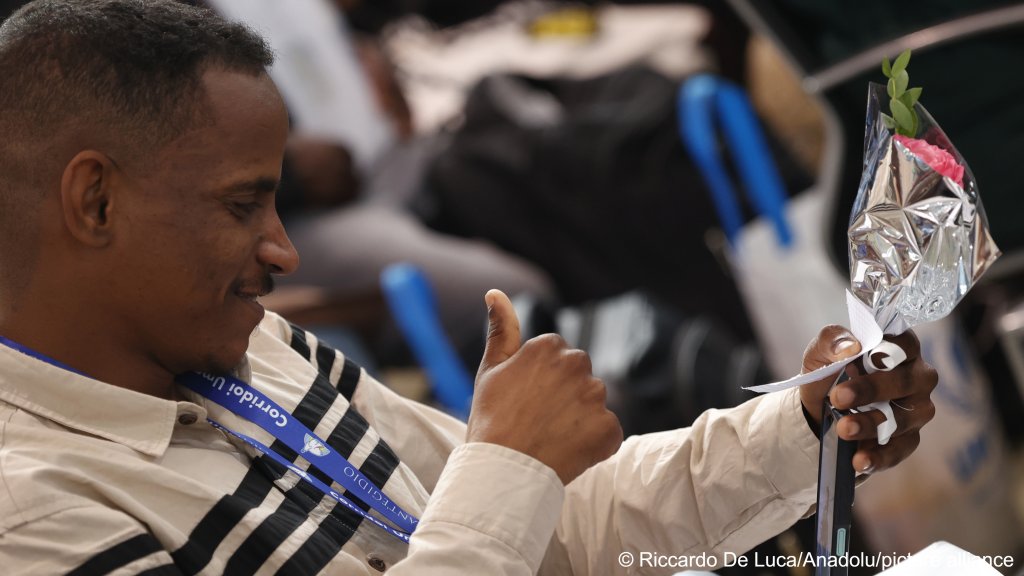
A warm welcome at the Rome airport
A number of individuals greeted the refugees at the airport, including: UNHCR representative Chiara Cardoletti; Marco Impagliazzo, president of the Community of Sant'Egidio; the Italian Ministry's Laura Lega; Filippo Miraglia, ARCI's national representative for migration and Valentina Setta, director of the Italian Ministry of Foreign Affairs and International Cooperation.
"I thank the Italian government for allowing us to sign this protocol which represents for us an indispensable tool. There is an alternative to deaths at sea, and there is an alternative to the violence that people suffer in Libya," said Miraglia.
"Today this alternative is open only for a few people, but we will do everything possible to increase this number, and the States must take responsibility for the crossing of borders safely and legally, because this is the only way to fight human traffickers and the violence that people suffer in Libya," he continued.