
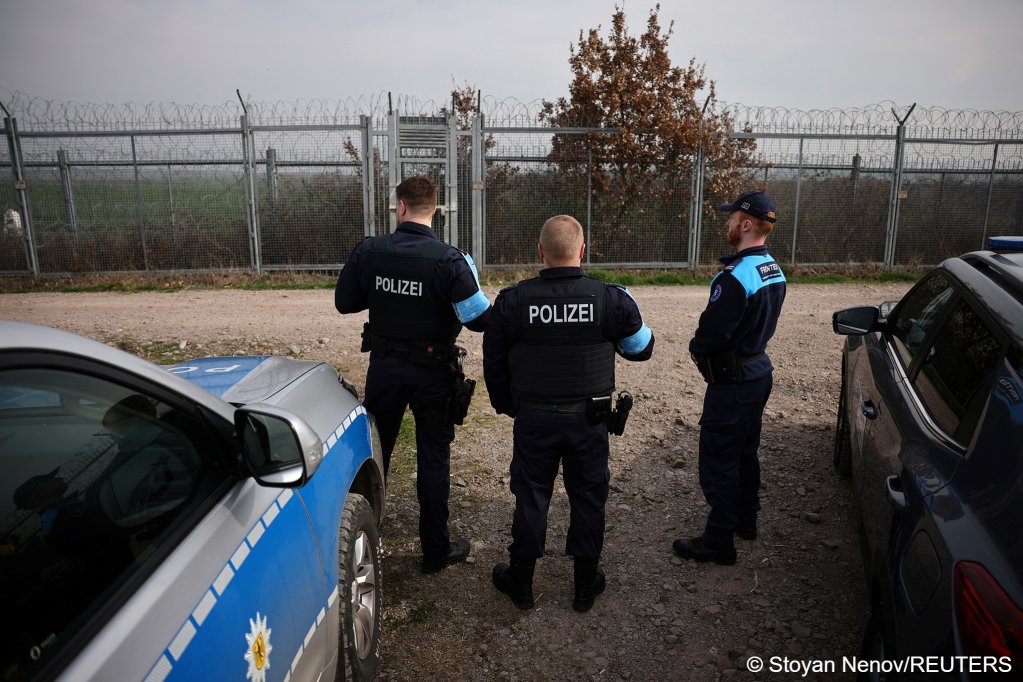
At least 500 extra Frontex officers are to be sent to help guard the EU's external border in Bulgaria. This comes amid fresh allegations of 'grave and persistent' human rights violations in the region.
From March 20, Bulgaria will triple the number of Frontex officers currently patrolling its border with Turkey. On Thursday (February 29) in a press conference, Frontex’s director Hans Leijtens announced that the European Border Agency would send a further 500 to 600 officers to Bulgaria, reported the German press agency dpa.
"Bulgaria has a very important role in guarding the EU’s external borders," explained Leijtens during the press conference.
In 2017, Bulgaria erected a 234-kilometer metal fence along much of its border with Turkey. The fence was funded by the EU. Barbed wire tops the fence and at points there are thermal imaging cameras to try and pick out anyone attempting to cross.
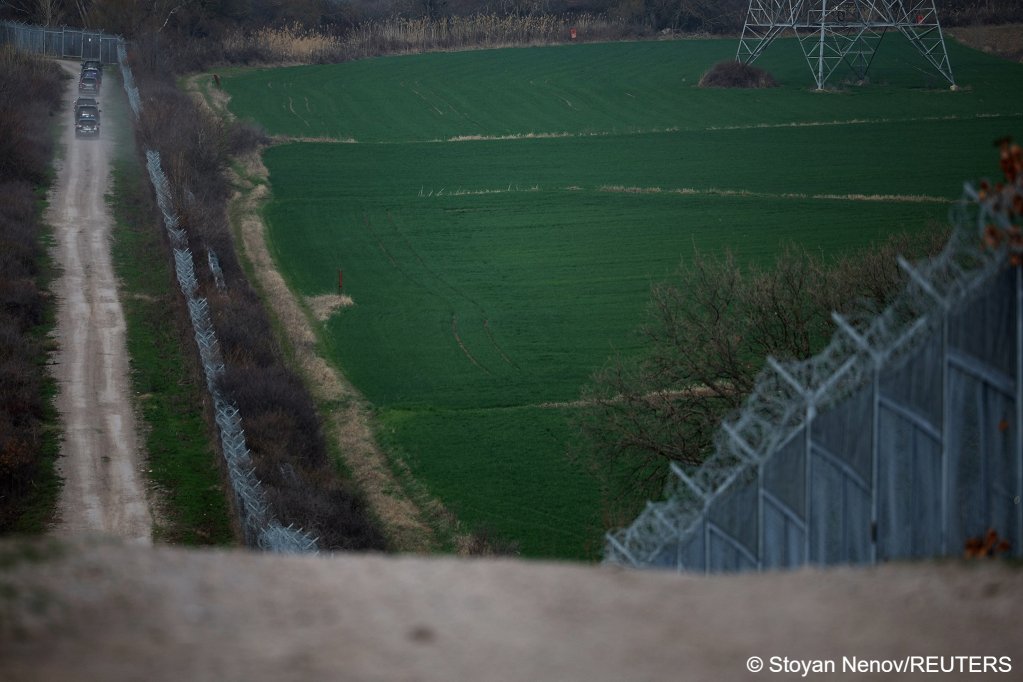
In spite of the checks, however, migrants using smugglers still manage to cross from Turkey into Bulgaria to begin the so-called Balkan route towards Western Europe. Most then cross from Bulgaria into Serbia, which shares a 341-kilometer border with Bulgaria.
Bulgaria-Turkey border one of EU's 'most pressing issues'
In February 2023, Ursula von der Leyen, the EU Commission President, called the border between Turkey and Bulgaria one of the EU's most "pressing issues."
Frontex told InfoMigrants last August that it had 232 officers deployed at the Bulgarian border.
A report published this week by the Balkan Investigative Reporting Network (BIRN) claims that Frontex' support comes despite its being aware of Bulgaria's poor human rights record on its border with Turkey.
BIRN said it has seen a 2022 report by an "unnamed Frontex officer" who had been posted to the area, alleging that migrants had been stripped, robbed and even "forced to swim back to Turkey" by Bulgarian border officers.
Other internal Frontex and European Commission documents seen by BIRN also "point to serious neglect on the part of not just Bulgarian authorities but EU officials as well when it comes to addressing evidence of grave and persistent human rights violations on Bulgaria’s borders," the BIRN report said.
Bulgaria accused of pushbacks at border
Migrants and humanitarian organizations working with them have repeatedly raised allegations of pushbacks and violence at the Bulgarian border – charges the Bulgarian government continues to deny.
In August 2023, Bulgaria's interior ministry told InfoMigrants that officers perform their duties in accordance with the principal of non-refoulement and that many claims of pushbacks are unfounded.
"[The Border Police General Directorate] doesn't tolerate violence against persons illegally crossing the border, and any report containing sufficient information is investigated thoroughly and accordingly," the ministry said.
It added that migrants are trained by people smugglers to "whistle-blow" in order to compromise the system, but did not elaborate.
"The migrants themselves do not want to be detained by the border police patrols, due to the fact that they are aware that in case of detention, they must be registered in EURODAC and AFIS (automated fingerprint identification), and even if at a later stage they manage to reach their desired destination, they are subject to return under the provisions of the Dublin Regulation or bilateral readmission agreements."
Frontex protects European borders and values, says agency's chief
Leijtens says that the presence of Frontex officers helps the agency protect not only Europe’s borders but also European values, the Bulgarian news agency BTA reports. He has promised that human rights experts will be among the new Frontex officers.
At the end of March, Bulgaria, along with Romania, will partially join the EU’s border free-Schengen area. However, their land borders will still be subject to checks, unlike full Schengen members. Leijtens told BTA that he promised his "full support" for Bulgaria to accede all the benefits of the Schengen zone.
Bulgaria had "an order" in terms of what it needed to do to clinch Schengen membership, Diana Radoslavova, director of the Sofia-based non-profit Centre for Legal Aid "Voice in Bulgaria" told BIRN.
"It is the border which has to be effectively closed," she said. "In order to fulfil this order we [Bulgaria] do whatever it takes, in extreme violation of human rights."

Frontex recorded 380,000 irregular border crossings across the whole European Union in 2023. This was the greatest number since 2016.
The EU agency held a conference in Krakow, Poland this week on the training of its border guards. Leijtens told the conference participants: "We ...need to understand how we can use new technologies to better train our border guards, and especially because Frontex will employ 10,000 new border guards by 2027."
With dpa and Reuters