
The documentary film 'A nord di Lampedusa' (North of Lampedusa) was shown in Rome on February 14. The film follows an Italian who helped rescue migrants from a shipwreck in 2013 and his attempts to meet up with some of those he rescued.
The documentary film 'A nord di Lampedusa' follows Vito Fiorino, an Italian man as he journeys through northern Europe trying to find some of the Eritrean migrants he helped rescue after their boat wrecked on October 3, 2013 off the coast of the Sicilian island Lampedusa.
The film was shown in Rome in a room off Italy's lower house of parliament by documentary makers Alessandro Rocca and Davide Demichelis. The protagonist, Vito Fiorino rescued 46 men and one woman from the shipwreck which claimed the lives of 368 people.
Demichelis accompanied Fiorino during his journey, helping him communicate in English. The two of them traveled to the Netherlands, Sweden and Norway to meet up with some of those he helped save.
'Finding the sons'
Hugs and smiles are exchanged by Fiorino and the Eritrean citizens he rescued on October 3, 2013. In the intervening years, they have found work and built families. Many of them though, see Fiorino as a second father or grandfather.
"Finding words after seeing this film is difficult because I feel like everything happened this morning", said the road movie's protagonist. "Then I realize how beautiful it can be to tell the story, involving people, but especially the kids who are listening to me today and at school meetings, and finding these sons who have decided to call me with a word I didn't know before: father. I have to say that this makes you live in a wonderful way," he told those who attended the presentation, including several students.
Fiorino was born in the southern Puglian city of Bari in 1949, remembered his own situation as a migrant in Milan, northern Italy. "I was only 11-months-old when my mom moved north. We were called 'terroni' (an offensive term to describe southerners) and invaders, although we had moved within the same nation. I experienced multi-regional (school) classes, today there are multi-racial ones. I ask kids to go back to the values that make us understand the dignity of human beings," he said.
Back to Sicily
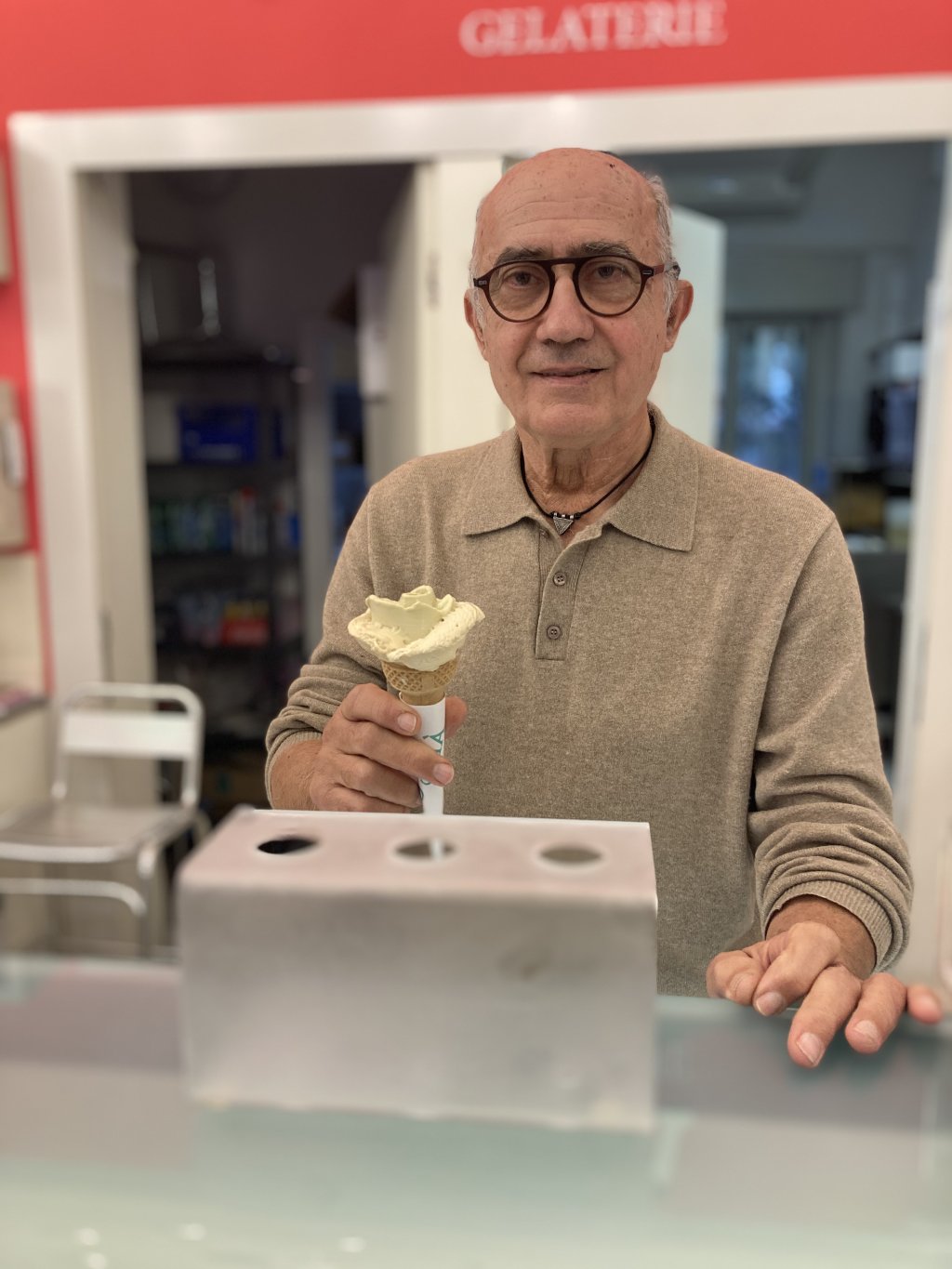
In 2000, Fiorino decided to move back down south, although this time to Sicily, where he opened up an ice cream parlor. His desire to help migrants has never dulled. Last year, he hit the headlines again after staff at his ice cream parlor started distributing free ice cream to migrants who arrived on Lampedusa and often were expected to sit for hours in the sun with little food or water.
The film's makers are hoping that their film will help make create a spotlight on the issues it raises, as well as the rescued migrants themselves. But for that, they need to acquire a distributor for the film to be more widely seen. "We would like it to go everywhere and we want it to be seen as much as possible", said Demichelis, who confirmed with Rocca that they have been in contact with State broadcaster RAI for this purpose.
"What drives you to tell this type of stories is the need to bring them to the attention of the highest number of people possible", stressed Rocca. "Mainstream information lets us see a little piece of a story but we don't see the entire lives of these people, who should be allowed to arrive with a visa they don't have. Why is my passport more valuable than that of an Eritrean citizen? These people are affected by famines, by the climate crisis and we need to change how we talk about their lives," he added.
More focus on the difficulties facing migrants in Europe
In talking more about their lives, and creating a fuller picture, the fllmmakers hope that they can raise awareness around the issues facing migrants in Europe, in particular Eritrean citizens.
This is a concept stressed by Ghirmai Tewelde, a member of the Eritrean diaspora: "Youths run away because Eritrea is an open-air concentration camp, they risk everything because there is no alternative. After finishing compulsory military service, there is no freedom or choices ahead of us," Tewelde added.
Tewelde thinks there needs to be more nuance in how Europe looks at migration. He hopes the film will go some way to changing the semantics of migration. "Integration must be replaced with interaction," because in the second term "there is the dynamic idea of an exchange" between people, he concluded.
The documentary was co-produced by the collective Hic Sunt Leones and by the Rimini-based Gruppo Icaro and made with the support of Fondazione Compagnia di San Paolo, with the contribution of Turin's Gmc Travel.