
Germany’s development minister visited Nigeria to open the third in a series of new migration centers aimed at offering advice and guidance to people would would like to work in Germany. The center will also help support Nigerians who have been sent back from Germany.
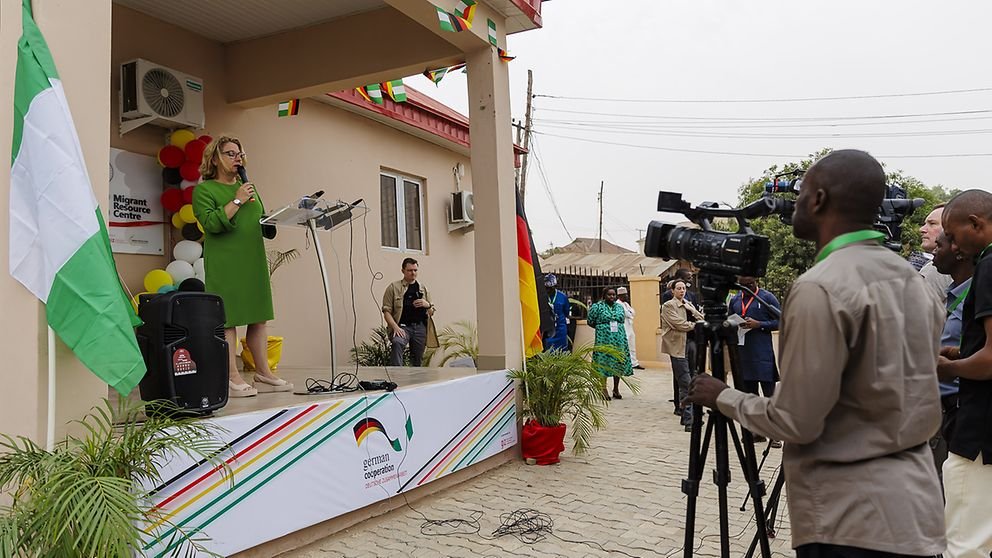
Germany’s development minister Svenja Schulze visited the Nigerian capital Abuja on Tuesday (February 6) to inaugurate a new "migration center" in the nearby town of Nyanya.
The new facility marks Germany's third migration center in Nigeria. Others are located in Benin City and Lagos.
"Nigeria has an interest in opening regular routes for employment migration. We want to reduce irregular migration even further. Working together can be successful, when we give out the correct information to people. There are lots of young, motivated people in Nigeria who are thinking about migrating.
We want to work with Nigeria to reach those people so that they can make the best decisions for their future, not on the basis of Fake News or unrealistic expectations. It is better for everyone if we can reduce irregular migration and instead open more routes to legal migration," Schulze said at the opening, according to a press release from the German Federal Ministry for Economic Cooperation and Development (BMZ).
Acquiring skills and education to open up legal routes to Europe
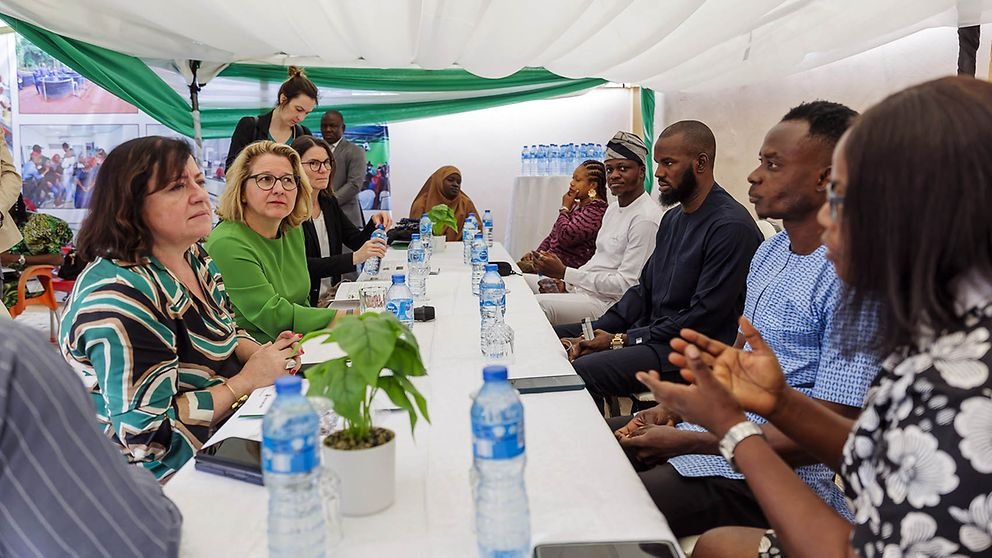
The center’s mission is twofold: First, it will offer advice to prospective Nigerian employees who would like to find work in Germany. Second, it seeks to provide support to Nigerians who had to leave Germany due to expired or rejected visas.
The BMZ press release explained that information on training programs and even language courses would also be offered at the center, and that employees will seek to make prospective migrants aware of the dangers inherent to clandestine routes to Europe.
The center will help inform people of the types of skills needed to fulfill job vacancies in Europe, according to BMZ. However, it will also try to offer resources to better fill vacancies in Nigeria. For instance, Nigeria needs more healthcare professionals, stated the press release.
Acquiring the right skills will open up legal routes -- not only to Europe, but also to legitimate jobs in neighboring countries too, the BMZ said.
Returnees face difficulties
Starting over is often very difficult for returnees. The individual and their family may face hefty debts incurred by the migration, which the returnee may not be able to feasibly repay upon their arrival home. This situation may cause feelings of anger, shame and prejudice.
Many people who might have been gone for several years and suffered traumatic experiences along the way often find they are shunned by the friends and family they return to. And the problems that prompted them to leave -- like unemployment -- can rear their heads again very quickly.
Also watch: What's behind the Nigerian urge to 'japa' or migrate?
Supporting returnees is an important part of many European countries’ migration policies. It is often written into agreements signed with countries of origin to facilitate the returns in the first place. The migration centers are part of Germany’s own strategy to sign more return agreements around the world.
Africa's most populated country, expected to double by 2050
With a population of more than 220 million, Nigeria is Africa’s most populated country -- and it's growing. The United Nations expects the Nigerian population to have doubled to around 400 million by 2050.
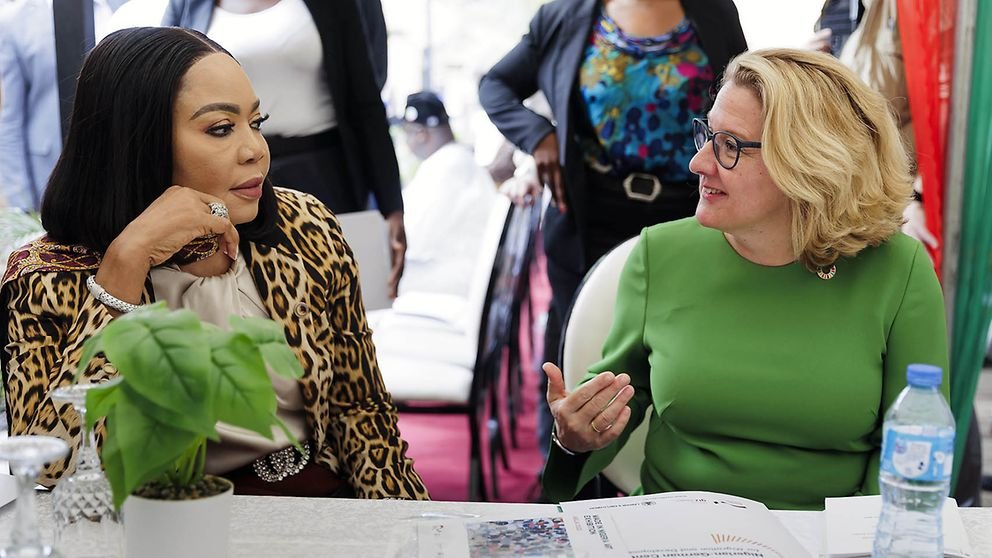
"Germany and Nigeria can both benefit from this situation, when we collaborate more closely on migration policy," explained Schulze to reporters.
German Chancellor Olaf Scholz visited Nigeria and the region for similar reasons at the end of October 2023.
Because of the country's size and potential for growth, Schulze told reporters, "solutions to global problems will in the future depend more and more on countries like Nigeria. At the same time, Nigeria will hold huge significance for an export-oriented country like Germany."
Germany has also built similar migration centers in Egypt, Ghana, Iraq, Morocco, Pakistan, Tunisia and Jordan. Preparations have also begun for one in Indonesia, reported Reuters.
While in Nigeria, Schulze hoped to address several important issues with her counterparts, including addressing recent military coups in Nigeria's neighboring states Mali, Niger and Burkina Faso.
A week ago, the new regimes stated they would withdraw from the ECOWAS community governing the economies of West African states.
Regime leaders said they were withdrawing because other ECOWAS countries had come under the influence of foreign powers threatening the sovereignty of its members, dpa reports. Their withdrawal may have also come in response to sanctions ECOWAS imposed on those countries following the coups.
On her visit, Schulze met with ECOWAS President Omar Touray in Abuja.
In statements made before her trip, Schulze said she was hoping to encourage leaders in the region “not to break any more china" and to try and limit the damage already created.
Niger, Mali and Burkina Faso are among the poorest countries in the world. The new military regimes in the countries have also sought to distance themselves from the West, and in particular from their former colonial ruler France. But this distance has pushed them closer to the embrace of Russia.
All three countries, but particularly Niger, are also seen as transit countries for migration, many of whom set off from Nigeria, but also fellow West African states like Senegal, Ivory Coast, Guinea and Gambia. This is one of the main reasons Western states, like Germany, are working hard to try and mend bridges between the neighbors and offer support to legitimate governments.
With Reuters, dpa and AFP