
For people on the move, smartphones are vital possessions, said to be 'more important than eating'. Yet in a largely hidden and at times unlawful practice, migrants are routinely forced to hand over their phones or are only allowed restricted use.
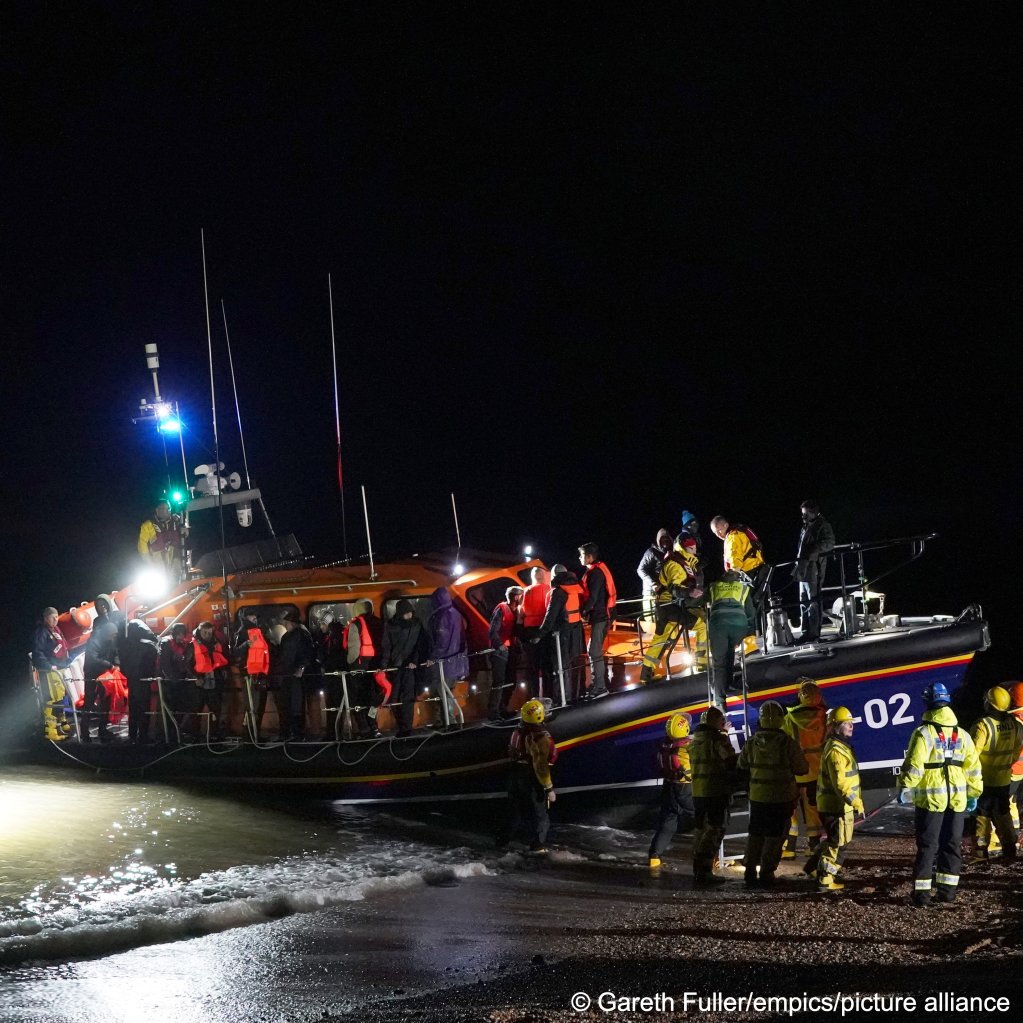
In November 2021, a young man from Afghanistan spoke about how he had reached the UK after a dangerous 12-hour crossing by boat from France. "Women and children were crying. My heart was crying," he told The New Arab, a news outlet.
The most distressing thing of all upon his arrival was having his phone confiscated, which left him unable to let his family know that he was safe. Less than two weeks later, 27 people lost their lives attempting the same journey.
It had been a similar story for thousands of people who reached the UK by boat in 2020 and, in a blanket policy by the Home Office, had their phones confiscated without being given the chance even to note down the contact details stored in the devices, let alone call their loved ones to say they had arrived safely.
"Taking away someone’s phone took away a lifeline, in fact, many lifelines," said Naomi Blackwell from the Jesuit Refugee Service, which helped to bring a legal challenge against the practice in the UK.
"People’s contacts, photos of loved ones, medical certificates, documents (…). All this was lost. It was truly crushing for the individuals affected," Blackwell wrote in an online post in 2022.
Mapping restrictions
Migrants elsewhere in Europe have also spoken about similar experiences. According to a report recently published by PICUM, an NGO in Brussels, having smartphones confiscated by authorities is relatively common for migrants who are in so-called administrative detention – usually either because they recently entered a country without a visa or because they have been issued with an order to leave. This means that people are deprived of their phones even though they have committed no offense and are not being held in a prison.
In Europe there is no single regulation on the use of mobile phones in immigration detention, and the extent of restrictions varies from state to state, from complete prohibition in the Netherlands, to no limits in Finland.
Some of the harshest practices are to be found in the UK, where personal smartphones are systematically confiscated upon detention. Migrants who are subsequently placed in administrative detention are allowed to use a phone without internet or camera, while those held in prisons have limited access to landline phones.
The picture is different again in Austria, Belgium, Bulgaria, France and Poland, the PICUM researchers found. In these countries people in immigration detention can keep and use their own mobile phones, but only if they have no built-in camera. This of course rules out most smartphones and amounts to a de facto ban.
Some countries limit the amount of time asylum seekers in immigration detention are allowed to use their phones, as is the case in Portugal and in Spain.
In Belgium, where immigration detainees have to pay for calls out of their own pocket, many cannot afford to do so.
"Sometimes what we see is that people receive a limited allowance, like 5 euros per week, and if you are calling a country in the Middle East or Africa, you might be able to speak to someone for a few minutes before your credit runs out," said Silvia Carta, an advocacy officer at PICUM and editor of the report.
Carta adds that there is a big difference between a migrant’s own phone and one that is given to them as a substitute in detention.
"A personal mobile phone is an important and core thing that the person has that contains their individual 'virtual belongings'," she said. "It also creates a communication channel which wouldn’t be as easy to use if the person could only access a phone twice a week, for example, in order to make phone calls."
Practice often unlawful
The confiscation of migrants’ mobile phones has been getting more attention among refugee rights and civil liberties groups in Germany. Here, authorities are legally permitted to take and analyze data from phones belonging to asylum seekers who arrive without any form of identification.
The German administrative courts have agreed that this step should be taken only as a last resort, though new legislation has since been passed allowing German authorities to commandeer migrants’ phones and extract their data without having taken any other steps to establish their identity.
Much of the data stored on smartphones is very intimate, says Sarah Lincoln, a lawyer at the Society for Civil Rights (GFF). "The search and inspection of mobile phones represents a particularly serious and extensive encroachment on the privacy of those affected," she told InfoMigrants by email.
In other situations where migrants’ phones are confiscated, such as when they cross a country border, the justification is generally given that police are looking for evidence of smuggling or trafficking networks.
When the 26-year-old Afghan man who had managed to cross the English Channel in late 2021 asked to have his phone back temporarily to call his parents, his request was denied. According to The New Arab, he was told by the Home Office that phones were confiscated as part of investigations into the "organized crime group involved in the facilitation [of irregular immigration]."
The seizing of a migrant’s phone containing their contacts, translation apps, maps, scans of important documents, information and evidence needed for their asylum procedure can be disastrous, according to Lincoln. Even if the migrant themself is not accused, their phone is often not returned for a year or longer, if it is returned at all.
"It is completely disproportionate to keep the phones for so long. [The person’s phone] is often irreplaceable. And in most cases they don't have the money just to buy a new one," said Lincoln.
The practice of confiscating phones at the border is also likely to be unlawful in many cases, especially if there is no connection to trafficking, she added.
The actions of authorities in taking migrants’ mobile phones have in fact been found to be in breach of migrants’ rights and not in line with national laws. For example, an Italian court decided in the case of a young Tunisian asylum seeker that restricting his access to his mobile phone constituted a limitation of the right to freedom of communication.
In that case, after arriving in Lampedusa in 2020, being wrongly age-assessed as an adult, detained and stripped of his phone, the young man had been unable to contact his family or his lawyer. The court ordered that his phone be returned.
Migrants in a 'twilight zone'
The use of personal smartphones to document conditions in detention centers as well as to record the treatment by authorities of people on the move has been crucially important in recent years. And the continuing practice of taking away or restricting detainees’ use of mobile phones means they cannot easily share information about what is going on in administrative detention.
This is no accident, Carta says. "If people are held in decent conditions there shouldn’t be anything to hide. However, often the use of cameras is prohibited exactly for these reasons, so that people cannot show what is wrong in these centers."
Several NGOs, like Detention Action, which supports people in immigration detention in the UK and Stichting LOS, a migrant welfare organization in the Netherlands, want to bring attention to conditions in detention facilities. The two groups have set up hotlines so that detainees can call outside the centers free of charge.
Stichting LOS has also established a system to collect complaints – also registered under its hotline number – which it hopes will lead to greater awareness of conditions of detention and help to bring undocumented migrants out of what it calls the "twilight zone of society."