
As the UK's Rwanda legislation continues to be debated in Parliament, the President of the European Court of Human Rights reminded the UK of its "clear obligation for states to comply with any interim measures" issued by the court.
The UK plans to send asylum seekers arriving in the UK to Rwanda for processing. This week, the government's latest attempt to make this plan legal via new draft legislation has progressed to Parliament’s upper house, the House of Lords. But as the debate continued, a diplomatically worded, but cast-iron reminder of the UK's international legal obligations came from the President of the European Court of Human Rights (ECHR) in Strasbourg.
In a question and answer session at an annual press conference on Thursday (January 25), the President of the ECHR reminded the UK, and all other states, of their legal obligations to comply with European law if they are signatories of international human rights conventions, which the UK is.
Also read: British government pledges to push through Rwanda plan at all costs
"There is a clear legal obligation for states to comply with rule 39 measures," stated the President of the ECHR, Síofra O’Leary. Her statement came in answer to a question from journalists about how and whether the UK would be, could be, forced to comply with any future judgements issued by the ECHR in relation to its current, or future legislation regarding Rwanda, and any possible infringement of human rights, as a signatory to the international conventions on human rights.

ECHR blocks first Rwanda flight taking off in June 2022
Famously, in June 2022, the ECHR issued a judgement under Rule 39, which effectively blocked the first flights from the UK taking off for Rwanda.
Since then, the UK has failed to get its Rwanda policy off the ground. In simplified terms, the latest legislation proposals are aiming to be able to enshrine in legislation that Rwanda is a safe country, and therefore there can be no legal impediment to sending people there to have their asylum claims processed. But that legislation would have jurisdiction over UK courts, but not a European one like the ECHR.
That is perhaps why some right-wing members of the Conservative party, including former Home Office ministers Suella Braverman and Robert Jenrick, have raised in the past the prospect of somehow enshrining in law in this bill a way to ignore any European judgements, or even exiting from binding human rights treaties. Those kinds of measures, they argue, would allow them to "close any potential legal loopholes" that would prevent flights from taking off to Rwanda in the future.
UK court also ruled current scheme 'unlawful'
The UK’s own Supreme Court ruled in November that under the current circumstances, the Rwanda scheme was "unlawful," because there were "substantial grounds for believing that asylum seekers sent to Rwanda would face a real risk of ill-treatment as a result of 'refoulement' (being returned) to their country of origin;" explained the Institute for Government, a UK independent think tank, in a briefing on the subject in November.
O’Leary’s words were shrouded in diplomacy and worded as carefully as you might expect from one of Europe’s top judges. She went out of her way to underline that she was not, and would not get into political debates in terms of the effects of her court’s judgements on the internal politics and policy of any country. "It is not my role, or my desire to [interfere with the democratic process]." #
She praised the UK’s "active civil society," and "many many international legal experts," and said she was sure that the debate there on any legislation would resolve itself because of this.
She also pointed out that historically, the UK consistently adhered to Rule 39 measures, dating as far back as the fifties, with only one exception, "but the factual circumstances of that case were particular," she noted.
Context is important
At a later point, she said it was important to see these things in context. In 2023 there had been some 61 requests for Rule 39 measures received by the ECHR against the UK. 49 of these were "deemed to be out of scope, [...]13 of the requests were refused [...] and only one interim measure was granted," explained O’Leary.
O’Leary ended her answer to the series of questions about the Rwanda legislation and UK compliance by saying that her court would "of course be in a position to examine any convention questions which may arise….[if and when it were to receive] a case related to an individual and individual circumstances." She had already reiterated that the ECHR can issue "interim measures in exceptional circumstances where there is a real and imminent risk of irreparable harm."
The new Rwanda legislation, says the government, is designed to act as a deterrent and stop the tens of thousands of people who board small boats on the French coast in order to enter the UK via the Channel.
'We do not think foreign courts should stop flights taking off'
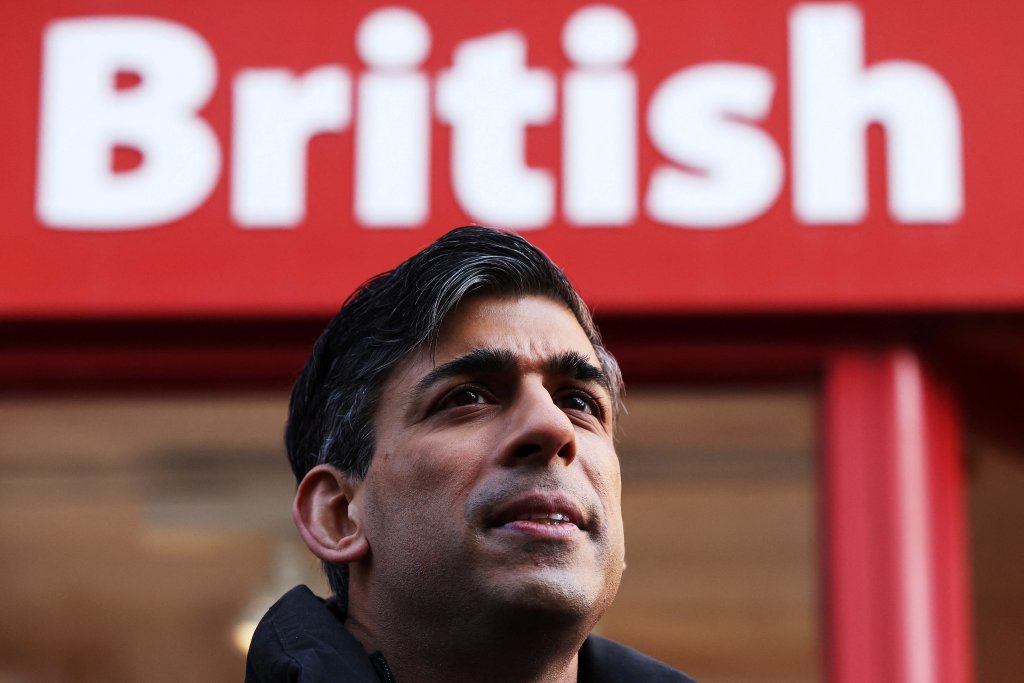
A spokesperson for Britain’s Prime Minister Rishi Sunak told the French news agency Agence France Presse (AFP) that the government was "confident our legislation is compliant with international obligations… and there should be no need" for the ECHR to block flights in the future.
The spokesperson also pointed out that the UK might, in the future, be prepared not to comply with any future ruling because "we do not think foreign courts should stop flights taking off."
The BBC reported that Sunak explained to journalists that the new Rwanda bill contained a "specific power" which would allow ministers to decide whether to ignore the court’s ruling. "I would not have put that power in there if I wasn’t prepared to use it," Sunak added.
Following the ECHR press conference, legal expert Lord Carlisle, a crossbench peer unaffiliated with any political party, told the BBC that he was worried by this kind of statement from the government. Even suggesting the possibility of non-compliance with an international court's judgment could do huge damage to Britain's reputation and standing in the world, he said.
Grandi: Migrants are becoming 'easy targets' of politicians
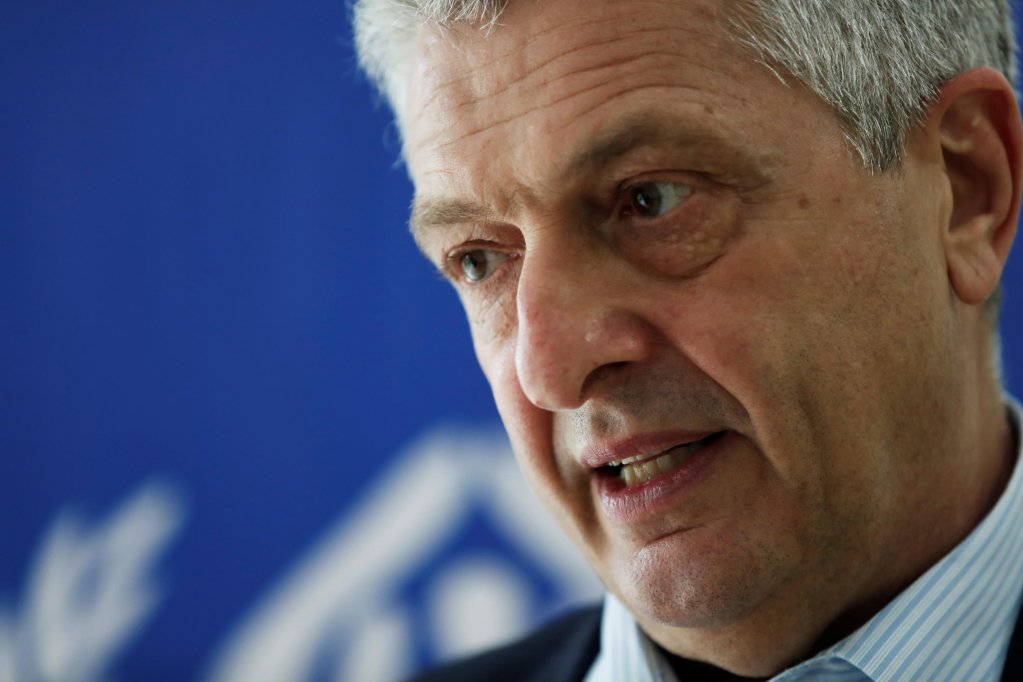
On the same day, the UN Refugee Agency UNHCR's High Commissioner Filippo Grandi told the BBC that he felt that migrants were becoming "easy targets" in a year where both the UK and the US were facing big general elections.
Grandi conceded that immigration was a hot topic in both countries and across much of Europe. However, he added that he felt that politicians were "fueling" the debate and "manipulating it often through a whole set of fake news to gain votes."
The High Commissioner said it was "much less sexy and attractive to say 'we need to roll up our sleeves and work on these issues'" and much easier to propose to the electorate "let's push them back and that will solve all our problems." Grandi implied that in his opinion, the second attitude would not contribute to solving any problems; instead, it would likely generate more issues.
When asked if his comments were directly related to the UK's "stop the boats" policy, as well as Donald Trump’s "build a wall" policy, Grandi replied "exactly. Those are fake responses which don’t even address even the problem of arrivals."
Grandi, concerns over Rwanda scheme
Grandi continued, "the risk is there is only attention on that at the expense of the real difficult work which needs to be carried out to better manage these complex thoughts." In relation to the Rwanda scheme, Grandi also had concerns.
He told the BBC, countries with "more resources" were busy "devising systems with which they would abdicate responsibilities they have to asylum seekers and shift these responsibilities to other states. This is contrary to the basic principles of refugee protection."
He said that under the refugee convention, all those seeking protection should have access to fair procedures. If that responsibility to offer that system was "given away, because you want to keep people away from your borders, then this will always meet our [the UN’s] disapproval."
The Rwanda bill will continue to be debated in the House of Lords on Monday (January 29) during its second reading. According to the UK's government website, "members will discuss the main topics in the bill and draw attention to specific concerns or areas where they think amendments (changes) are needed."
A motion has also been put forward by a Liberal Democrat Peer, Lord German, "to decline to give the bill a second reading on the grounds that the draft law ‘places the UK at risk of breaching international law commitments, undermines the jurisdiction of the courts, will lead to substantial taxpayer costs, fails to provide safe and legal routes for refugees, and does not include measures to tackle people smugglers."
With AFP, Reuters