
On Wednesday, Italy's lower house of parliament ratified the deal between Italy and Albania to set up two migrant reception centers on Albanian territory. The centers are intended to process the asylum claims of migrants rescued by Italian authorities at sea.
On Wednesday, (January 24) the Italian Chamber of Deputies (Italy's lower house of parliament) approved the bill thus ratifying the agreement on migrants between Italy and Albania. Lawmakers approved the ratification bill with 155 votes in favor, 115 against and two abstentions. The bill will now head to the Senate for final approval.
Following the vote the majority applauded, while the opposition protested. They question the feasibility of the project, saying that it threatens to violate Italian and international human rights laws. They are also worried about the cost of the project.
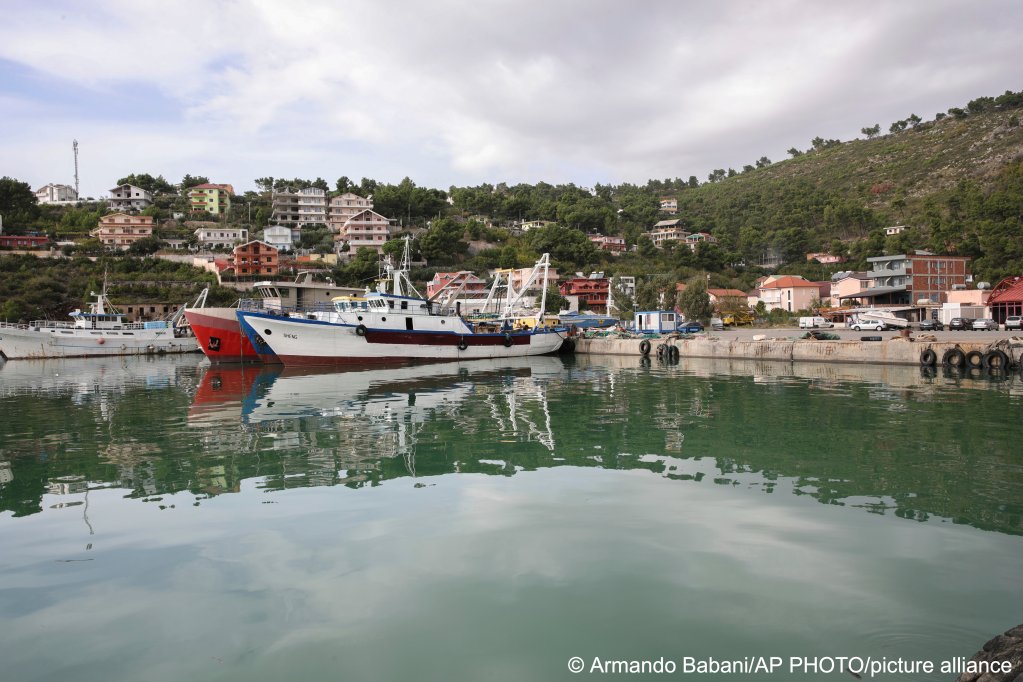
The agreement foresees the opening of two repatriation centers on Albanian territory which could house a total of 3,000 migrants. The first is a center for the identification of migrants inland that will hold "a maximum of 3,000 persons", and a smaller center will be built at the port of Shenjgjin, to allow Italian ships with migrants on board to dock.
Italy will cover all costs
The bill estimates that the centers will cost a total of €675 million to be spread over ten years, which is the planned duration of the protocol agreement. Planned payments start at €142 million in 2024, then €125 million in the years up to 2029, and lastly approximately €7.3 million per year in the final years of the agreement.
The detailed protocol goes as far as attaching maps and plans for the processing centers and how they should be built. In the plans, seen by ANSA, the center to be built at the port will have a perimeter of 240 meters, with a four-meter high external fence topped with barbed wire.
Also read: Albania, Italy, UK leaders discuss migration accord
Within the processing center, there will be a room to treat scabies and a room where those entering and exiting the center will stay while their files are processed.
The detention center, to be built inland at a place called Gjader, about 20 kilometers from the port is expected to cover an area of about 77,700 square meters. It will comprise ten buildings with a combined capacity of over 2,000 square meters.
Transport from the landing point Center to the CPR will be handled by Italy which will also oversee internal security at the two centers, while Albania will be responsible for external security.
3,000 to be hosted in the center at any one time
At a press conference about the agreement, Italy's Prime Minister, Giorgia Meloni, initially talked in terms of the centers hosting up to 36,000 people. This though, it was later explained to journalists, was the numbers they expected to process over one year. Since the law initially allowed up to 12 months to assess a person's asylum claim or not. Now, according to a migration decree issued in November 2023, dubbed the "Cutro 2" decree, the time limit has been extended to 18 months.
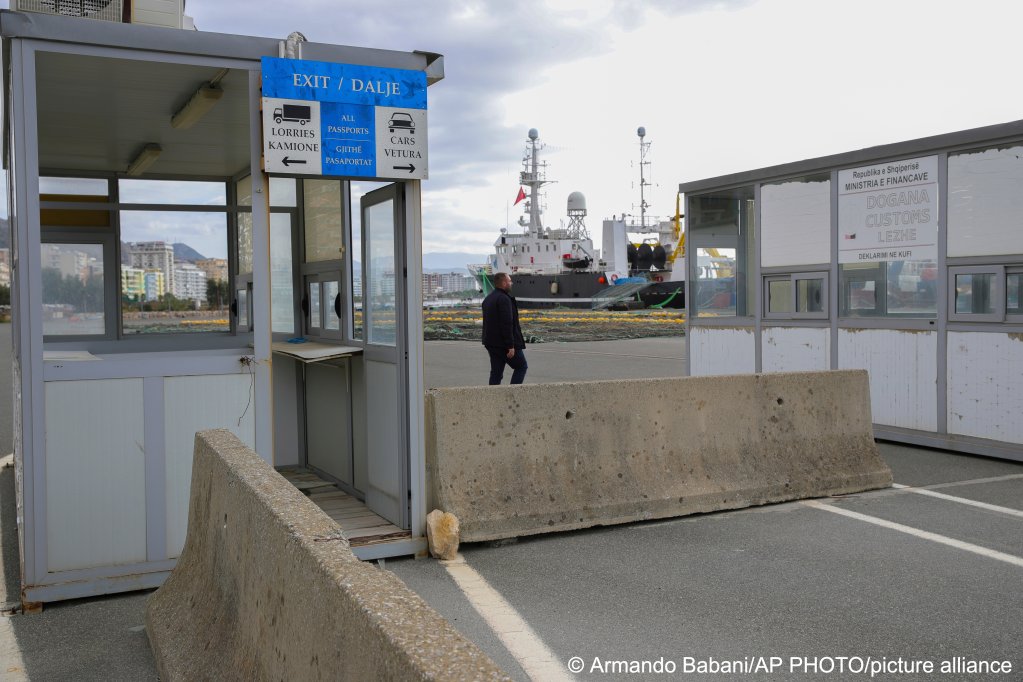
Once migrants' claims have been assessed, the Italian government has promised, those who have the right to international protection will be transported to Italy and those who have been rejected will be repatriated to their countries.
Prior to the ratification, the government also repeatedly said that any migrants considered vulnerable (that is to say unaccompanied minors, pregnant women, physically and mentally disabled persons, the elderly and anyone who has been the victim of human trafficking or torture) will not be sent to Albania and will instead have their cases assessed in Italy. The Deputy Foreign Minister Edmondo Cirielli, repeated this assurance during the committee debate.
Amendments from opposition rejected
However, an amendment to the bill issued by the Democratic Party that included this measure as law within the protocol was subsequently rejected by the majority.
Also read: Albanian opposition calls for suspension of deal with Rome
Now, only migrants rescued by Italian ships will be taken to Albania. The government stated that "distinguishing" between those who are "vulnerable" and those who are not will not take place on the ships.
Instead, the Protocol now states that Italy is committed to ensuring that the treatment of migrants "respects human rights and the fundamental rights of freedom, in compliance with international law." However, the amendments put forth by the opposition parties that listed a specific set of rights, such as the possibility for migrants to contact a lawyer, were rejected.
Albania's Supreme Court is also in the process of ratifying whether or not the agreement can be considered constitutional, and Albania's opposition parties have also expressed discontent about the contents of the agreement.
However, the deal has been viewed with interest by several other European countries, including Germany, Austria and the UK. If the deal were to go ahead, it might pave the way for more EU countries to investigate if they could also process some of their asylum claims outside their territory.