
For much of January, "severe winter weather" has caused chaos across northern Europe. For migrants, often traveling on clandestine routes, far away from populated areas, the cold can not only disrupt but kill. We asked activists at some of the borders how the weather is affecting migration.
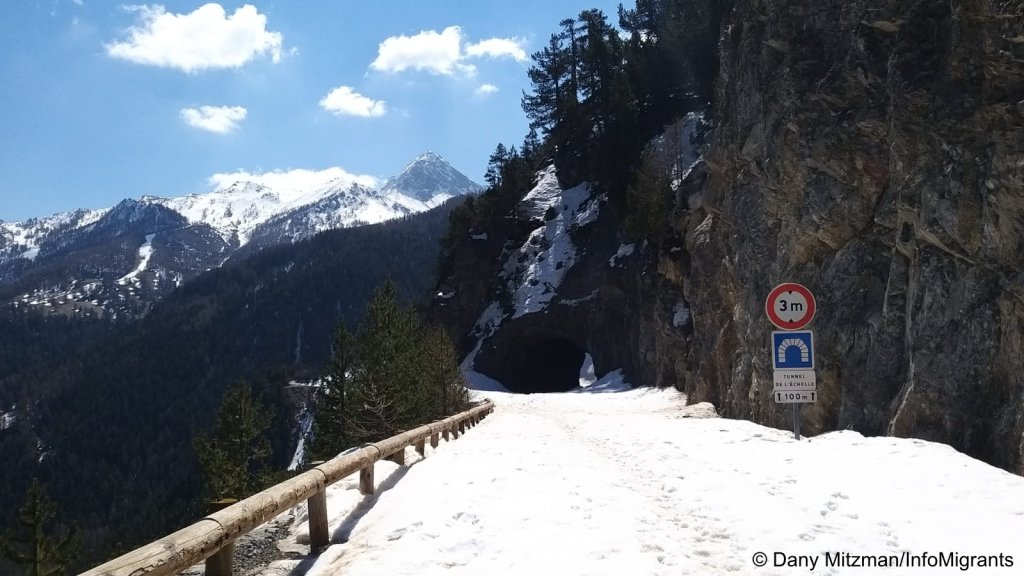
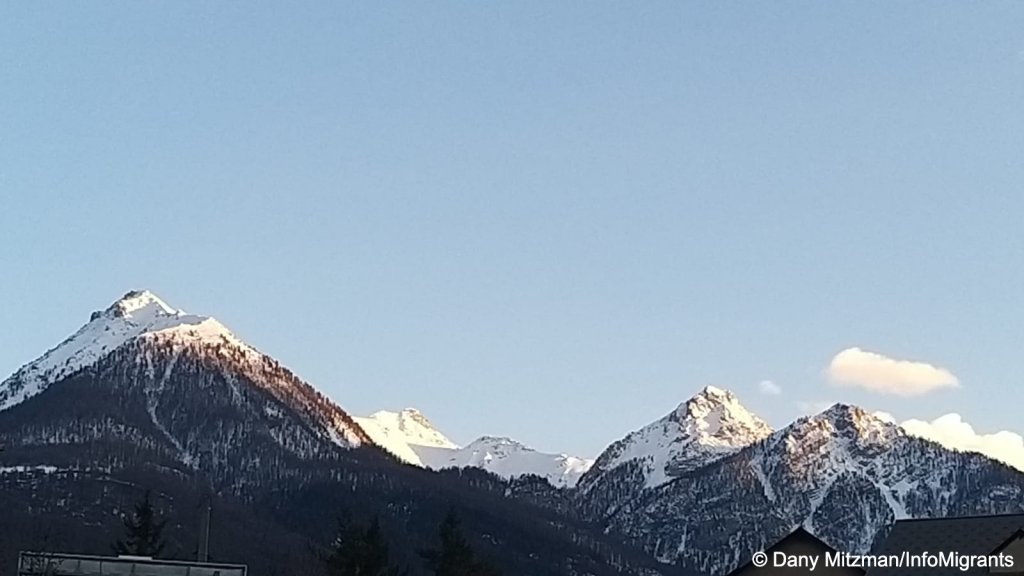
"Here in Oulx the snow is just melting at the moment," explains Amin, a volunteer working with migrants in the Italian Alps as part of the organization On Borders. Originally from Morocco, he spoke to InfoMigrants on January 19. "But up at Claviere, which is about 800 meters higher than us, the snow and ice has been a permanent fixture since November. Up there on the paths, the temperatures are regularly below zero, ten, 12 or even 15 degrees below zero."
"Up here, because the police controls have doubled in recent months, the migrants are departing for the border later and later at night, going higher and higher up in the mountains, and walking longer and longer routes," explains Amin. This, combined with the cold in the higher altitudes "is what is making things so dangerous for them."
In mid-January a blanket of white snow fell over much of northern and central Europe, even at lower altitudes. Transport came to a halt, there was chaos on the roads, closures at airports, like Germany’s biggest hub Frankfurt, and some rail and bus networks had to call a pause.
Some of the snow has now melted, but the warmer temperatures come heralded with strong winds and heavy rains, which can make traveling and sleeping outside just as problematic for migrants and those on the move. At higher altitudes, the snow stays for most of the winter, and even during much of the summer.
Also read: Ayoub's tale, a long and winding road to independence

France: Left on the street in winter weather
In northern France, the local prefecture issued an "orange alert" citing dangerous ice as just one of the dangers that could affect travelers. On January 18, the organization Utopia 56, which works with migrants in Calais and Paris, said that at least five young Syrian men "died of cold" in the Channel while trying to reach the United Kingdom.
The French rescue services said that most migrants would not survive more than ten minutes in the water temperatures measured in the Channel at this time of year if they fell in.
On the same day, January 18, Utopia 56 posted a message on X (formerly known as Twitter): "It is snowing, there are tens of thousands of people sleeping on the street and they don’t have any place in which to take refuge." They accused the authorities of leaving "hundreds of places free in refuges while thousands of people were left on the streets in temperatures that fell below zero." According to Utopia 56, "places [in shelters] exist, but the political will is a lot less in evidence."
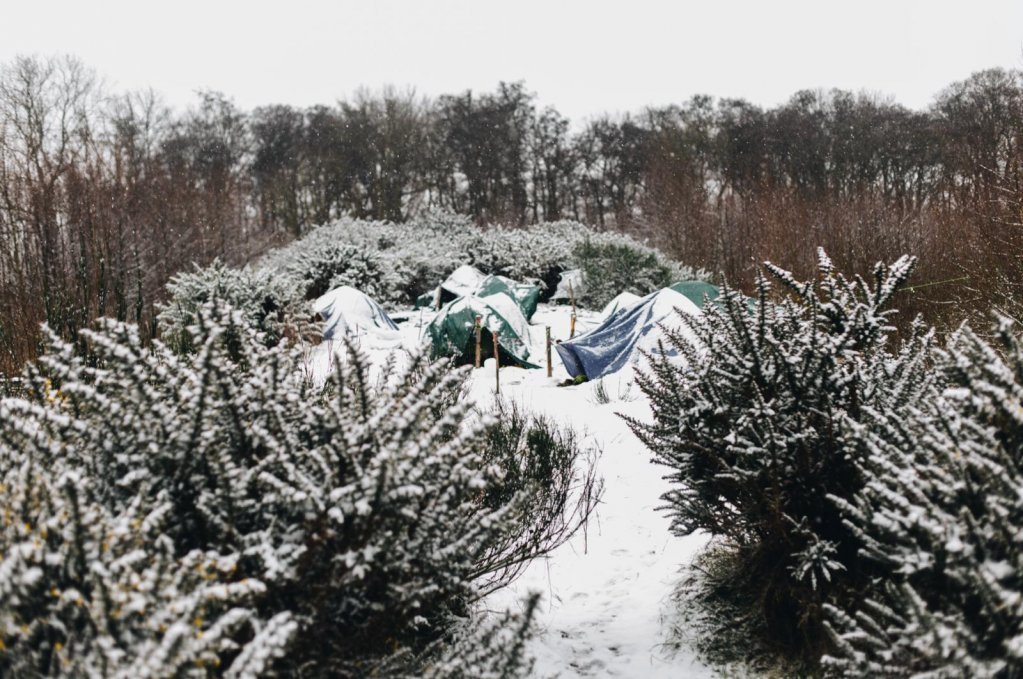
Just a couple of days earlier, they posted a video from Paris showing a small child who was "crying from the cold." They said that their volunteers were "seeing this on a daily basis, and have been seeing it for years."
Poland: 'Conditions in winter can drop as low as -27 degrees'
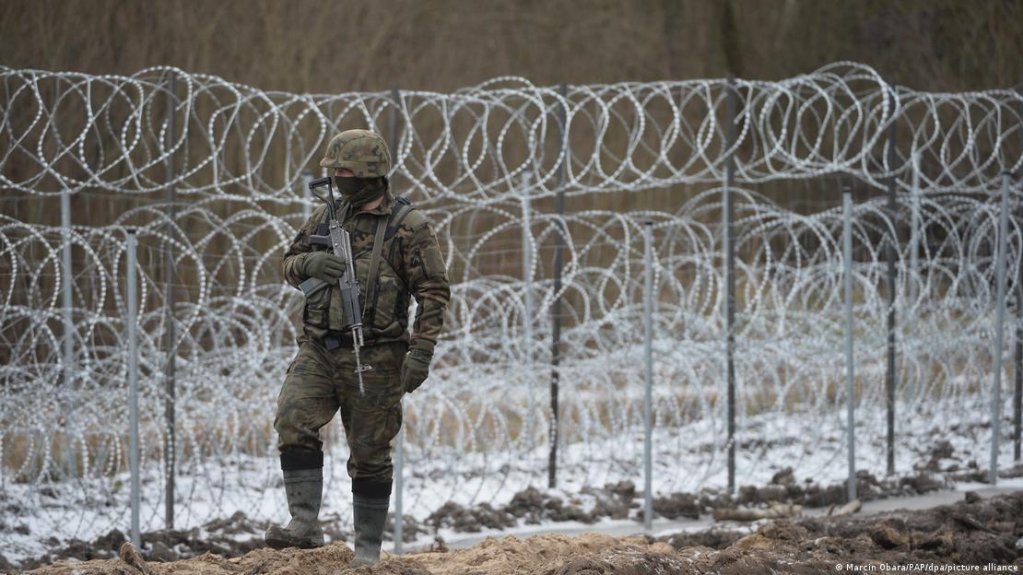
In Poland, on the border with Belarus, "conditions in winter can drop as low as -27 degrees below zero," explains Marianna*, a humanitarian worker who helps migrants in the area as part of the Grupa Granica (Border group) collective. The village where she lives is just a couple of kilometers from the border.
She sends videos of the snow that blankets the area through much of the winter. Marianna spoke to InfoMigrants on January 22. "What makes it difficult here is that you cannot predict what the temperatures might do. You might start your journey in zero degrees and then a day or two later it could be minus 20 or even minus 27. We had a lot of snow, maybe up to a meter in places and a lot of wind. And it snows every couple of days and it doesn't melt. Although we are expecting some warmer temperatures soon."
Also read: How are migrants getting from Belarus to Poland, an investigation
Marianna has been working with the collective since 2021. To help fund their support of migrants at the border, they started up a foundation, FundacjaBezerkres (The Boundless Foundation); their website says they stand for "limitless help, limitless imagination, limitless tolerance, limitless compassion." The group provides water, food, clothes, medicine, first aid and warm food and drinks to people on the move they find in the forest.
In previous years, Marianna tells InfoMigrants over the phone, they came across migrants poorly equipped for the weather conditions they were met with. "Some would arrive with just flip flops, or even no shoes, and we would find them in the snow," remembers Marianna. "But this winter, compared to last winter, there are fewer people arriving in general and their equipment is slightly better. In the last month we have had hardly had any calls, and there have been more pushbacks than we had calls. There are a lot of border guards and they are pushing back almost every person at the border."
Also read: Polish film challenges official narrative on Belarus border crisis
Marianna says they have recently had some contact with a group who are on the Belarusian side, but they can't do much to help them there. "I only hope that the Belarusian authorities let them go back to Minsk, because it is very cold there, their situation is very difficult, and sometimes the guards on that side don't let them go back and force these people to cross the border again and again."
Nevertheless, Marianna and the volunteers working with her foundation and as part of the Grupa Granica, have "big heavy sleeping bags" and "special tents" that would allow someone to survive a night or two even when the temperatures get well below zero. Although Marianna herself hasn’t had to deal with anyone dying in the forest yet, some of the other volunteers have had the misfortune of finding people who weren’t able to survive the cold. Part of their mission as a group is to make sure that that doesn’t happen.
Alps: Up to 20 people try and cross most days, even in winter
Snow covers paths in the Alps, even in the summer months. At the moment, Amin explains to InfoMigrants over the phone, there are about 20 people in the refuge hoping to cross to France. "Most days in January have seen about ten people on average attempting the crossing." In the summer months hundreds of people attempt to cross the border here, because it has become known to those on the Balkan route for its absence of smugglers, explains Amin. In places like Ventimiglia on the coast joining Italy with France, the more people who want to cross, the higher the price the smugglers charge, at least that is what the migrants tell us, says Amin.
Also read: 'Illegal methods,' the shadow zones employed by French border police
"Lots of the people attempting to cross here come from Sudan. This is the first time they have seen snow and they have absolutely no experience of the mountains," says Amin. "They can't imagine that it is going to be so cold. They are the people who are most at risk. They often don't know how to map read and they get lost. It is mostly these people who are picked up by the mountain rescue teams. Sometimes those who have traveled through the Balkan route, those from Iran, Afghanistan and North Africa, they have already come across snow before and mountains and they seem a bit better prepared."
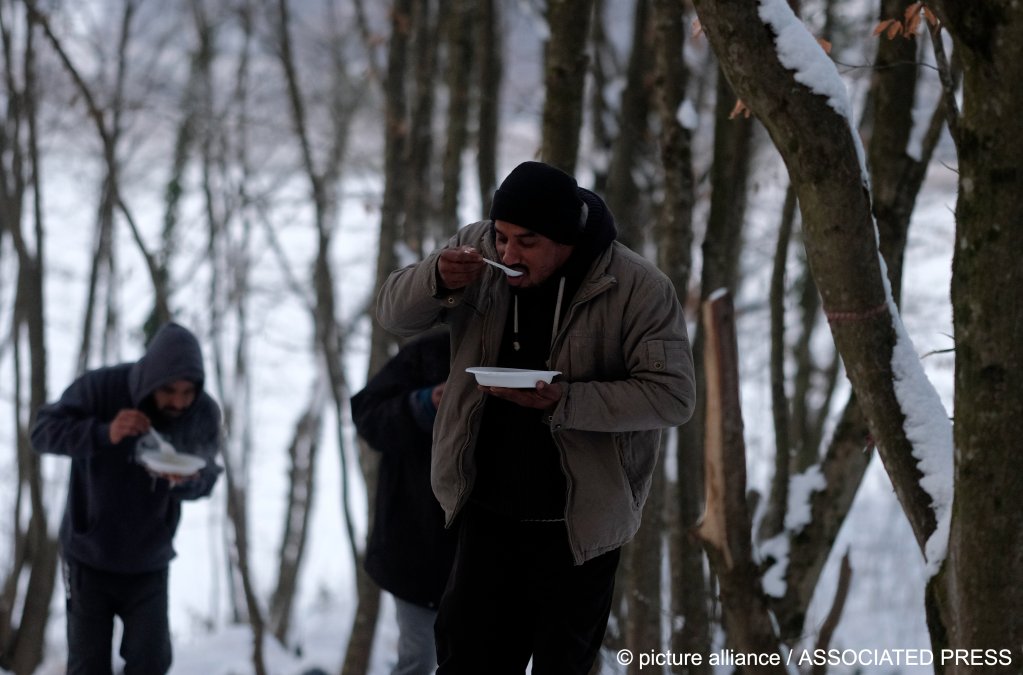
Amin explains that they have talked to lawyers to make sure they know what they can say to migrants and how they are allowed to help. They are allowed to provide clothing and food and provide them with medical assistance and a lawyer to discuss their situation and rights concerning asylum applications. "We are not allowed to tell them a route, but I can tell them not to climb too high, because that way just leads to the summit. We are also allowed to tell them that once they start walking, and sweating, they shouldn't take off their clothes, because then they will be in trouble later. We also tell them to keep their phones on full power, so they can call for help if they are lost or in trouble."
'I met this young guy and he had lost three fingers on one hand'
"I started here in May and one story still stays with me. I met this young guy and he had lost three fingers on one hand. He got lost and he kept climbing higher and higher. At these altitudes, even in May, there is still snow. So he was climbing, he saw the sign that said he had already climbed above 2,400 meters high and at a certain point, he lost his glove in the snow, and he just carried on with his bare hands, and then he got frostbite. He was from Ivory Coast. He did manage to reach France eventually, but at what cost?"
🎧 Also listen: Tales from the Border podcast in the Italian and French Alps or subscribe here.
The route through the Alps is dangerous, but it is attractive as it circumvents the need to pay a smuggler or potentially be exploited by criminal gangs, says Amin. However, the reason for the lack of smugglers is mostly to do with the fact that crossing the border is limited to just one road, which the French police have effectively controlled, he adds.
Which pushes migrants to go higher and higher up into the Alps. "In 2023, there were five people who died in the mountains. The majority of those who died came from Sudan. This year so far, thanks to God, there haven't yet been any deaths. One of those who died had basically arrived in France, he was at the gates of the city of Briancon, and the police caught up with them."
"When you are being chased, you forget to pay attention. They were crossing a bridge near the city and they just slipped. One slipped in to the stream and died of drowning. The other was hanging for ages on a rock before he was eventually found. Another one slipped and also drowned. And another young guy, we don't know how he died exactly, but he maybe had a heart attack or some kind of illness and they found his body on the mountain. Most of these people got lost or they panicked and tried to escape from the police and slipped," Amin explains.
'Several people die here every year'
Attempting to escape from the police is one of the biggest dangers to the migrants. "Many of those who have traveled the Balkan route have had bad experiences with police forces along the way. The young guys who come to us tell us that they have been attacked by dogs at the hands of Greek, Bulgarian and Croatian police forces, they have had their money stolen, they have been stripped and have had their phones stolen."
"If the telephone is not a good make, the police will break them so they can't use them. They are often sent back across borders in the Balkans without shoes, or most of their clothes, maybe just in their pants, or even naked. So, they are used to being scared of the police. We try and explain that here the French police won't hit them, or steal their money or their telephones and if they get stopped, they shouldn't escape. If they are stopped, they are sent back to Italy, but if they try and escape, they risk slipping and potentially dying."
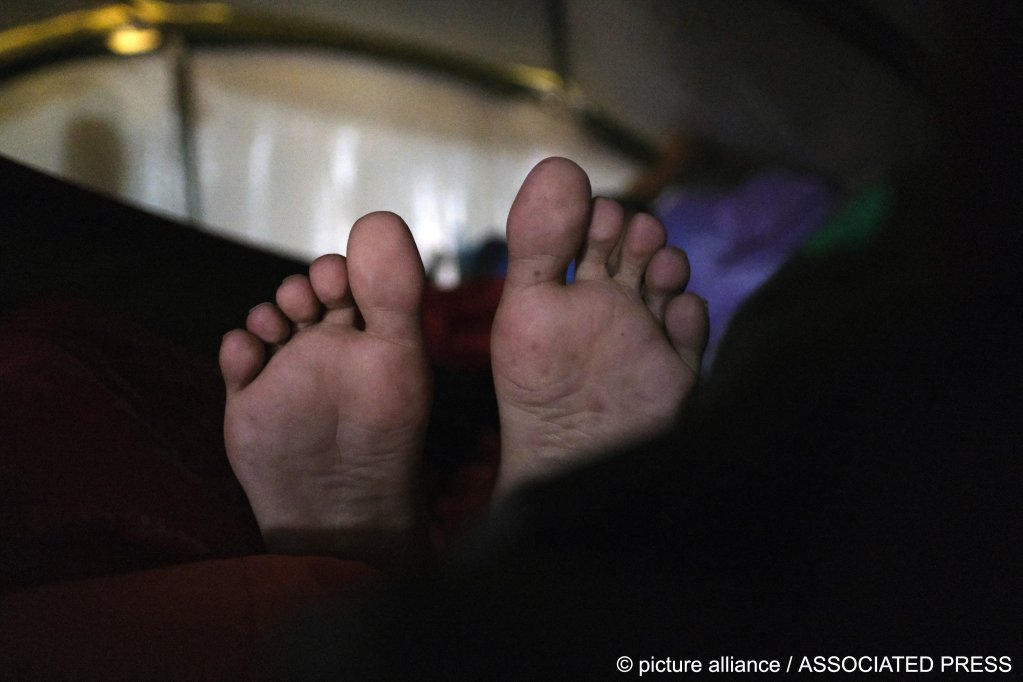
"From here, a bus takes people up to Claviere," explains Amin. "This is the last border town in Italy. They then have to walk from there to Briancon. The distance is about 18-20 kilometers. So, most take about eight to ten hours. When the police stop them, they are taken to the border post in Montginevro. There, the French police will call the Italian police to see if they have had their fingerprints taken in Italy. If they are unaccompanied minors, they are taken by the French police, as you are not allowed to push back those people. If they are adults and the Italian police have their prints on file, then they are brought back to Oulx, to our refuge, often by a van run by the Red Cross. Here they can shower and eat something and rest."
Erroneous age registration can 'ruin lives'
Although each border crossing has its unique challenges, weather systems and situation, they are all linked by the well-trodden journeys the migrants make. So what happens at a previous crossing can affect what happens later, explains Amin.
One of the biggest problems we see in this area is that lots of young guys get registered as adults when they arrive in Lampedusa. So, even though they might just be 16 or 17, they are recorded as adults on the system and so they get pushed back anyway, and their "lives are ruined," as they have no right to study or be supported by the authorities because of the erroneous registration of their age.
Most people try to cross the border two, three or four times, says Amin. "We try and encourage people to spend at least one night recuperating in the refuge before trying to cross to France again," says Amin. "Most people who are caught will have been up all night in the mountains. There is nowhere to sleep when the police catch them. They don't give them anything to eat, or anywhere to sleep, so when they arrive back here, they are destroyed."
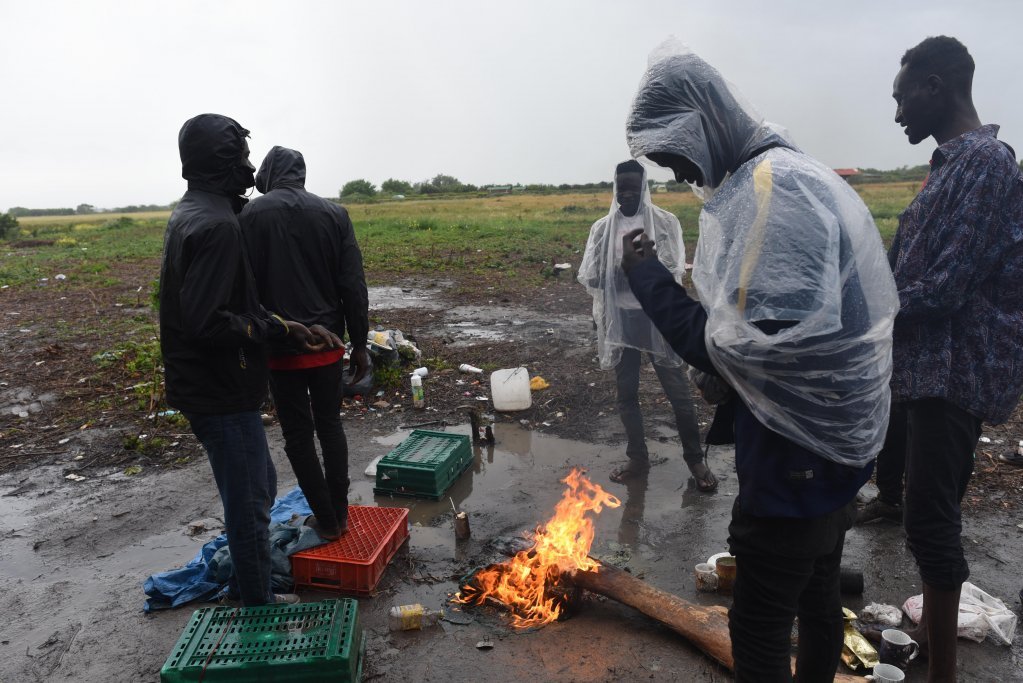
At the moment, because of the winter weather, fewer people are arriving in the mountains, says Amin. "The weather is mostly too rough in the Mediterranean and even those who are traveling the Balkan route are hampered by the winter."
"Most of the migrants know that once they get across this border here, the rest of the borders from France are less controlled. For instance if they want to get to Spain or Germany. But for the Sudanese guys who pass through here, most of them can't speak French and they hope to reach the UK. So, they still have a long road ahead of them."
*Marianna is a pseudonym to protect her identity