
More than 18,000 Guineans landed in Italy in 2023. They are the first nationality of migrants arriving in the country. The driving forces behind these departures include persistent insecurity and severe political repression in Guinea, regardless of the regime in place.
Banfa hopes the end of his nightmare is near. After two days and one night on a frail iron boat, the 27-year-old Guinean and the other passengers were rescued by the Italian coast guard off the coast of Lampedusa. On that day, September 12, 2023, the small Italian island’s first reception center is already at capacity. Near the hotspot, a towel on his head to protect himself from the sun, Banfa shared his bitterness with InfoMigrants. "You leave home, you leave your parents… Without knowing the Mediterranean. We don’t know how to sail […] And often the boats sink," he said.
The central Mediterranean is one of the deadliest migration routes in the world, but that does not dampen the determination of those looking for a better life. In 2023, 157,652 people landed in Italy, a new high. Among them were 18,211 Guineans. This is the first nationality arriving in the country, followed by Tunisians and Ivorians.
What pushes so many Guineans to risk their lives at sea? For Alhassane Balde, director of the Guinea Socio-Anthropological Analysis Laboratory at the University of Quebec, the main factors driving this exodus are the "political instability" within the country and an acute economic crisis. "All the regimes that have succeeded one another since independence have failed to get the country out of underdevelopment, causing repeated social crises. As a result, in Guinea, neither security nor success are achievable."
Demonstrations repressed in blood
Since 1958 and the takeover of the father of independence, Sékou Touré, Guinea has struggled to stem poverty. Despite its bauxite-, gold- and diamonds-rich soil, the country remains 182nd in the latest UN Human Development Index (HDI) published in 2022, two ranks behind Afghanistan.
The coup d'état of September 5, 2021 by Colonel Mamadi Doumbouya had nevertheless "sparked hope among all Guineans,” Alhassane Balde said. "The population expected things to change. But without solid foundations, development takes more time. So impatience grows, generating frustration, expressed in heavily repressed demonstrations. Creating a cycle of uninterrupted violence," the teacher explained to InfoMigrants.
Despite the promises of another "system" of governance "respectful of justice and focused on the fight against corruption", the new regime in place quickly adopted the methods of its predecessors. On July 28 and 29, 2022, anti-regime demonstrations in Conakry were bloodily repressed, leaving at least five people dead.
On September 21, Mamadi Doumbouya dashed the last hopes of change-aspiring Guineans. Invited at the UN forum in New York, the colonel railed against “the democratic model insidiously, cleverly imposed on Africa”. "The graft did not take," he concluded.
'It was too dangerous for me'
Ibrahima fled the country at 27, for fear of being imprisoned. He was a blogger in Conakry. In addition to his writings, the young man regularly participated in meetings and marches "to denounce bad governance and corruption." "I was afraid, because we knew there were killings, arrests. But defending democracy was a cause that was really close to my heart,” he told InfoMigrants.
One day in 2017, during yet another demonstration against the regime in place, Ibrahima received a worrying call from his father. "He told me: 'Don't come home.' I had received a police summons. I was going to be thrown at the Maison Centrale prison [a Conakry prison where 1,200 prisoners can sometimes be crammed in for a facility designed to hold only 400 people, editor's note], like many of my comrades".
Ibrahima then hid for a few weeks, before leaving Guinea for good "in the trunk of a car, under luggage." First, he left for Mali, then Algeria and Libya, where he taught French in schools for two years. Like most Guinean nationals who leave their country, going to Europe by sea was only a last resort: Ibrahima made his decision when anti-migrant raids started out in the Tripoli suburbs.
"Frankly, all of this was not planned. After my studies, I was fine, I had my own little daily life in Guinea. But living under Alpha Condé was too dangerous for me," the young man, now in France, told InfoMigrants. After the coup, I told myself that I would finally be able to see my family again. But the junta in power has not changed anything. I still receive threats."
An excision rate of 96%
While the majority of migrants are young men, or even minors, many Guinean women also choose to leave. In addition to the lack of professional prospects, precariousness and political persecution, they can be subjected to "polygamy, early marriages and forced marriages", "still the norm [in Guinea]", novelist Tierno Monénembo wrote in a piece published in Point Afrique.
"It is patriarchal society taken to its highest degree. And custom almost always prevailing over the law, the little girl, until her death, is confronted with the possibility of violence of all kinds, violence without limits."
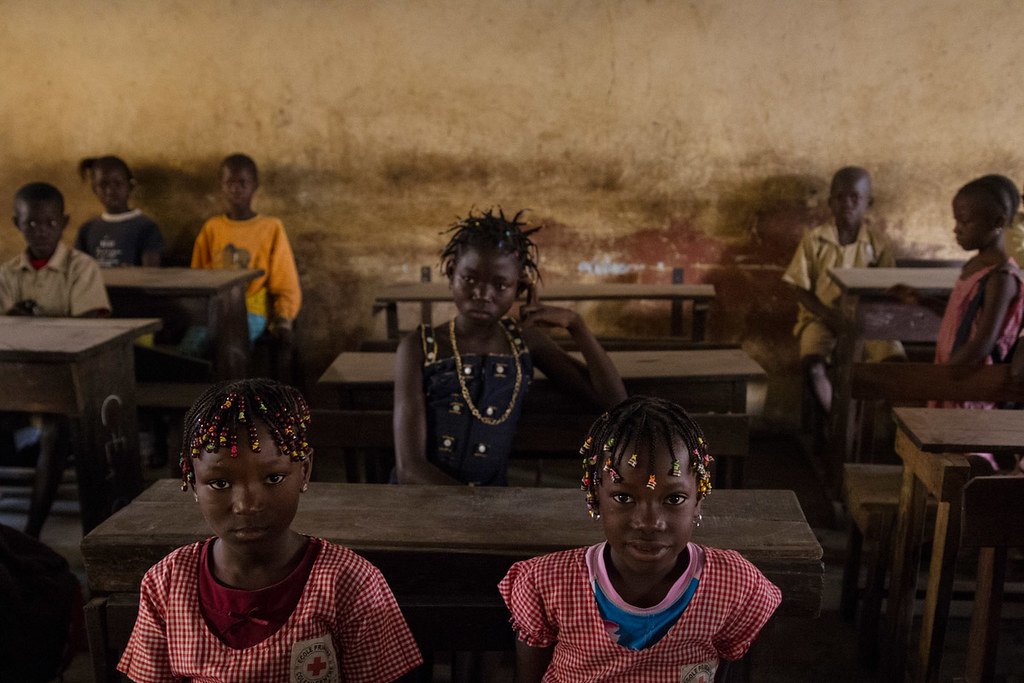
Many women also flee genital mutilation. The country also has the second highest excision rate in the world (96%), behind Somalia. “There is no change on this subject, excision is still present in Guinea,” Diaryatou Bah, president of the association "Excision, lets talk about it!" said. "The state has so many problems to manage that excision is very, very far from its concerns."
At the family level too, this tradition remains deeply rooted. “If a family stops excising, it is frowned upon, we will say that it is betraying customs. There is a long way to go to change mentalities,” Diaryatou Bah added. "But we must maintain hope. One day, that will change."