
The German government claims that the introduction of border checks with Poland, the Czech Republic and Switzerland have reduced the number of unauthorized entries.
At Germany's borders with Poland, the Czech Republic and Switzerland fewer unauthorized entries were detected in December than in the previous months.
According to provisional data from the federal police, a total of 2,876 unauthorized entries were registered last month. In November, according to police entry statistics, the figure was 4,050 in November and 5,488 in the second half of October.
In October of last year, German interior minister Nancy Faeser ordered temporary fixed border controls at the borders with Poland, the Czech Republic and Switzerland. They have since been extended several times and are to be continued until at least March 15, 2024.
The German Interior Ministry announced in December that the controls would be continued to combat smuggling crime more effectively and limit irregular migration. Fixed border controls have been in place at the land border between Germany and Austria since the fall of 2015. According to police, a total of 127,089 unauthorized entries were registered in the whole of Germany last year (2022: just under 92,000), not just at the borders with the three countries.
According to preliminary figures from the police, 1,954 people were searched at the borders with Poland, the Czech Republic and Switzerland in December, with 338 cases involving an arrest warrant.
Also read: Irregular migration to Germany drops due to new border checks
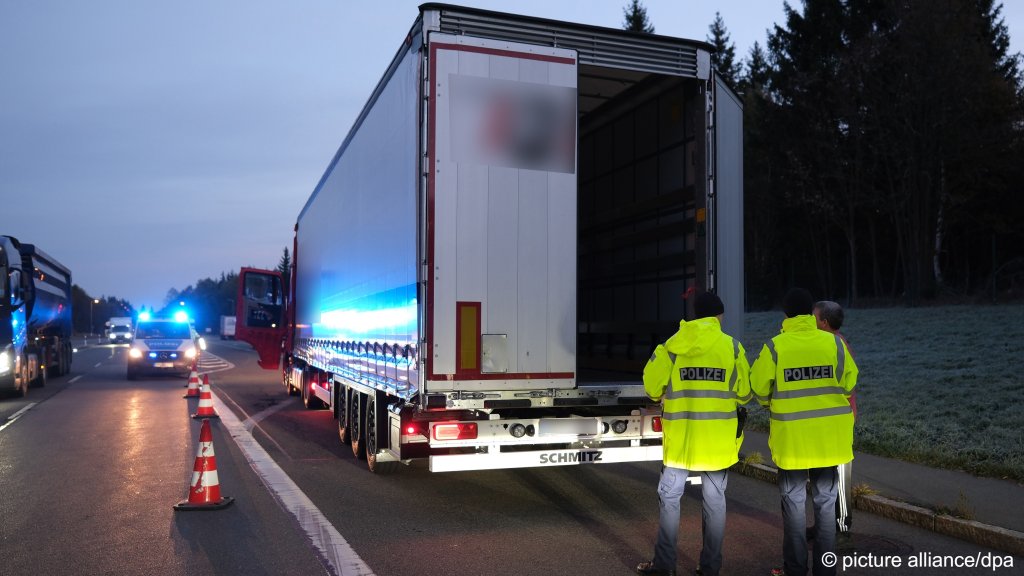
Lower figures could be due to cold weather
Far-right MP Leif-Erik Holm, accused the Interior Minister of acting "too late" in response to the rise in unauthorized entries. He claimed that there is "no effective protection of the EU's external borders". Adding that while Germany continues to be the main destination country for asylum seekers and economic migrants from "safe third countries", there is a need "for permanent fixed controls at all our external borders."
However, it is worth noting that there are increased risks and difficulties for migrants as the weather gets colder, which may also be a factor in the downward trend. According to statistics in December, the decline in unauthorized entries in 2020 and 2021 was partly attributed to the weather.
According to Andreas Roßkopf from the German Police Union (GdP), the fact that fewer foreigners without visas have recently appeared at the borders with Poland, the Czech Republic and Switzerland, is also due to the fact that neighboring countries have reacted to the new German controls with intensified controls of their own. Nevertheless, he expects a renewed increase in the spring.
Faeser said on Monday that the temporary border controls "are working". Claiming that they also serve to put a stop to smugglers.
Also read: Czech Republic extends temporary border checks with Slovakia as EU tries to clamp down on smugglers
Border controls 'challenge' for Schengen area
Many countries within the Schengen region continue to enforce border checks under the guise of tackling irregular migration. However, rules allowing the permanent reimposition of border controls are not built into the EU's Schengen framework.
The Schengen Borders Code allows for a temporary reintroduction of border controls at internal borders in the event of a serious threat to public policy or internal security. The framework emphasizes that it must be applied as "a last resort measure, in exceptional situations, and must respect the principle of proportionality".
In October, EU Home Affairs Commissioner Ylva Johansson expressed concerns over the issue of internal border checks, describing them as a challenge for the Schengen area.
"Even if it is justified by severe things, internal security or illegal border crossing, internal border controls also hamper free movement," said Johansson. "We need to avoid it."
With dpa