
Amid a severe cold spell sweeping through northern France, approximately a hundred migrants are enduring harsh conditions in makeshift tents in Paris. Predominantly Sudanese, these migrants recently arrived from Italy and depend on aid organizations to survive, with the majority yet to initiate administrative procedures.
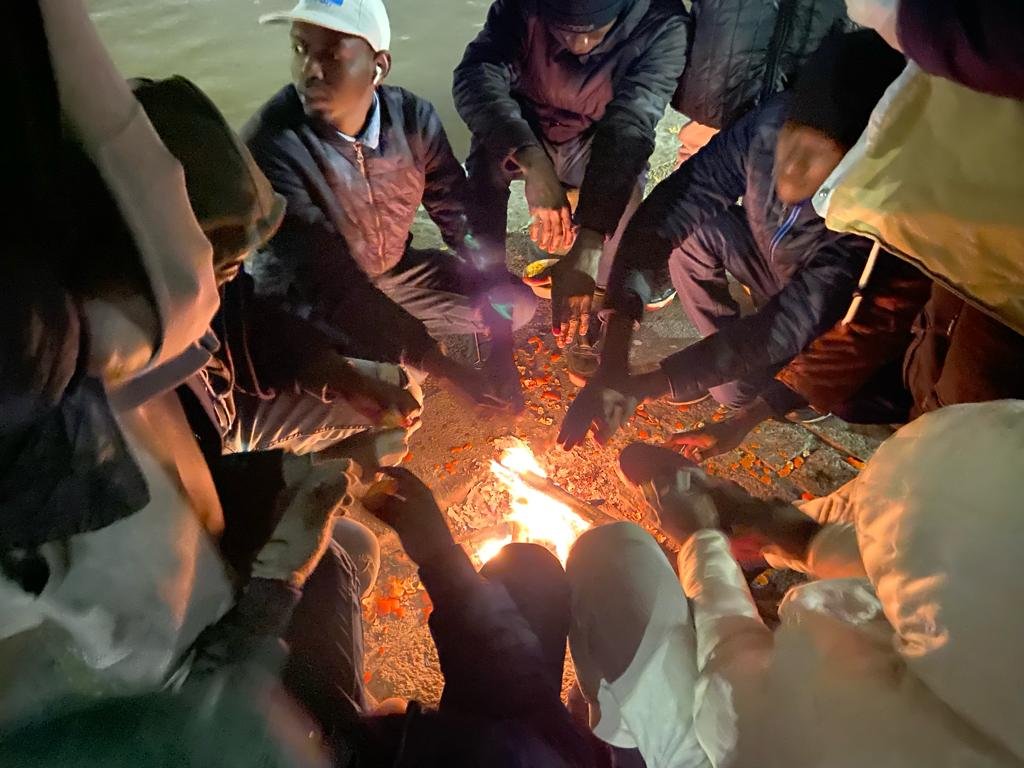
Hands stretched out over a fire, a few men are trying to find some warmth under the Charles de Gaulle bridge, in the middle of Paris. This Monday, January 8, it is -2 degrees at 7:30 pm. For two days now, a wave of freezing cold has hit the north of France, including Paris. The hundred or so migrants here were not ready for these sub-zero temperatures.
Hassan has no scarf or warm coat, just a black hat. This 24-year-old Chadian who arrived in France from Italy in December seems lost. "I have no choice," he says on repeat. "I've been here for three weeks. You see, it's not easy. I don't know what to say, we're more than cold... It's so cold," he says without ever moving away from the fire. "I make do with the others, but in my tent, I only have a few sheets for the night."
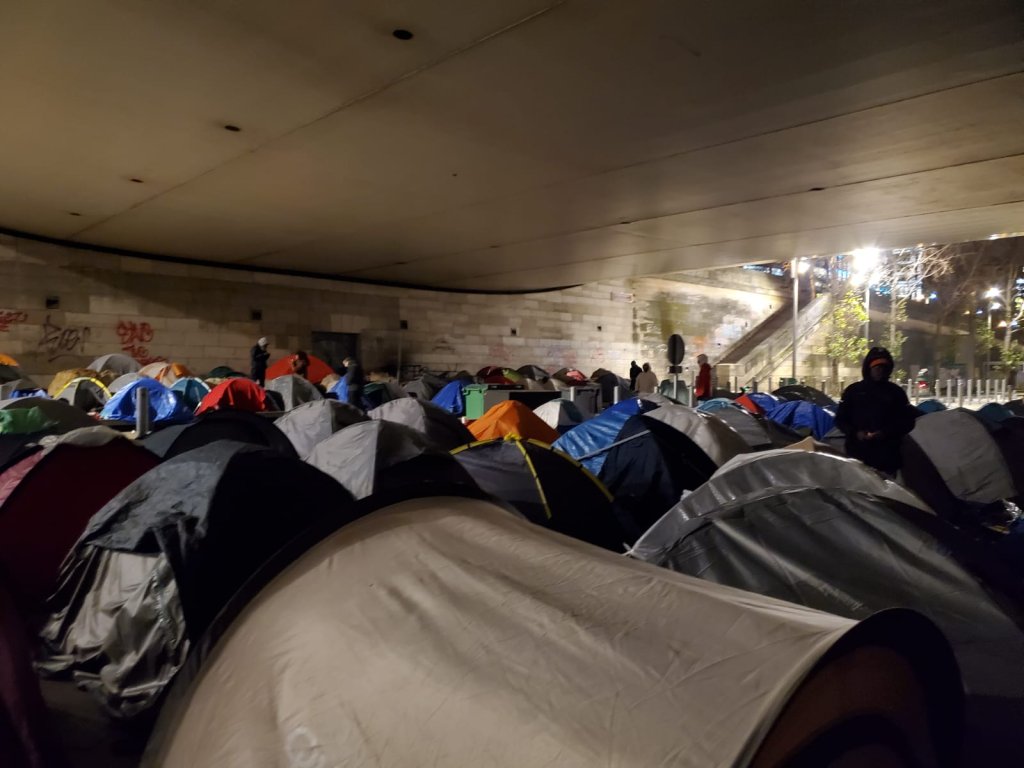
Most of these migrants, who arrived from Italy and have not ventured far from the Gare de Lyon train station, are new to the area. Sophie, a member of the Utopia 56 association, notes, "Many just arrived. They arrived in France very recently and do not know their rights. They arrive from the station and stay there." Some have reached out to the overloaded 115 emergency shelter line, while others remain unaware of this option.
None say they fear the police, whom they consider non-violent. "They come from time to time," explains Chérif, a 16-year-old Guinean. "They were here this [Monday] morning, they look to see if there are any problems, but they are never violent, they don't tell us to leave."
Also read: French immigration reform sparks broad outcry
'Why did I come to France? Honestly, I don’t know'
Facing a lack of resources, these migrants depend on associations that come to hand out a little food and hot coffee. This Monday evening, Anthony from the Sawa collective observes that there are not enough meals. "We distributed around 30 meals in Pantin [in the north of Paris], and around 30 meals at the Gare de Lyon. We only had 50 meals left for this camp here,” he regrets. Far from enough. "At the moment, problems are piling up. People need clothing and tents as much as they need food."
Chérif, originally from Guinea Conakry, did not get a hot meal. But he was able to eat a "baguette" and some clementines brought by Sawa. Wrapped up in his (too) large winter coat, given to him by an association, he shows us his tent covered with a tarpaulin "to keep out the cold". “I just have a blanket for the night. The hardest part is the fingers, they freeze first," explains the boy who says he came to France "to study and have a job."
Next to the fire, Al-Daïf Mohamed, a Sudanese man, regrets having come to Paris. "I decided with a group of my Sudanese companions to come to France. Why? Honestly, I don't know, maybe because the French language is used in more than one country, unlike Italian?" This Sudanese, who arrived in this camp in November 2023, had crossed the Mediterranean on an inflatable boat leaving from Libya. "At least, in Italy, we were housed in reception centers, we weren’t sleeping on the street."
Also read: 2023 EU migration trends: border patrols, homelessness and offshore detention
The main challenge remains accommodation: "We have access to food thanks to associations but we do not know how to get accommodation or obtain a residence permit. We also suffer from the total loss of contact with our families in Sudan."
'The cobblestones are very cold'
Similar informal camps exist further north in Paris, like under the Villette bridge, where living conditions are equally dire. “I put boxes to sleep on but the cobblestones are very cold and hurt my back," a young Ivorian, Abolayi, 17, who lives there, told InfoMigrants. "I don’t have any light, it’s very difficult to find a place to charge my phone."
Another man, from Afghanistan, says he is "very cold," speaking from inside his tent he keeps closed to stay warm. "I have been here for two weeks, and I arrived in France four months ago." He added that he has received his asylum application file but has not yet completed it.
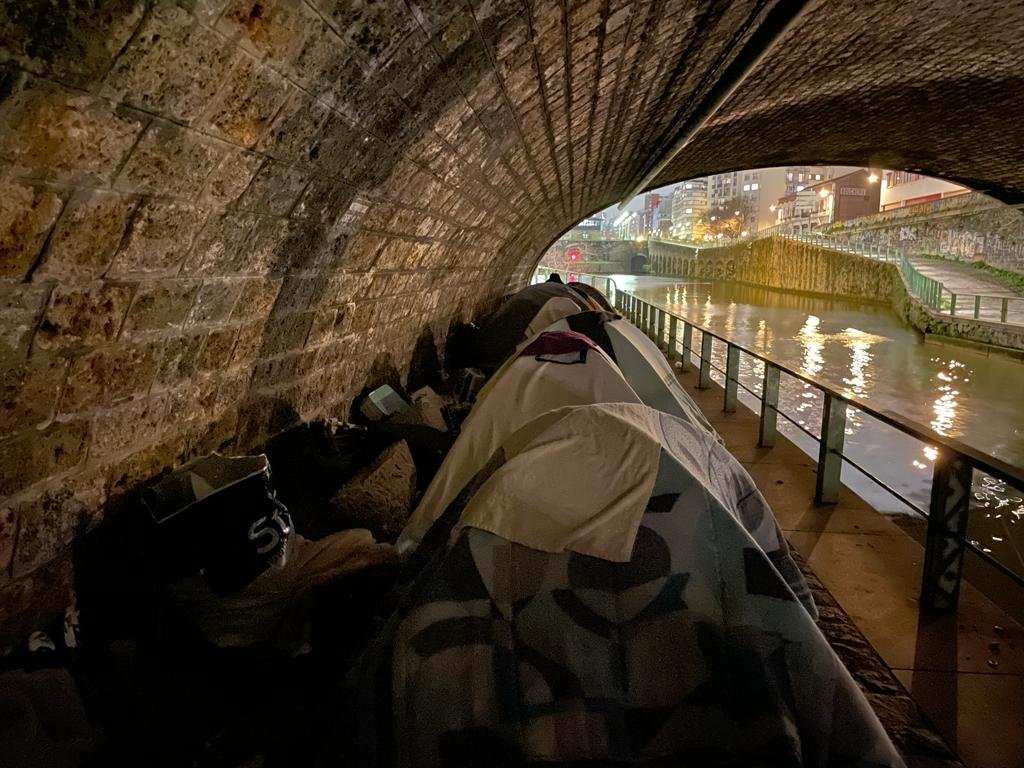
To address the immediate danger posed by the extreme cold, France has opened 100 shelter spots in Paris for families, women, and men without shelter, with an additional 274 spots anticipated as temperatures will continue to be negative over the next few nights.
This episode of extreme cold is particularly dangerous for homeless people, who risk experiencing hypothermia -- which can be fatal in some cases. "Making a fire is the only way to warm up a little," Sophie from Utopia 56 told InfoMigrants in the camp near Lyon station.
"The prefecture has opened up a few hundred spots, which is insignificant compared to the number of people on the street," Sophie said. The number of homeless people is estimated at 3,000 in Paris, by Emmaüs. "We fear having a lot of cases of hypothermia. By staying outside for 10 minutes, with your hands in the air and without a hat, you see that it is impossible to hold on. Some migrants have nothing, not even shoes their size, leading to a lot of frostbite. Their health will get worse. Everything gets worse in the cold."
Also read: Series: How unhoused migrants can protect themselves against the cold in Germany