
More than 155,750 people arrived in Italy by sea in 2023. This marked an increase of nearly 50% from the previous year when an estimated 105,000 people arrived.
Italy has not been successful in reducing migration across the Mediterranean, Interior Minister Matteo Piantedosi announced, as reported by German news agency dpa on December 31.
"The number of arrivals this year certainly does not correspond to the goal of the political measures that the government has introduced in various directions to combat and defeat human trafficking," Piantedosi told Italian newspaper La Stampa.
Citing data from his ministry, Piantedosi said that more than 155,750 people had arrived in Italy by sea in 2023. This marks an increase of nearly 50% from the previous year when an estimated 105,000 arrived.
Aggressive measures to curb migrant arrivals
Reducing irregular migration across the Mediterranean is a key pillar of Italian Prime Minister Giorgia Meloni's right-wing government, which has been in power since October 2022.
Italy, with a coastline of nearly 8,000 kilometers that guts out into the Mediterranean, has served as a common entry point to Europe by sea for migrants for years.
In 2023, the path from North Africa across the central Mediterranean to Italy became Europe's busiest migration route. Along this route, tens of thousands of people have attempted to reach Lampedusa, Sicily, or the Italian mainland from Tunisia and Libya in boats that are often more than unseaworthy.

Last April, the Italian government declared a six-month “state of emergency” over the issue of migrant arrivals.
Claiming that Italy takes on disproportionately more migrant arrivals compared to other countries in the European Union, the government has implemented a series of controversial measures to deter migrant arrivals.
Rome has also brokered deals with countries notorious for serious human rights violations to conduct maritime patrols, effectively setting up borders at sea.
Also read: Italy 2023: Central Mediterranean becomes busiest route to Europe
A decree alleged to cost lives
Meanwhile a decree passed last year prohibits private vessels run by search-and-rescue NGOs from carrying out multiple rescues on the same voyage. Violations are met with heavy fines and weeks of ships being impounded.
Several search-and-rescue NGOs such as Doctors without Borders and Sea-Eye have slammed the Cutro decree saying that it is causing more lives to be lost at sea.
Under an agreement with Libya which includes the provision of search-and-rescue vessels to the North African nation's government, the Libyan coast guard can intercept migrant boats at sea and return them to Libya -- where migrants face life-threatening conditions.
Also read: Italy hands over patrol boat to Libyan government
Furthermore, in November 2023, Italy and Albania agreed to build two centers in the Southeastern European country to house asylum seekers picked up by the Italian coastguard in international waters.
The deal, which is yet to be ratified on the Albanian side, is the latest of Italy's contentious migration agreements with third countries.
Stinging criticism
Last month, the Council of Europe, which is comprised of 46 member states across the continent, issued a report with stinging criticism of the Italian government's migration policy, the Italian news agency ANSA reported.
The report called for the suspension of all cooperation with Libya for deportations and repatriations, and criticized Italy's collaborative efforts with the government of Tunisia.
Council of Europe Human Rights Commissioner Dunja Mijatovic also said that Italian authorities should stop "criminalizing" NGOs and end practices that block search-and-rescue operations at sea.
In response, Italy defended its alliances with Tunisia and Libya, saying that these kind of deals were "essential to dismantle migrant trafficking networks."
Italian Interior Minister Piantedosi also told German news agency dpa that cooperation agreements with Tunisia and Libya had stopped tens of thousands of arrivals, and had led to the arrests of hundreds of smugglers.
According to Piantedosi, even more people would have arrived on Italy's shores if the government had not introduced such tough measures.
A cemetery for migrants
The treacherous waters of the Mediterranean Sea have claimed thousands of lives in recent years, making it one of the deadliest migration routes in the world.
According to figures from the International Organization for Migration (IOM), more than 2,750 people went missing and are presumed dead in the central Mediterranean in 2023. The figures are higher than in any of the preceding five years.
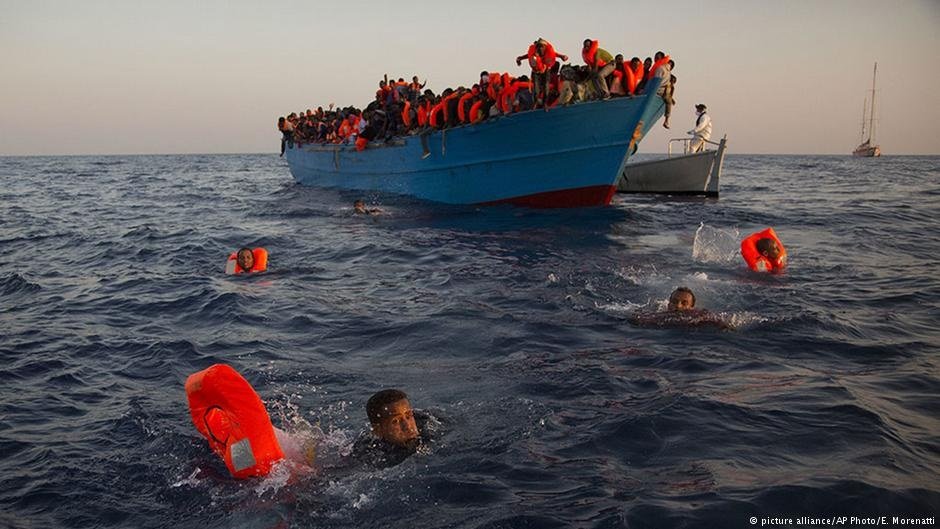
According to the United Nations Children's Fund (UNICEF), more than 11,600 unaccompanied children crossed the Central Mediterranean to Italy as of September last year, marking a sharp rise in minors seeking better lives in Europe -- if they make it there successfully.
"The Mediterranean Sea has become a cemetery for children and their futures," said Regina De Dominicis, UNICEF and Special Coordinator for the Refugee and Migrant Response in Europe in a statement.
"The devastating toll on children seeking asylum and safety in Europe is a result of policy choices and a broken migration system," De Dominicis added.
Also read: 'Thousands of kilometers alone': Unaccompanied child migrants arriving in Europe