
Countries across the EU have ramped up border security in 2023 to stem the flow of irregular migration: Germany, Austria, Italy, Denmark, Poland, Hungary and Latvia -- to name but a few. Meanwhile, a severe shortage of housing across the bloc has left scores of asylum seekers homeless, sleeping in tents or boats, while offshore detention centers are increasingly becoming more palatable for EU leaders.
EU countries ramp up border security
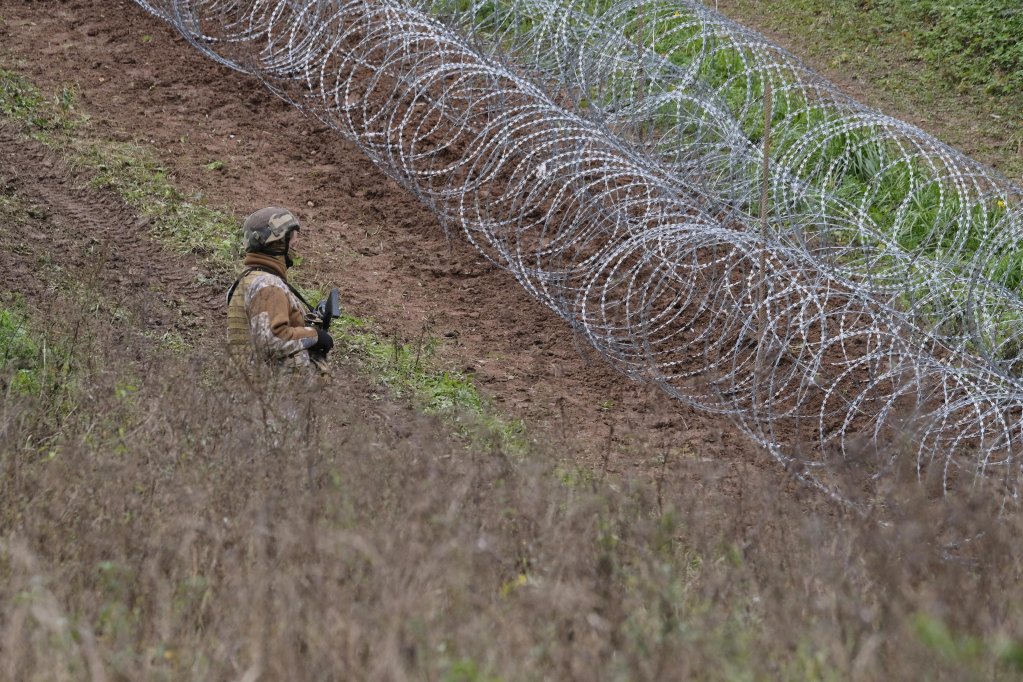
Latvia's border authorities announced this week that its border fence with Belarus is slated for completion by the end of 2023.
Construction of further infrastructure, such as new paths along the fence and the erection of surveillance cameras and sensors, is now set to begin. Military, police and more border personnel were also deployed at the Latvian-Belarus border in 2023.
This comes as the European Union has accused Belarusian leader Alexander Lukashenko of stirring up a migrant crisis at the EU's external borders to assert political pressure on the bloc, prompting Latvia and many other EU states to tighten security at the border.
Nine other EU member countries -- Slovakia, Czech Republic, Poland, Hungary, Austria, Germany, Slovenia, Italy and Denmark -- have also beefed up border controls and other measures in recent weeks due to high 'migratory pressure,' among other reasons, according to the European Commission.
On December 4, Germany announced the extension of temporary border controls with Poland, the Czech Republic and Switzerland until December 15 as part of its efforts to manage irregular migration flows and reduce first-time asylum applications.
Germany's Interior Ministry stressed that stationary police measures at the Polish border should continue, adding that those measures had led to the prevention of around 1,100 unauthorized migrant entries since they came into force on October 16.
The central European country of Slovakia meanwhile announced on November 6 that it would keep temporary border controls with Hungary in place until January 22 at least.
Offshore detention: Albania
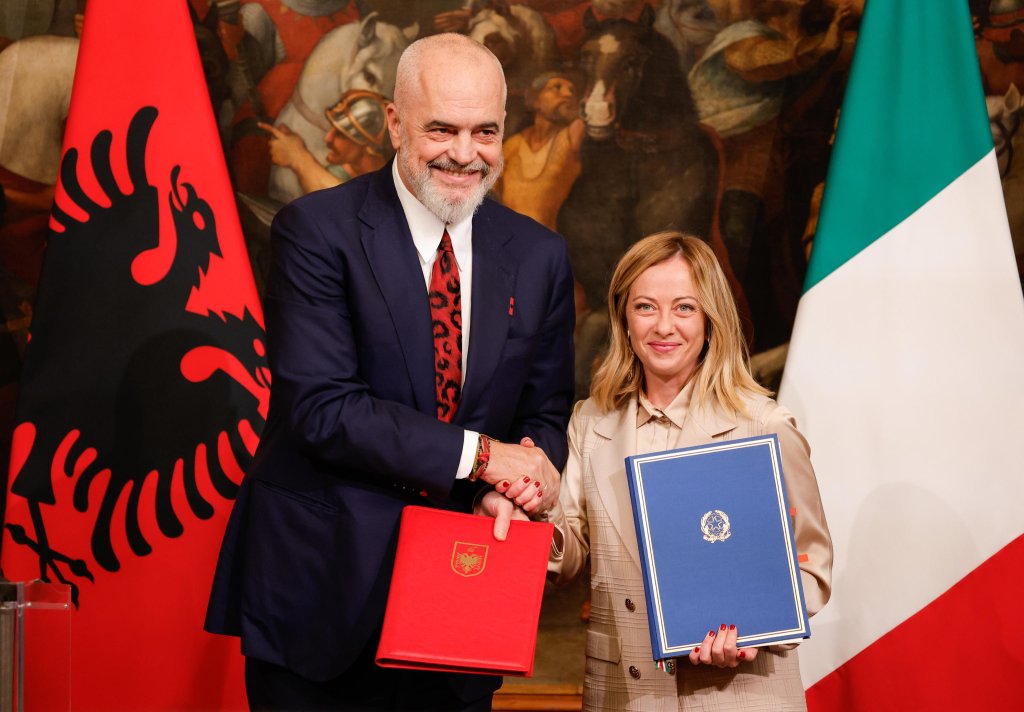
In November, Italian Prime Minister Giorgia Meloni announced that Italy would build detention centers in Albania to host migrants attempting to come ashore. This would only apply to migrants intercepted outside of Italian waters, while Italy would remain responsible for those picked up in Italy's own territorial waters.
Meloni said the centers would initially host some 3,000 people when they open in spring 2024. She added the Italian government then aspired to process 36,000 migrants a year there eventually.
In mid-December, a top EU official endorsed the agreement that Albania would host migrants picked up at sea and transferred there by the Italian authorities, which came just as the Albanian Constitutional Court delayed the deal because of legal concerns that needed to be addressed.
European Commission President Ursula von der Leyen lauded "important initiatives" on curbing migration by EU countries, including "the operational arrangement between Italy and Albania."
"This serves as an example of out-of-the-box thinking, based on fair sharing of responsibilities with third countries in line with obligations under EU and international law," von der Leyen added.
But Albania's opposition petitioned the country's top court to examine the pact, arguing that accommodating migrants in the centers would deny them "any right the Albanian Constitution offers individuals," and would therefore also breach international law.
So on December 13, Albania's chief judge of its Constitutional Court halted the ratification of the deal and said a public hearing would be held on January 18 to decide whether the agreement violates Albania's constitution.
The human rights commission of the Council of Europe also warned in a report that "(t)he extra-territorial detention of refugees, asylum seekers and migrants as foreseen in the memorandum could deprive them of crucial safeguards."
The report added that the deal was "characterized by many legal ambiguities. In practice, the lack of legal certainty will likely undermine crucial human rights safeguards and accountability for violations."
Floating accommodation: Bibby Stockholm
2023 was marked by acute housing shortages across the bloc. To meet the demands of accommodating migrants and refugees, EU member states set up temporary housing solutions in several forms, such as tents, containers and converting hostels.
Though floating migrant accommodation has been around for a while – from boats in canals and cruise ships docked in ports in the Netherlands to a floating hotel in Marseilles – the introduction of the Bibby Stockholm in the UK this year drew some sharp criticism.
The British government deployed the ship, along with a number of disused military barracks, as a solution to accommodating migrants awaiting the outcome of their asylum applications. The vessel, which can house up to 500 people, is still moored in Portland harbor in Dorset, as the controversy continues.
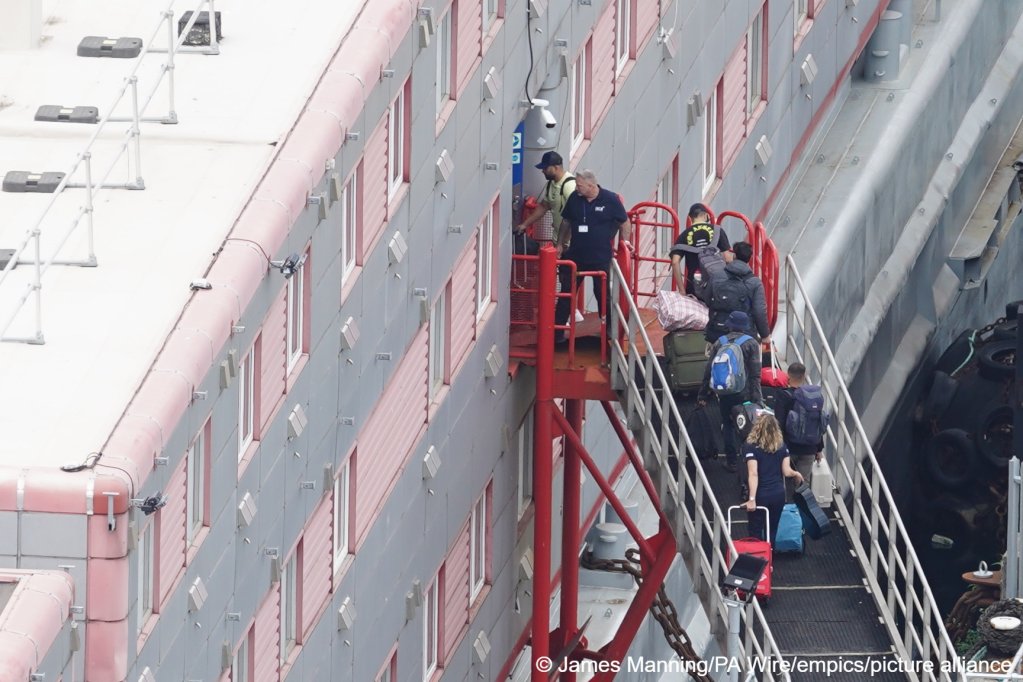
The first migrants to be housed at the site arrived in early August: they then had to be evacuated soon after, following the discovery of Legionella bacteria (which can cause severe sickness) in its water supply. Around 40 migrants returned in October, but rights advocates have slammed the policy, saying the Bibby Stockholm was unfit to host migrants, who have described the vessel as a "prison."
UK officials have maintained that alternative accommodation like the Bibby Stockholm brings "better value to taxpayers" than housing migrants in hotels across the country.
Earlier in December, Britain's Refugee Council called for an independent review into the death of the asylum-seeker staying on the Bibby Stockholm.
Migrants left to sleep rough
Scores of migrants have also been forced to sleep in tents or rough this year as many European countries continue to fall short in providing migrant accommodation.
Ireland said in December it was offering tents, sleeping bags and cash for new migrant arrivals.
Ireland's International Protection Accommodation Service cited a severe housing shortage as the reason, with dozens of asylum seekers at risk of sleeping rough over the winter. The Irish government this year has also announced plans to house asylum seekers in floating accommodation.
Asylum seekers in the center of Brussels meanwhile also found themselves sleeping in tents after local authorities told them there was no more space available in migrant accommodation.
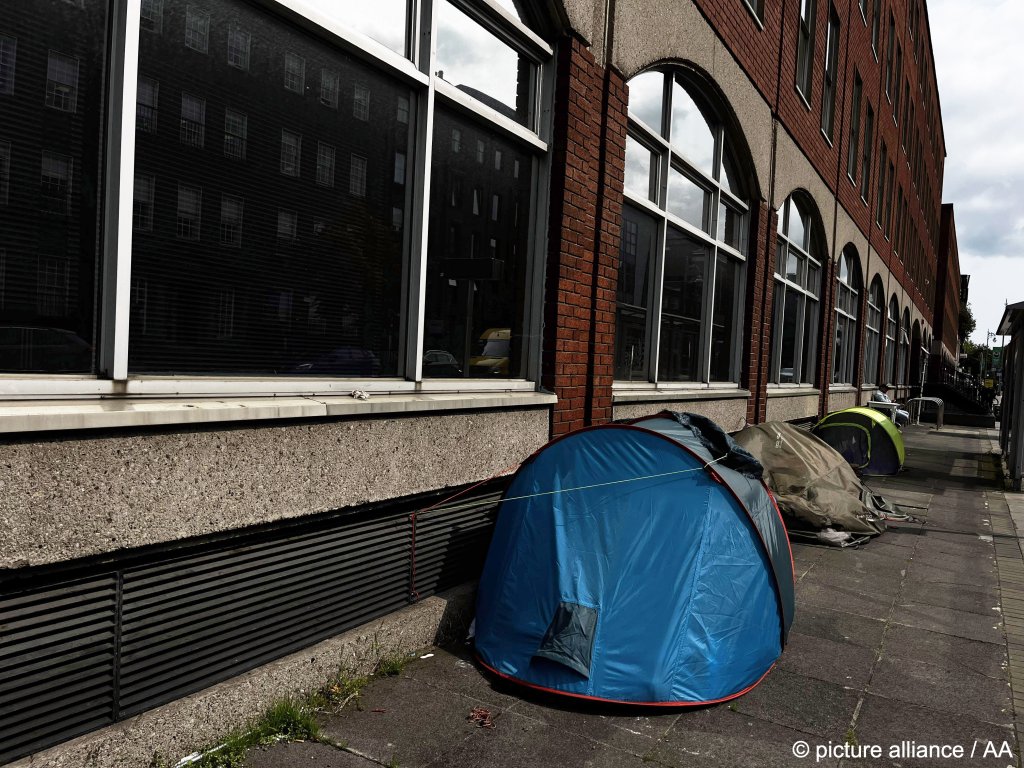
The Belgium Federal Agency for Asylum (Fedasil) estimated in January 2023 that at least 3,000 migrants were homeless in the country, with many staying in tents or in squatted buildings.
In August, the Belgian State Secretary for Asylum Nicole de Moor announced that in particular, there was not enough accommodation available for single males applying for asylum in the country.
De Moor said she wanted to give priority to families and children.
The distribution of first-time EU asylum applicants by sex in 2022 shows 70.8% of male applicants compared to 29.2% women -- meaning many migrants will be left homeless.
Cases of scabies, diphtheria and tuberculosis have all been reported among migrants sleeping rough.