
Latvia's construction of a border fence with Belarus is slated for completion by the end of 2023. But border security personnel say a fence is not enough to manage migration.
The fence on Latvia's border with neighboring Belarus will soon be completed, according to border authorities in the Baltic country.
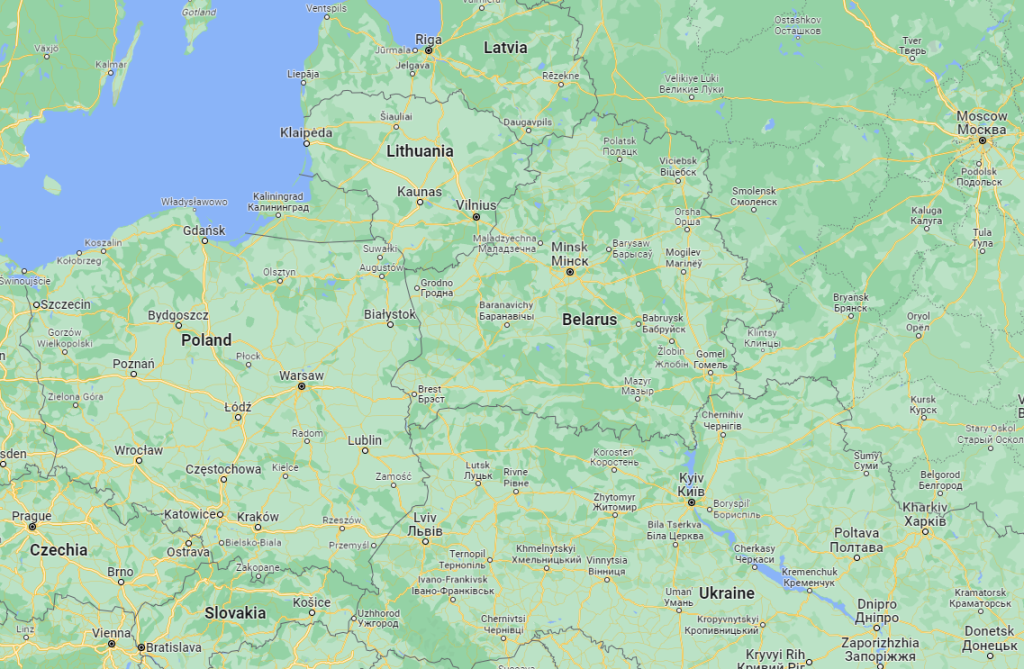
Latvia has an approximately 172-kilometer-long border with Belarus, which makes up part of the EU's external border.
The European Union has accused Belarusian leader Alexander Lukashenko of stirring up a migrant crisis at the EU's external borders to assert political pressure on the bloc, prompting Latvia to tighten security at the border.
"We hope that by the end of year, the entire fence on the land border with Belarus will be completed," border guard officer Vladimirs Sersts told the German DPA news agency during a visit to the border.
Border to be bolstered with surveillance cameras, sensors
Unlike in Lithuania or Poland, Latvia does not yet have a continuous fence along the border with Belarus, which partly runs through local bodies of water. Instead, multi-layered rolls of barbed wire have been laid out in several places, which are easier to cross.
Most of the construction of the fence had already been completed shortly before Christmas. Construction of further infrastructure, such as new paths along the fence and the erection of surveillance cameras and sensors, is now set to begin.
Smugglers a 'big problem'
The Latvian border security maintains that a fence is not sufficient to prevent irregular migrants from passing through.
"The fence is not a stone wall," emphasized Sersts. "Of course it can be overcome, and finished sections are already being damaged or cut open. But the fence will give us time to react," he added.
Another "big problem" are smugglers who help migrants on the Latvian side of the border to cross.
"Many traffickers try to get easy money and transport these people illegally onwards to Europe," Sersts added.
More than 13,000 migrants have been prevented from crossing the border from Belarus this year, a considerable uptick from just under 5,300 last year, according to the Latvian government in Riga.
Shortly after becoming Latvia's new prime minister in September, Evika Silina accused the Belarus regime of once again using migrants as a "hybrid threat" to undermine the Baltic country's security.
Poland and other EU countries also blame the increase in arrivals on Lukashenko and also on Russia, saying they orchestrate the migrant "influx" together in an attempt to destabilize the bloc.
Migrants sold lies in Belarus
As part of efforts to boost surveillance capacities at the Belarus border, the Latvian government has closed one of its other border checkpoints in September to free up personnel and redeploy them at the Belarus border.
Military and police have also been deployed to bolster security at the Latvian-Belarus border.
Sersts said most migrants crossing through Latvia aim to reach Germany; many reportedly are surprised to find themselves in the Baltic country instead of anywhere near Germany due to deliberate misinformation on the Belarusian side, Serts explained.
"They don't even know what Latvia is or where it is," he added.
With Reuters, DPA