
Countries across the European Union are changing their tactics in meeting migration flows, not only by tightening border controls but also by upping the number of deportations of failed asylum seekers. Germany in particular is seeking partnerships to make deportations much easier. According to an investigation, its government has all but signed a secret pact with Iraq to this effect.
An investigation led by the German public broadcasters NDR, WDR and the Süddeutsche Zeitung newspaper revealed that the German government has secretly reached a deportation agreement with the government of Iraq, which had been in the making for months.
Details about the deal remain shrouded in mystery, but the agreement appeared to already be in place and functional, the investigation revealed -- deportations to Iraq have been steeply rising in recent months, according to official information.
A high number of asylum seekers in Germany who eventually end up having their applications rejected come from Iraq, making the Middle Eastern country an attractive partner for Berlin.
But are deportations to Iraq safe -- and ethical? And why did the German government strike its latest deal behind closed doors?
To deport or not to deport
There were about 26,000 Iraqis in Germany by the end of October 2023 who technically were required to leave the country, according to Germany’s Federal Ministry of the Interior. In 2022, however, only 77 people in total were deported directly to Iraq.
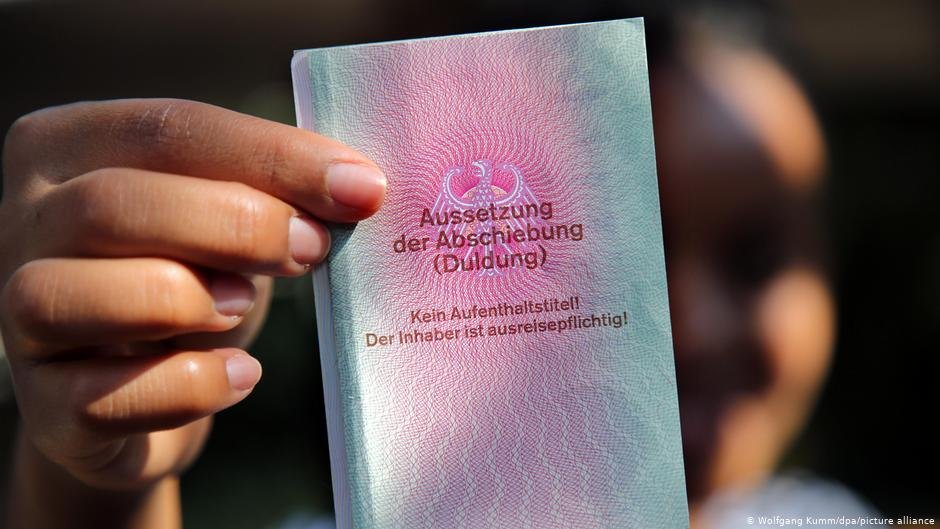
This is because many Iraqis do indeed fail their asylum cases in Germany, but are not pegged for deportation -- as long as they don’t break German laws. Many of them manage to remain in Germany under the provisions of a so-called tolerance permit ("Duldung"), which means that they will have access to only few benefits in Germany and often are not allowed to work.
Technically, they’re not even qualified to be called "residents" of Germany but occupy a legal grey area, and can always be scheduled for deportation. Many people under Duldung permits, however, manage to spend years or even over a decade in Germany, which is why the government is focusing on this particular area in its attempts to lower migration rates.
Partners in crime
The joint investigation revealed that officials from Germany and Iraq had met in early 2023 to define their joint objectives for future cooperation: together, they penned a declaration of intent which highlights plans of greater collaboration in several points of mutual interest, especially when it comes to migration (both legal and irregular).
To this end, both sides agreed in the official paper "that legal migration is beneficial for both societies and strengthens relations between the two countries" since Germany considers the establishment of controlled pathways of legal immigration through work permits and similar means to be a central part of its overall migration policy.
The document also specified that one of the main goals of the cooperation was to promote voluntary return programs for people without a residence permit in Germany.
Read more: Immigrants in Germany: Who gets what kind of support?
A warm welcome for Iraqis -- back home
Both sides, however, also agreed in the declaration on "the readmission of nationals who do not or no longer fulfill the required conditions for entry, presence or residence in either territory."
This sentence in particular marks a change in direction: it signals that after these negotiations, Iraq is now willing to accept not only migrants who have committed criminal offenses in Germany, but in principle all its citizens -- including minorities like the Yazidis who until recently have suffered severe persecution.
Read more: German state halts deportation of Yazidi women and children
The document further highlights that specifics to enact this change have also been discussed. The biggest boon to deporting higher numbers of Iraqis in the past was faithfully establishing their identity; most asylum applications submitted by Iraqi nationals have so far failed to meet the government’s criteria for clarifying identity, according to the investigation.
It is believed that in many cases this is a deliberate strategy promoted by smugglers for migrants to buy time in Germany; failed asylum seekers cannot be returned to their home countries until their identities have been proven.
But now, Germany and Iraq have agreed that all relevant documents will be shared by consular departments when trying to establish someone’s identity -- to the extent that even biometric data might be exchanged.
No time to waste
The agreements, which according to the joint investigation have so far been kept secret, could already be in effect: Iraq has been confirming the identities of rejected asylum seekers at a higher rate than before, as reported by the German refugee organization, Pro Asyl.
In all of 2022, only 115 suspected Iraqi nationals were interviewed to have their identities established, but by August this year, that number had risen to 339.
The total number of deportations to Iraq has also recently doubled - from 77 cases in 2022 to 164 by the end of October 2023, the investigation revealed.
On the most recent deportation flight to Baghdad, which took place earlier this week, barely more than half of all 28 passengers were confirmed to have committed criminal offenses and were being deported for that reason, local officials said.
Deals behind closed doors
Iraqis are the single biggest nationality of failed asylum seekers with Duldung papers in Germany, according to the Federal Office for Migration and Refugees (BAMF). In many cases -- though they are ultimately required to leave Germany -- they end up living off public funds for years, making this also a public policy issue.
There’s growing criticism now that the German government failed to consult its taxpayers and voters on the matter. The opposition in parliament strongly criticized the secretive way in which the deal with Iraq was struck.
Alexander Throm, spokesperson for domestic policy in the opposition Christian Democrats said that German Chancellor Olaf Scholz could not "leave Parliament and the public completely in the dark about which agreements have been concluded with which countries."
Left Party politician Clara Bünger meanwhile said: "The German government must disclose what has been agreed with Iraq on the subject of deportations."
Read more: NGOs criticize EU migration pact, predicting more death and suffering as a result
A growing trend
But Germany is not the only European country to have signed such contentious secretive deals with Iraq. According to the research by WDR, NDR and Süddeutsche Zeitung, Austria and Sweden are also seeking partnerships with the Middle Eastern nation.
The EU Commission itself told the investigation that it was working more closely with authorities in Iraq, and that there had been "an unprecedented change in Iraq's return and readmission policy in the second and third quarters of this year." It added that the Iraqi government was allegedly committed to "accepting all returns."
The European Commission’s partnership, however, was publicly known all along — in contrast to Germany’s deal with Iraq. The Federal Ministry of the Interior told the investigation that it would not comment on "details."
Iraq meanwhile does not deny the agreement, telling the investigation that its cooperation with Germany was going well.

Between Iraq and a hard place
In recent years, Germany has enacted multiple programs to increase the number of deportations of rejected asylum seekers to Iraq. The most recent deal, however, is believed to be the only one the government remained tight-lipped about.
Regardless, thousands of Iraqi people continue each year to apply for asylum in Germany, citing persecution and suffering back home — never thinking they might be forced to go back.
After many years of war and fighting in Iraq, the country indeed appears to be on its way to more stability domestically; at the same time, however, it is still not considered a safe country of origin per se, which is why Iraqi asylum cases are highly complicated.
In fact, Germany’s Federal Foreign Office itself continues to paint a bleak picture of Iraq, saying in its reports that authorities there continue to hold "responsibility for numerous human rights violations."