
The migration route towards Spain and its territories – including the Canary Islands archipelago and the two enclaves Melilla and Ceuta in North Africa -- became busier in 2023. InfoMigrants takes a look at the route and its themes across the year.
The year kicked off in January, when a fire ripped through an informal migrant camp in south-eastern Spain where around 200 workers had been living. The workers were evacuated from the camp known as El Walili in the region of Almeria.
At the time, press reports said it was unclear how the fire started. However, unions were concerned that workers residing in the camp had been rendered homeless by the fire and risked losing their jobs if they could no longer live near the fields.
In the last 20 years, the area around the El Walili camp had almost doubled the number of hectares being farmed, reported Spanish newspaper El Salto Diario. But the expansion did not go hand-in-hand with adequate housing and services for the additional migrant workers needed to farm and harvest more than 6,500 hectares of agricultural land.
A politician in Spain, Serigne Mbaye, originally from Senegal, was quoted by the Anadolu news agency saying he thought the fire had been set deliberately to make migrants leave. He said he felt that Spain was exploiting migrants, using them and then throwing them away.
He told El Salto Diario that many of the workers at the camp were in "legal limbo" and being exploited. He accused Spain and Europe of profiting from slavery because of the conditions in which some of the migrants allegedly worked in the fields, producing fruit and vegetables for the rest of Europe.
Overview
This explosive start seemed to herald the arrival of more migrants than the previous year, influencing various policies the Spanish government began pursuing across 2023.
Between January 1 and December 17, according to UN Refugee Agency (UNHCR) figures, a total of 53,569 migrants entered Spain without the correct papers. Over 53,000 of them arrived by sea.
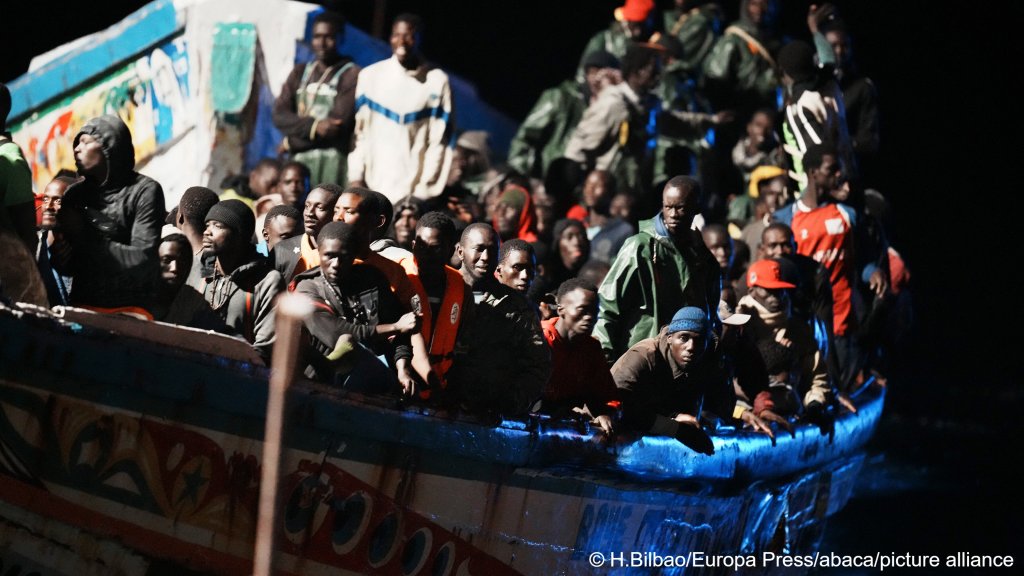
This, reported the French news agency Agence France Presse (AFP), was at its "highest level since 2018" and represented a 76% increase over the same period the previous year.
This year, the number of migrants arriving on the Spanish Canary Islands, Spain’s archipelago in the Atlantic Ocean off the coast of West Africa, has surpassed levels last seen in 2006, the previous record year for arrivals.
During much of this year, Canary Islands officials signaled they felt "overwhelmed" by the numbers of arrivals and pleaded with the central government in Spain for help.
Dead and missing
In 2018, according to the UNHCR, a total of 65,383 migrants arrived in Spain, over 58,000 of them by sea. The numbers of dead and missing were estimated to be 811.
Since then, apart from 2019 when the figure slightly declined, the numbers of dead and missing on routes to Spain have risen. In 2021 they were estimated at 1,571 and in 2022 at 1,221.
According to UN migration agency IOM’s tracker on the numbers of dead and missing en route to Europe, by December 20, 2023, at least 1,087 people died en route to the Canary Islands over the Atlantic Ocean or in the Western Mediterranean between Morocco and southern Spain.
NGOs like the Spanish organization Walking Borders Caminando Fronteras estimate the numbers even higher. At the end of December 2022, they said some 11,286 migrants had died trying to reach Spanish borders over the previous five years.
Why might more migrants attempt to reach Spain?
Part of the reason for increasing attempts to reach Spain could be found in the political crisis which engulfed the previously relatively stable country of Senegal.
In the space of some six weeks around July, 19 boats arrived to the Canary Islands from Senegal, but around 30 are thought to have set off. These vessels either disappeared en route or were turned back by patrols before they could reach the Spanish archipelago.

The last two years in Senegal have seen a worsening political situation, culminating in a spate of violence in June and July. Unemployment and overfishing are other factors propelling young people from Senegal’s coastal regions to consider departing.
Frontex acknowledged the situation in Senegal over the summer. In an internal report, the agency noted "the political situation will act as a push factor that will drive more people to leave the country and encourage demand for smugglers on the West African route.”
Drought, food shortages and a lack of jobs also contributed to the situation. In 2023, Senegalese President Macky Sall announced he would be stepping down in February 2024. His departure after years of holding the reigns of power could lead to even more instability in the West African country, at least in the short term.
Spain plays a leading role in EU's migration policy
In the second half of 2023, Spain held the rotating EU Presidency. It was under the Spanish presidency that the EU Migration Pact was finally agreed upon after more than three years of wrangling. On December 20, when the signing was announced, Spanish Prime Minister Pedro Sanchez commented: "It will allow us to do something very important: that is to improve our border management, to manage migratory flows in a more humane and coordinated way."
The agreement was also hailed as "landmark" by the president of the European Parliament Roberta Metsola. She posted on X (formerly known as Twitter): "Europe has once again defied the odds. I’m very proud that with the Migration and Asylum Pact, we have delivered and provided solutions."
Surveillance and drones as prevention
This year, Spain has gone to great efforts to try and curtail the number of migrants attempting to reach the country by sea, particularly on the highly dangerous Atlantic crossing. On December 15, the Spanish government announced the deployment of two surveillance planes along the coast of West Africa, which they said had enabled officials to stop 59 canoes leaving from Senegal and Gambia. The canoes stopped were estimated to have been carrying some 7,200 migrants just in the past two months.
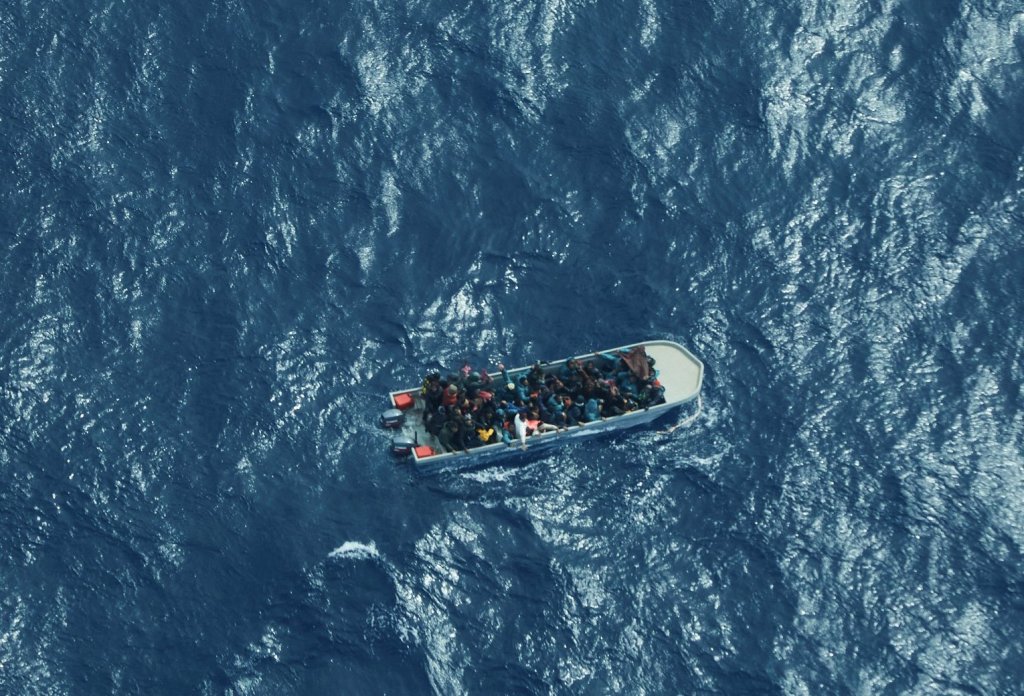
Spanish Interior Minister Fernando Grande-Marlaska told the news agency Associated Press (AP) that he thought those numbers represented around half of those that would otherwise have been headed for the Canary Islands in that period.
On a visit to the Canary Islands last week, Grande Marlaska told reporters the spotter planes had helped "save lives, because you know that the Canary Islands route is a very dangerous route."
In October, it was also reported that Spain sent surveillance drones to Senegal in a bid to curtail the numbers leaving for the Canary Islands. Also that month, it spent millions on putting obstacles along the Canary Islands route.
Also read: Spain spends millions to tackle migration flow towards Canary Islands
In addition, Spain provided 38 personnel, equipped with four boats, a helicopter and 13 all-terrain vehicles, said Grande Marlaska, who visited Senegal at the time.
Altered routes
The planes are stationed in both Senegal and the Canary Islands. The Moroccan and Senegalese navy have also been drafted to help patrol their coasts and try and prevent boats from leaving the shores of West Africa.
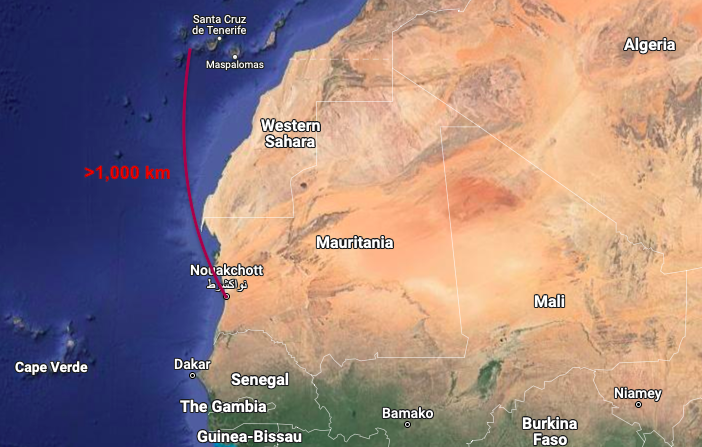
However, sometimes these patrols lead to migrants taking ever more dangerous routes --pushing further out to sea more quickly, for instance, in an effort to avoid the patrols. Sometimes these alternative routes lead to even more problems, longer periods at sea and more chance to get pushed off-route.
In August this year, for instance, many news agencies reported on a Senegalese pirogue (wooden fishing boat) which left Senegal in July with 101 people on board. After 36 days at sea, only 38 people survived. They were found around 180 kilometers away from the Cape Verde islands after being blown far off their original course towards the Canary Islands.
Bilateral agreements to enhance migration policy
Ylva Johansson, the EU’s Home Affairs commissioner responsible for migration, has been working closely with Spain to try and reduce the number of migrants entering the bloc via Spanish territories. Most of the migrants using these routes are from Senegal, Mauritania and Morocco.
Spain has been working hard on its ties with third countries in 2023. Last week, Spain’s Foreign Minister José Manuel Albares began a two-day trip to Senegal and Mauritania to discuss the migrant situation with local authorities in those countries.

The OECD notes that Spain has made efforts to promote circular migration. Back in September 2022, Spain launched the new edition of the Collective Management of Recruitment in Origin (GECCO) program. The program aimed to bring more than 16,000 seasonal workers from Morocco to work in Spain’s agricultural sector.
Spain also collaborates with Canada and the US to promote legal migration from Latin America. In January 2023, Spain signed a circular migration agreement with Guatemala. This was in line with similar agreements it holds with other Latin American countries. It was scheduled to bring in around 2,000 seasonal workers to Spain throughout 2023.
In March 2023, Spain extended its migrant worker program to Senegal. At that time, it was announced that Spain would take in around 100 people to work on its farms in April.
Mending old wounds
In February, Spain and Morocco inked migration agreements. The Spanish Prime MInister met with his Moroccan counterpart in Rabat to reset his country’s “strategic partnership” with regard to migration and economic partnership.

The meeting was aimed at pacifying diplomatic tensions between the two countries over the disputed territories in Western Sahara – a former Spanish colony annexed by Morocco in 1975.
Two memorandums of understanding were signed at the meeting. The Spanish government began to refer to Morocco as an ally in helping the EU’s migration policies.
At the meeting, the two countries also signaled they would prepare to reopen the borders between Morocco and the Spanish enclaves Ceuta and Melilla. In 2022, tens of migrants, mostly reportedly from Sudan, died when they tried to cross the border fence to Melilla. The borders have remained shut since.
Attitudes to migrants within Spain
Journalist Maria Ramirez, Spanish daily newspaper El Diario’s deputy managing editor, recently commented in The Guardian newspaper about how migration is seen in Spain.
"Spain has not witnessed the same level of outrage and alarmist anti-immigration rhetoric" seen in the UK and some other European countries, she wrote.
According to Ramirez, citing survey data published in November by Spain's Center for Sociological Investigations (Centro de Investigaciones Sociológicas CIS), only 2% of Spaniards consider immigration the main problem for Spain and about 12% mention it as one of the key issues for the country. Many Spaniards feel integration is working and that migration should be seen positively to help ease labor shortages in an aging population.

Age assessment tests and unaccompanied minors
In November, Spain saw criticism when the government expressed wishes to introduce age assessment tests for young migrants. At the time, news agency Reuters reported that there had been a number of potentially incorrect age assessments carried out, resulting in young people being assessed as adults and sent to adult camps.
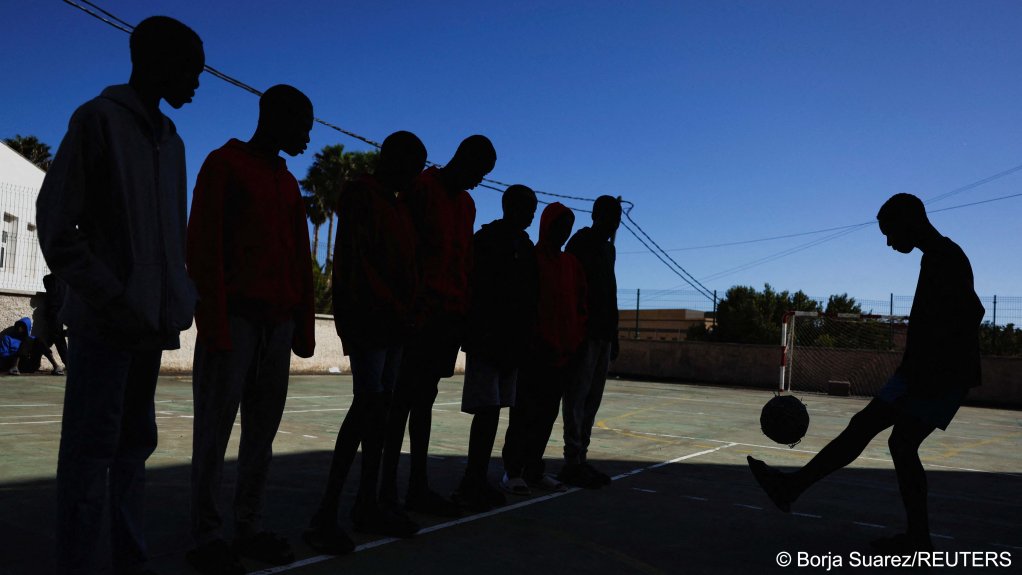
The Ministry of the Interior and Migration told Reuters they were looking into at least 48 cases of suspected misclassification of minors as adults. Bone scans and other age assessment tests are used in these kinds of re-assessment.
More than 4,000 of the migrants that arrived in Spain this year were unaccompanied minors.