
The UK government appears ready to push its new Rwanda deal through parliament, regardless of cost.
A £140 million (€160 million) UK deal to fly asylum seekers landing in Britain to Rwanda to seek asylum has barely left the news since it was first signed in April 2022, despite the fact that no flights have actually taken off.
Now the government appears ready to push a new deal through, regardless of cost. Along with signing a new deal and proposing to change the law, it has also paid out millions to get the so-called "repatriation flights" up and running as soon as possible.
Last week, the UK’s latest home secretary (interior minister) James Cleverly flew to Kigali to sign additional agreements. The new deal is designed to address concerns raised in a November UK Supreme Court judgement that determined the original deal "unlawful", stating Rwanda was not a safe enough third-country to send asylum seekers to.
Also read: UK court blocks government's Rwanda plan, government vows to press ahead
The Conservative government hopes that once it has pushed a new draft law declaring Rwanda a safe country through parliament, flights might start to take off next spring 2024.
Total costs expected to reach around £290 million
So far, the UK government has paid Rwanda an additional £1 million (€1.17 million) for the deal and is pledging to pay another £50 million (€58.4 million) over the next 12 months, bringing total costs to around £290 million (€339 million).
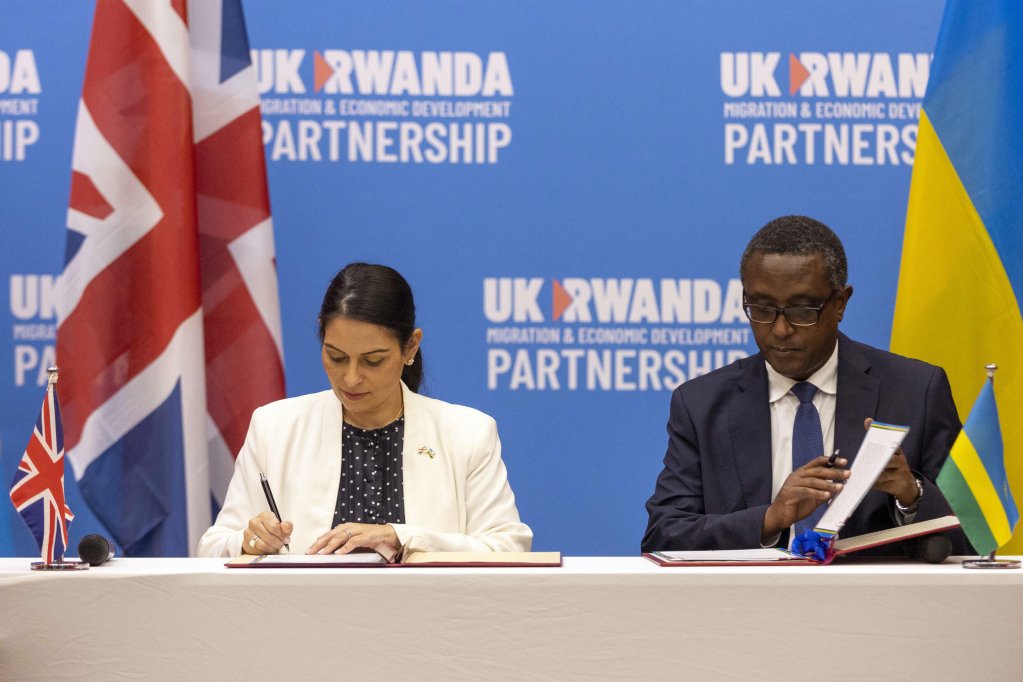
The UK’s Junior Immigration Minister Tom Pursglove defended the costs on Friday, reported news agency Associated Press (AP). Pursglove told parliament that "all of the right infrastructure to support the partnership is in place."
Also read: Europe considers offshore screening of asylum seekers after UK court ruling
He added that part of the additional payments were "helpful in making sure that we can respond to the issues properly that the Supreme Court raised."
'An unforgivable waste of taxpayers' money'
To complicate matters even further, a UK election is expected in 2024. The main opposition Labour party is leading in the polls and say they would scrap any Rwanda plan, potentially making the millions of pounds paid out a waste.
Labour's leader Sir Kier Starmer said in parliament that Rishi Sunak's government had given Rwanda "hundreds of millions of pounds for nothing in return," reported the British left-leaning broadsheet, The Guardian. The opposition Liberal Democrats called the additional payments "an unforgivable waste of taxpayers' money."
After the new deal was signed last week, former immigration minister Robert Jenrick resigned, saying it did not go far enough and he couldn’t stand behind it. Over the weekend, he told the BBC the new draft law was "weak" and would be "bogged down" by legal challenges.
'Take back control' of the UK's borders
Jenrick said that everyone who "understands" asylum law thinks the bill will fail, reported the BBC. The former minister also said he would not support a vote about the proposed law expected on Tuesday (December 12).

Jenrick and his former boss Suella Braverman have both stated they do not feel the law goes far enough in terms of the UK taking back control of its borders. Braverman, herself a trained lawyer and former Attorney General, has advocated leaving the European Convention on Human Rights in order to "take back control" of the UK’s borders.
Also read: Austria plans to offshore asylum seekers, like the UK
The new draft law, if passed, would disapply some sections of the UK’s human tights law related to asylum claims. This would essentially make it harder for complainants to challenge the decision to send them to Rwanda on the grounds of safety.
The law has met opposition both within and outside the Conservative party. Edward Garnier, a former Solicitor General and a member of the UK's Conservative party, told the BBC that the law was "trying to define things when there is no evidence, or no safe evidence, for that being the case."
Garnier said that the government's attempts to change the law to say that Rwanda is a safe country is "rather like a bill which says the parliament has decided that all dogs are cats."
With Reuters and AP