
In a bid to curb irregular migration, Slovakia is extending its border controls with Hungary until January 22. The move comes two days after Germany said it would prolong border checks at its borders with Poland, Czech Republic and Switzerland.
The central European country of Slovakia will keep temporary border controls with Hungary in place until January 22, the government said on Wednesday (November 6), extending checks aimed at preventing a renewed spike in irregular migration for the second time.
Imposed on October 5 and initially meant to last ten days, the move followed neighbors and fellow EU countries Poland, the Czech Republic and Austria, which had tightened their frontiers with Slovakia. After several extensions, the checks had been due to end on December 23.
In late October, moreover, Slovakia's newly formed government announced the deployment of hundreds of police officers and troops along the Hungarian border.
Numbers dropped due to border checks
According to government data, the number of migrants entering Slovakia has reportedly risen 11-fold to nearly 40,000 this year (through September). Most of those crossing into Slovakia tend to come from countries in the Middle East and North Africa as well as from Afghanistan.
The vast majority of arrivals come via Hungary on their way to richer EU countries such as Germany, AFP reported.
In November, border controls caused the number of migrants in detention to drop from 6,809 in October to only 34 in November, according to the Interior Ministry.
Also in November, Slovak Prime Minister Robert Fico returned to power for a fourth time after winning a September election for which he pledged to protect borders from undocumented migrants.
Read more: Irregular migration to Germany drops due to new border checks
Germany extends checks at Polish, Czech, Swiss borders
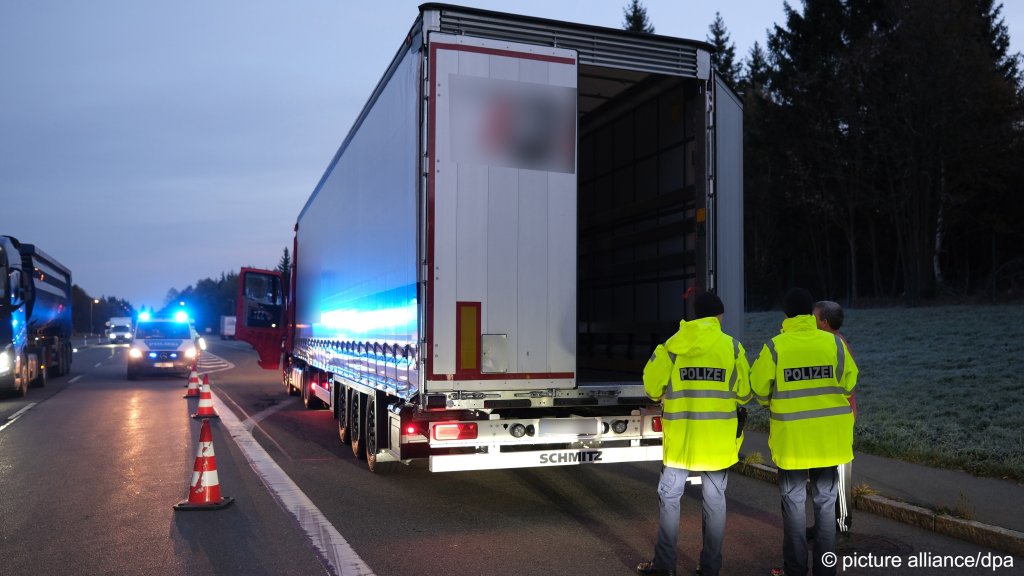
On Monday (December 4), Germany's Interior Ministry announced an extension of temporary border controls with Poland, the Czech Republic and Switzerland until December 15.
Similar to Slovenia, the German government said the aim of the reimposed border checks along its southern and eastern borders was to curb unauthorized migration.
German Interior Minister Faeser first announced plans to reintroduce stationary border controls at Germany's borders with Poland, the Czech Republic and Switzerland in mid-October. The checks have been extended several times since.
According to news agency dpa, similar border controls along the German-Austrian border have been in place on a supposedly temporary basis since 2015.
Since October 16, around 3,300 unauthorized entries have been detected at Germany's border with Poland and 1,100 unauthorized entries have been prevented, a spokesperson for the Interior Ministry said.
If someone is detained at the border and utters the wish to apply for asylum, they are generally allowed to enter the country, the ministry spokesperson said further.
The overall aim of the controls is to "put a stop to the increasingly unscrupulous and brutal smuggling of migrants," the spokesperson added.
'Last resort measure'
On Monday, the spokesperson told dpa that the extension of the border checks would be reported to the European Commission in Brussels but that controls are expected to continue, especially along the German-Polish border.
According to the European Commission, nine EU member states -- Slovakia, Czechia, Poland, Hungary, Austria, Germany, Slovenia, Italy and Denmark -- imposed border controls and other measures in recent weeks due to high 'migratory pressure', among other reasons.
All are part of the European Union's Schengen visa-free travel zone, within which borders typically have no passport or document checks.
According to EU law, reintroducing border controls between EU countries can only be "a last resort measure, in exceptional situations, and must respect the principle of proportionality." The duration, moreover, "is limited in time".
Read more: Croatia tightens border checks as Balkan migration route gets busier