
Libya announced the deportations of almost 250 irregular migrants to Niger and Chad on Tuesday (November 28). The initiative is a rare example of the country's two rival governments working together.
Libyan authorities on Tuesday said they were preparing to deport 248 undocumented migrants.
The deportations are a joint effort of the two rival administrations in the war-torn North African country.
An official working at the official government agency against clandestine migration in the capital Tripoli told Agence France Presse (AFP) that the group of deportees, which included 120 Nigerian nationals, had left Libya in coordination with the International Organization for Migration (IOM).
Meanwhile, the same official added that the rival government in Libya's east would deport 128 Chadian migrants to the country's border with Chad.
Moussa al-Koni, vice president of the Libyan presidential council in the capital Tripoli, said the cooperation was part of an initiative to tackle "criminal networks of traffickers" in Libya, Chad and Niger.
"This is a collective effort that would let this people stay in their countries and live there in dignity," al-Koni said.
Libya's official government in Tripoli meanwhile is hoping to reach further agreements with countries in the region and beyond to deport more migrants; earlier this week, Interior Minister Imed Trabelsi met with the IOM's regional representative Othman Belbeisi to push for a mechanism that will facilitate this.
Also read: Mediterranean countries agree to take hard line stance on migration
A volatile region -- not only for migrants
The collaboration between the two rival governments in Libya comes amid turbulent times in the Sahel region.
For more than five months, Niger has been under the leadership of a military government following a major coup d'etat in what was long regarded the most stable country in the region. The junta government has meanwhile also revoked a 2015 law to curb migration in a bid to gain popular support, which is likely to further weaken security in the African country.
Also read: Niger junta revokes law aimed at curbing migration to Europe
Chad, meanwhile, has been on the forefront of the fallout from the ongoing war in Sudan, with tens of thousands of war refugees arriving in the country since April.
Libya itself is also facing difficulties, with the two rival authorities trying to assert control over the entirety of the country since the fall of the authoritarian regime of Muammar Gaddafi in 2011.
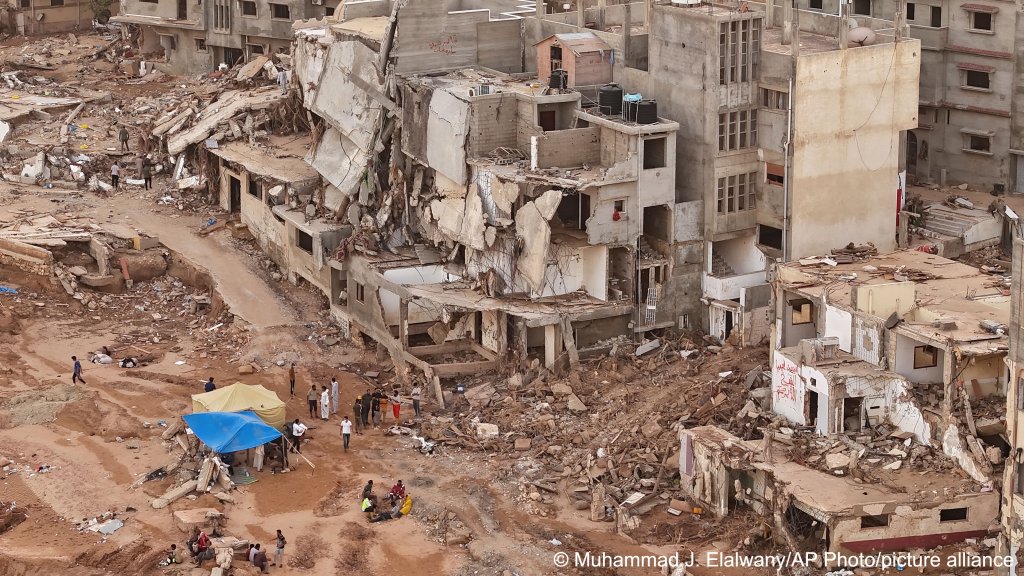
Earlier this year, the North African nation suffered its biggest setback in over a decade, when over 4,300 people died in devastating floods in the city of Derna, which were brought in by Strom Daniel. Thousands still remain missing, including many migrants.
Also read: Libya: Migrants' families still hoping for news following floods
Hundreds of thousands stuck in Libya
In the effective absence of leadership for over a decade, Libya has long become a major hub for irregular migrants trying to come to Europe across the Mediterranean.
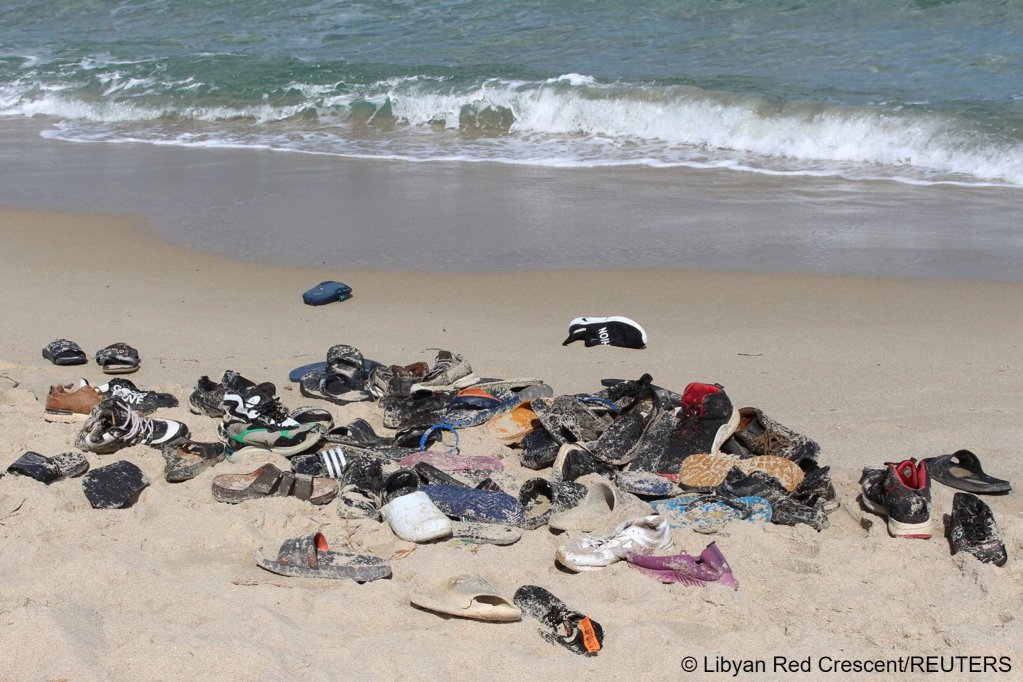
Thousands have drowned during attempts to cross the sea on unseaworthy small vessels, while many more have fallen prey to traffickers in Libya, who are known for grave human rights abuses.
Also read: Videos of migrants being tortured in Libya published on social media
"We have all paid a big price because of these groups that try to profit not only off nationals of Niger and Chad, but also of more distant countries in Africa and Asia, by smuggling them into Europe," al-Koni further explained.
The vast majority of migrants coming to Libya transit through Niger, Chad or Egypt at some point of their journey. According to IOM figures cited by AFP, more than 700,000 migrants were in Libya in June of this year, most of whom had crossed into the country from Niger and Egypt.
Also read: Libya deports 600 undocumented Egyptians
with AFP