
The interior ministers of six EU countries are meeting in Hungary to discuss efforts to curb migrant smuggling. The meeting takes place against the backdrop of several EU countries introducing temporary border checks amid heightened concerns about irregular migration.
Hungarian Interior Minister Sándor Pintér is hosting his counterparts from Germany, Austria, the Czech Republic, Slovakia and Poland on Monday (November 27) for discussions around people smuggling operations and unauthorized migration.
Several of the six governments of the European Union member states have temporarily established static and mobile checkpoints along their borders with other EU countries to prevent people smugglers from transporting migrants to Central and Western Europe via routes through the Balkans.
Slovakia, for example, announced temporary border controls on its border with Hungary on October 5. Within the Schengen visa-free travel zone, borders typically have no passport or document checks.
Migrant smuggling is a highly profitable and highly organized business that poses significant dangers for migrants. Some smuggling networks transport thousands of migrants to Europe.
Earlier this month, two men said to be people smugglers were taken into custody in Hungary following a car chase in which they opened fire on police. 21 migrants were found inside the suspects' van.
Separately, on Monday, the Council of Europe Commissioner for Human Rights said Hungary should abandon its proposed 'sovereignty' law as it gives sweeping investigative powers with little democratic oversight. The controversial bill, submitted to parliament last week, would set up an authority to monitor political interference and recommend changes in regulations.
Read more: The EU's migration dilemma: Is sealing borders the solution?
Border checks renaissance
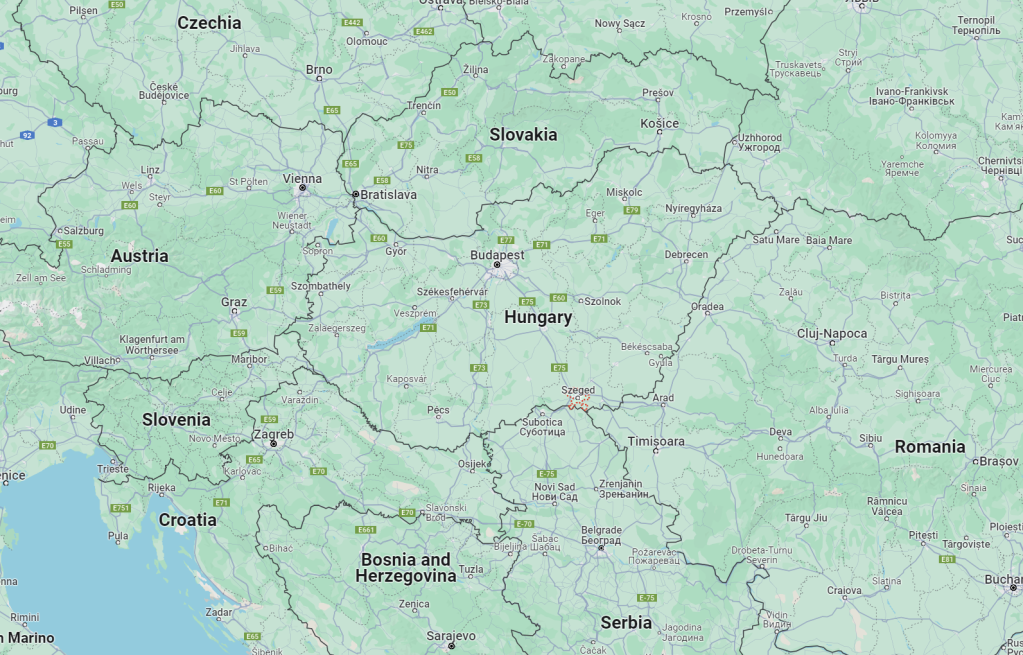
Monday's talks between the interior ministers are taking place in the southern Hungarian city of Szeged, near a border fence that Hungary erected along its frontier with Serbia in 2015.
German Interior Minister Nancy Faeser will also attend. Her presence comes as Europe's biggest economy has been grappling with the highest annual number of irregular migrant arrivals since the so-called migration crisis of 2015.
In October, Faeser announced plans to reintroduce fixed border checks at Germany's borders with Poland, the Czech Republic and Switzerland. The checks have been extended several times.
Since new controls were introduced last month, however, German police have registered a 40% fall in unauthorized entries at Germany's borders with Poland, the Czech Republic and Switzerland, according to a newspaper report.
Nearly 234,000 people applied for asylum in Germany for the first time from January to September, a rise of 73% from the same period last year.
Around 40% of German municipalities say they've reached their limits in terms of resources for accommodation, care and the integration of refugees, especially as the country is currently hosting more than a million refugees from Ukraine since Russia's invasion in February 2022.
Also read: Serbian police detain over 4,500 migrants in raids
with dpa