
Frontex announced that it will deploy 50 officers to Finland amid an increase in migrant numbers at its border with Russia. This comes after Finland said it will shut nearly all its border crossings with Russia.
The EU border protection agency will reportedly send border guards as well as other staff "to bolster Finland's border control activities." It added that the reinforcement might be in place "as soon as next week."
The deployment is scheduled to begin on November 29.
This comes after Finnish Prime Minister Petteri Orpo had claimed earlier that Russian authorities were actively involved in creating "systematic and organized" ways of facilitating the entry of irregular migrants into his country.
"Russia started this, and Russia also can stop it," Orpo told lawmakers in parliament, referring to the development as "a serious disruption of border security" affecting the national security of Finland.
Hundreds of new arrivals
Helsinki accuses Moscow of sending more than 700 people from Yemen, Syria, Afghanistan and other countries to the border region in the last two weeks, which Russia has denied.
That number compares to just a few dozen migrant arrivals in the preceding months.
Finnish Interior Minister Mari Rantanen meanwhile said she would speed up the registering process of the people who had already arrived, focusing on safely establishing their identity before launching asylum procedures.
To this end, the Nordic nation will also receive support from Frontex.
Also read: Finland’s president appeals to EU as border tensions rise
Frontex focused on humanitarian work
Hans Leijtens, the executive director of Frontex, meanwhile referred to the increase in migrant arrivals to Finland as a set of "hybrid challenges" that the EU was facing.
Leijtens did not name Russia specifically but stressed that "(t)his collaboration shows that when facing complex border issues, Europe stands united, offering support through tangible actions" for "one of its members."
Until now, Frontex only had 10 officers working at Finland’s 1,300-kilometer border with Russia.
It is unclear whether the deployment of additional Frontex staff will be a long-term measure after Finland acceded NATO earlier this year in response to Russia's invasion of Ukraine.
In a statement, Frontex stressed that its immediate mission was to focus on "the humanitarian aspect of this scenario, especially considering the harsh weather conditions and the unpreparedness of the people arriving at the Finnish border."
Also read: Finland erects barriers at border with Russia to control migrant influx
Finland shuts nearly all border crossings
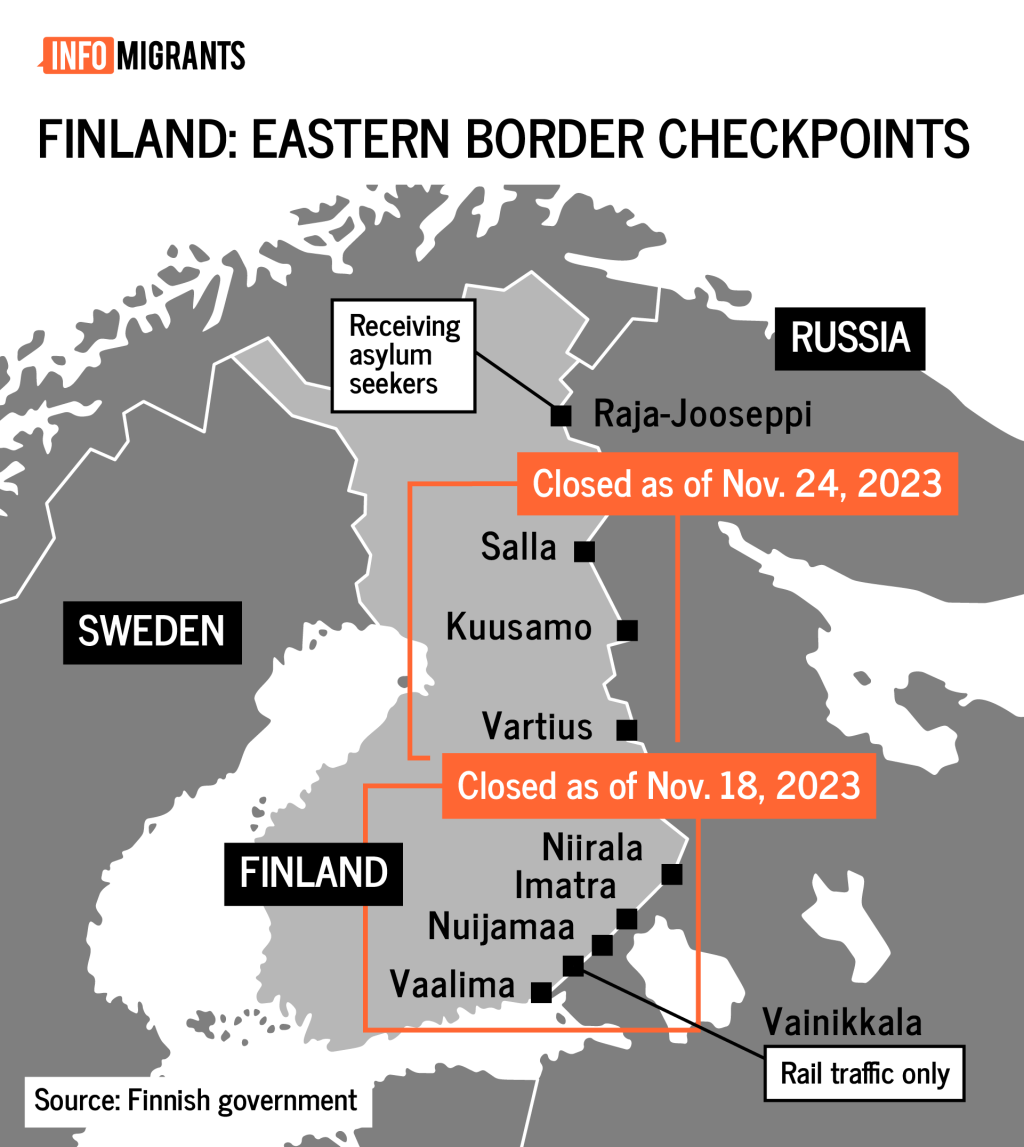
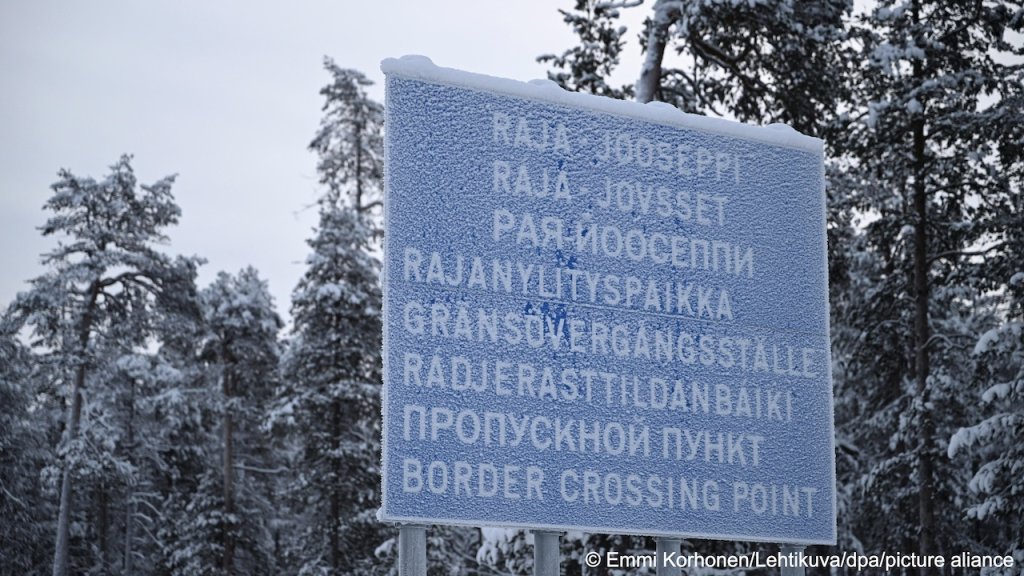
Earlier in the week, Finland had already announced unilaterally that it would close all but its northernmost border crossing with Russia for at least a month.
Finland has a total of nine border crossing points along its border with Russia, which is the EU's easternmost border and also makes up a significant portion of NATO's northeastern flank now.
On Wednesday, Finnish border guards and soldiers were seen erecting barriers at some of the border crossing points with Russia.
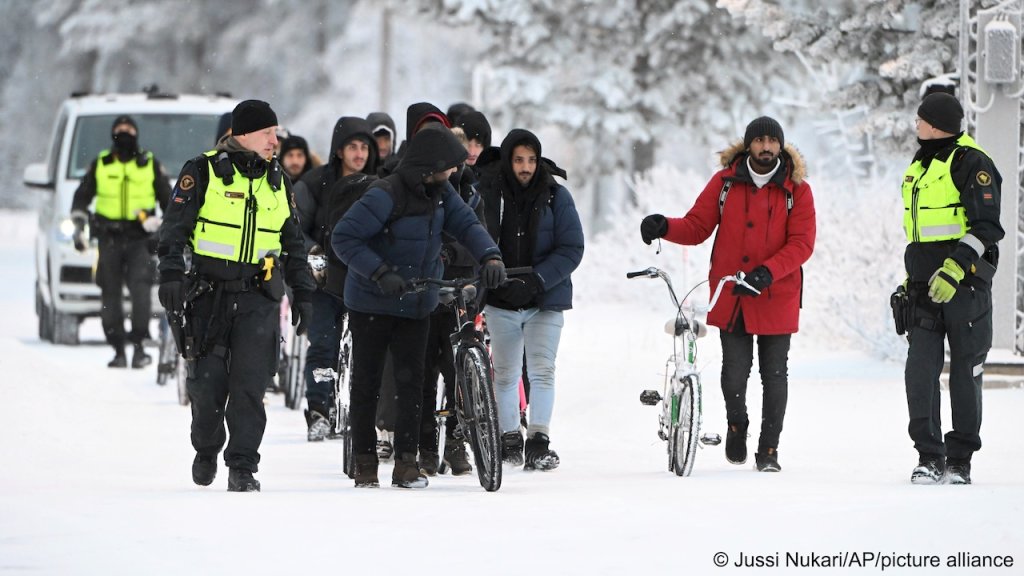
Nearly all irregular migrants arriving at the border to date had come on bicycles, trying to circumvent a ban on crossings on foot. Finnish media reports say these bikes were provided and sold to them with aid from Russian authorities.
In response to the high rate of bicycle arrivals, Finland also barred entry by bicycle last week.
Also read: EU's eastern border sees massive rise in people smuggling
A 'deja vu' for EU commissioner
EU Home Affairs Commissioner Ylva Johansson meanwhile expressed the EU’s overall support of Finland amid these developments, saying that the Nordic country "can count on our full support to protect the EU border and uphold fundamental rights."
"The Finnish border is the EU's border," Johansson told EU lawmakers.
She added that her observations along Finland's border gave her a sense of "deja vu," two years after Russia-allied Belarus had begun sending migrants into Latvia, Lithuania and Poland in a similar manner.
The EU claimed that Belarus’ President Alexander Lukashenko had pushed tens of thousands of irregular migrants across the border to Poland and the Baltic states in retaliation for sanctions imposed on his regime.
European officials as well as major world governments referred to this crisis along the Belarus border as a deliberate attempt to destabilize the bloc.
Also read: The EU's migration dilemma: Is sealing borders the solution?
With AFP, AP, Reuters