
The party of Geert Wilders has shocked observers by winning a huge victory in Dutch national elections. The anti-Islam and anti-migrant politician is making preparations to form a government.
With nearly all of the votes counted by Thursday morning (November 23), the Party for Freedom (PVV), led by Wilders, had won 37 of the 150 seats in the Dutch Parliament, putting it well ahead of a joint Labor-Green bloc and the conservative party (VVD) of the outgoing Prime Minister Mark Rutte.
"It is going to happen that the PVV is in the next Cabinet," Wilders announced. It is not yet clear whether he will be able to get the support needed to form a government, however.
Among the far-right politicians in Europe to congratulate Wilders on his shock victory were Hungary’s Viktor Orban, the Italian deputy prime minister and leader of the far-right party, Matteo Salvini, and France’s Marine Le Pen, who heads the Rassemblement National Party.
Le Pen posted on X: "Congratulations to Geert Wilders and the PVV for their spectacular performance … which confirms the growing attachment to the defence of national identities."
Others expressed concern at the election outcome. Frans Timmermans, the leader of the left-wing Green/Labor bloc, said: "…We have to take a stand against exclusion, against discrimination."
A reaction to fears over immigration
French Finance Minister Bruno Le Maire said Wilders’ election win was a consequence of "all the fears that are emerging in Europe" over immigration and the economy.
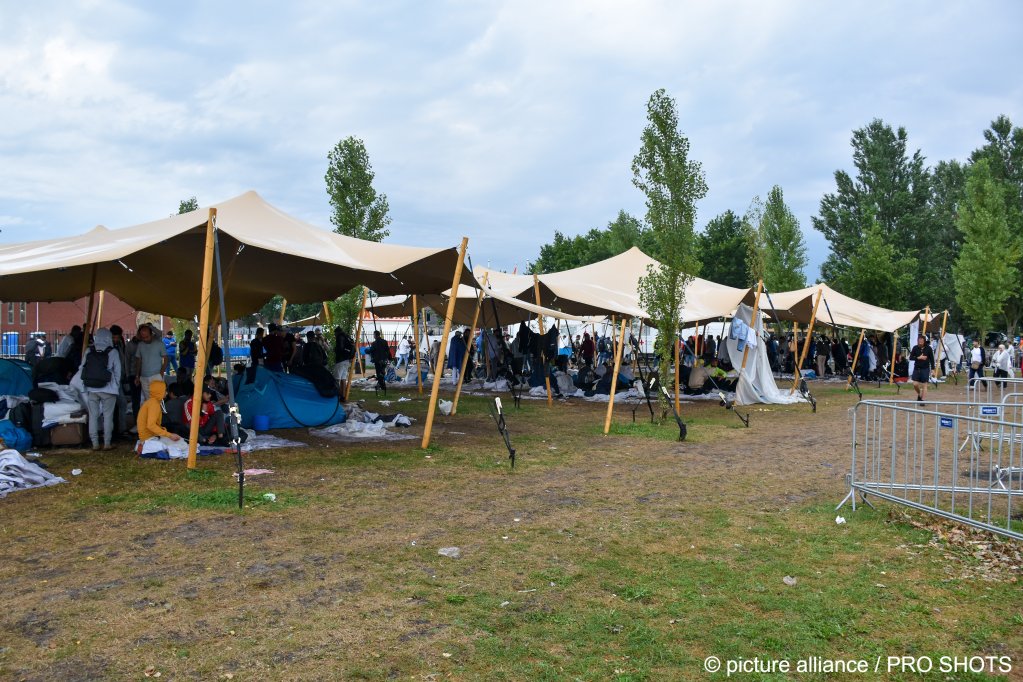
The PVV was not the only party to campaign on a pledge to tackle migration problems in the Netherlands, which had become highly visible in Ter Apel, the northeastern town with the country’s main reception facility. More than a year after hundreds of migrants were forced to sleep outside because the center was full, it is still overcrowded. Complaints from locals about rising levels of crime blamed on migrants have been frequently published in the media.
One of the candidates in the election, Dilan Yesilgöz, who now leads the VVD, was among those pushing for stricter immigration controls. The daughter of Turkish human rights activists who fled to the Netherlands when she was a child, said laws and regulations in the Netherlands were "way more attractive than (...) in the countries around us, which makes us more attractive for people to come here."
The VVD, as well as the recently formed New Social Contract party (NSC), advocated the introduction of an asylum system that differentiates between people fleeing persecution and those fleeing war. The second group would have fewer rights.
Also read: Asylum seekers in tents on the streets of Belgium and the Netherlands
Creating distress and fear
Wilders' party, however, went much further, calling for a total halt to accepting asylum seekers. Sometimes called the "Dutch Trump", he called Moroccans "scum" and was found guilty of discrimination in 2016 after leading a crowd chanting for "fewer" Moroccans in the Netherlands.
The 60-year-old has made it his mission to stop an "Islamic invasion" of the West, pledging to ban mosques, Islamic headscarves and the Koran, which he previously likened to Adolf Hitler’s "Mein Kampf".
It is widely believed that his anti-migrant, anti-Islam ideology as well as a strong stance against membership of the European Union, have propelled him ahead in the polls, with worrying implications for many in the Netherlands.
Habib El Kaddouri, the head of the SMN organization representing Dutch Moroccans, said: "The distress and fear are enormous … Wilders is known for his ideas about Muslims and Moroccans. We are afraid that he will portray us as second-class citizens."
Those fears seemed to be validated by Wilders’ victory speech at The Hague. "The Dutch will be Number One again," he said. "The people must get their nation back."
Addressing cheering supporters, he also said he wants to end what he called the "asylum tsunami," referring to the migration issue.
Also read: Dutch court rules asylum seekers cannot be sent back to Italy under Dublin Regulation
What Wilders stands for
The PVV’s 50-page manifesto proposes a "freeze on asylum" and "a generally more restrictive immigration policy."
"The influx of asylum seekers costs Dutch taxpayers €24 billion a year," it states, complaining that "illegal immigrants" are "pampered".
"Asylum seekers feast on free delicious buffets on luxury cruise ships, while Dutch families have to cut back on grocery spending. Healthcare that is unaffordable for many Dutch people is provided free of charge to asylum seekers," the program says.
During his election campaign, Wilders’ rhetoric became somewhat milder. And as he seeks to attract support from the other parties to form a governing coalition, he will have to tone down its far-right policy stance, according to Kate Parker of the Economist Intelligence Unit.
The Refugee Council (VluchtelingenWerk Nederland) has urged a future Cabinet with the PVV "not to get bogged down in symbolic politics that fuel polarization, but to get started with solutions that address the concerns of citizens and that are good for refugees."
The party that came second in the election, Timmermans’ Green-left bloc, however, ruled out a partnership with the PVV and expressed concern about the impact of Wilders’ party on migrants.
"We don’t let anyone down in the Netherlands," Timmermans wrote on X. "If you come across people in the neighborhood, at school or at work in the coming days who think: do I still belong here? Then you can say clearly: YES."
The formation of a government is likely to take some time – possibly months. Mark Rutte, who resigned in July after the governing coalition failed to agree on the issue of limiting immigration, will remain in a caretaking role until a new government is installed, probably in the first half of 2024.
With AP, AFP, DW