
France will deliver three search and rescue vessels to the Egyptian coast guard, along with training for its agents, as part of the EU-Egypt migration agreement signed in October 2022 to stem migration to Europe.
The 2022 agreement between Egypt and the European Union (EU) aimed at preventing irregular Mediterranean crossings is gaining momentum, at a time when the 27 EU member states fear the war between Israel and Hamas will lead to a regional conflict and cause an influx of migrants into Europe.
France plays an important role in the partnership, according to the media Orient XXI. Three French companies – Civipol, its subcontractor Défense Conseil International (DCI) and the Couach shipyard – will supply the Egyptian navy with three search and rescue vessels. The DCI will also provide training for the Egyptian coast guard. A supply of thermal cameras should follow in the coming months.
Funded by the EU with €23 million, these contracts were made possible by the October 2022 agreement between Cairo and the EU. The agreement stipulates that Egyptian forces will intercept migrant boats en route to Europe in its territorial waters, and also on its soil. Egypt is also set to receive material aid worth €110 million as part of the agreement.
The EU plans to provide the first search and rescue vessel to Egypt in 2024, according to the website Africa Intelligence.
Also read: Deportations: Africa's role in EU migration management
In a letter received by Orient XXI on November 15, a spokesperson for the Directorate-General for Neighbourhood and Enlargement Negotiations (DG NEAR) of the European Commission wrote, "full respect for human rights will be an essential element and integrated into [this agreement with] rigorous and regular monitoring of the use of the equipment."
Egypt, the first nationality represented among arrivals to Italy in 2022
The EU-Egypt partnership continues to worry human rights defenders. Egypt has been ruled with an iron fist by Abdel Fattah al-Sissi since 2013. The president has led a violent repression against political opponents; there are currently 60,000 prisoners of conscience and human rights are regularly violated.
Also read: Poverty, restrictions, censorship: What's driving Egyptians to head for Europe
Many Egyptians seek exile, with one in five migrants arriving in Italy in 2022 being from Egypt, according to the European Union Agency for Asylum (EUAA). Egypt represented the largest nationality among arrivals in Italy last year, including a third of all unaccompanied minors, according to Italian government data.
"This phenomenon will be accentuated by the EU's support to the Egyptian government. Immigration is used by the dictatorships in the region as a lever to obtain political and financial support from Europe," declared Refugees Platform in Egypt (REP), a non-governmental organization, cited by Orient XXI.
Other similar agreements in North Africa
The EU-Egypt deal is part of a long list of controversial partnerships signed with other North African countries to stem migration to Europe. The agreement with Libya, where the EU has trained and equipped the Libyan coast guard since 2016, has faced accusations of complicity in atrocities committed against migrants during interceptions at sea as well as in Libyan detention centers.
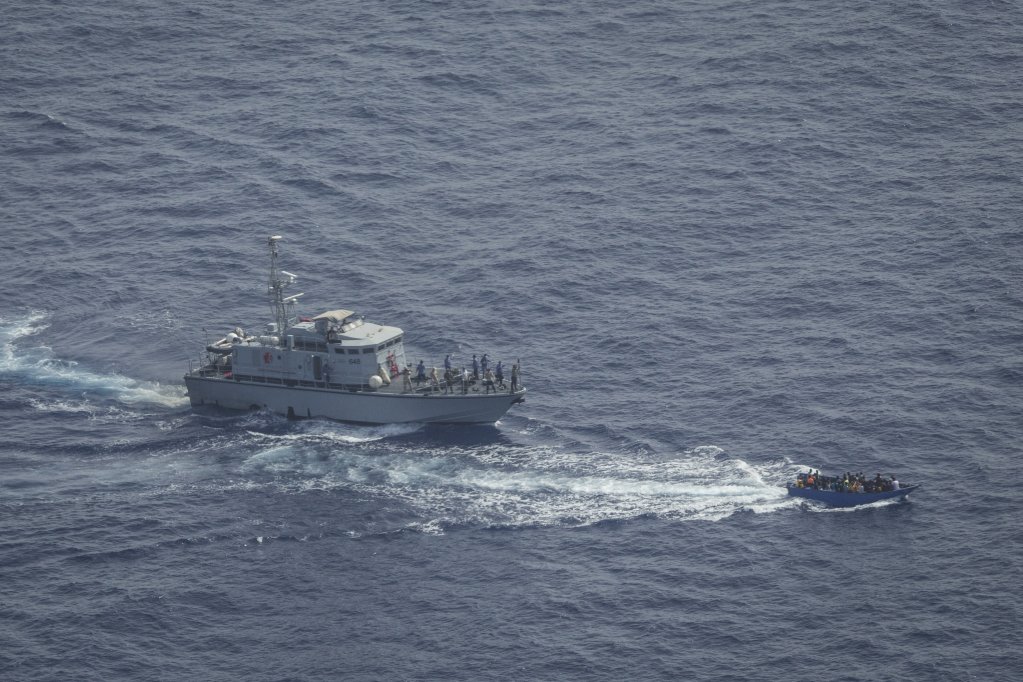
Tunisia signed a similar agreement in July with the EU. "This [deal] will probably be similar to the one we see in Libya, including support for the Tunisian coast guard fleet and training," said Camille le Coz, associate director of Migration Policy at Institute Europe think tank.
Also read: EU-Tunisia migration deal under scrutiny
The Tunisia agreement is also widely criticized. At the time of the signing, thousands of sub-Saharan Africans were rounded up in Sfax, Tunisia, and sent to the desert on the border with Libya and Algeria. Around twenty of them, including women and children, died of thirst in the border region. President Kaïs Saïed has given several speeches this year in which he accused sub-Saharans of being at the origin of violence and crimes.
Over 350 researchers and civil society members from nearly 10 countries issued a statement on August 14 denouncing the agreement, warning of dangerous racist assumptions underlying such policies.
Despite criticism, the EU seems to view its partnership with Tunisia as a model. Ursula von der Leyen, President of the European Commission, aims to sign new agreements with other countries in the region, notably with Morocco.
Also read: EU debates ways to curb migration - especially from Tunisia