
Migrant women and children are exposed to heightened risks of abuse as they journey to Europe. After escaping violence in their homeland, there is no guarantee that they will find safety upon arrival. InfoMigrants investigates in Bulgaria.
Mena*, a 32-year-old mother of three, fled violence in Afghanistan for a new life in Bulgaria. But what she never expected upon arriving in Europe was that she would face a different kind of violence – abuse from her own husband. Mena's husband regularly beat her, ultimately driving her to seek help from a Bulgarian human rights NGO.
Mena decided enough was enough and – with the help of Mission Wings – received humanitarian status for her and her children with Bulgaria's State Agency for Refugees. She successfully separated from her abusive husband and now happily resides in Germany. But other women and girls are not so lucky.
Mena's story of domestic terror and violence is one of many among migrant women making precarious journeys to reach Europe, while waiting for their asylum status in refugee camps and beyond resettlement in a new country.
Migrant domestic violence survivors struggle to access social services
Diana Dimova, the head of Mission Wings, says her biggest concern is that many women who come into her consultation room do not recognize that what is perpetrated against them is abuse – or they feel too ashamed to speak out or fear that doing so would compromise their safety.
"It usually takes a long time to share about the trauma. Most often, when a woman feels immediately threatened, then she seeks help," Dimova told InfoMigrants. Identifying and supporting survivors of gender-based violence among Bulgaria's refugee community is a difficult and ongoing process.
"The practices we encounter in our work are related to physical violence; forced marriages – some of which involve selling the girl, even children; genital castration of underage girls and sexual exploitation," Dimova said.
Refugees suffering from gender-based violence struggle to seek and receive help from institutions and social services in Bulgaria.
"They are highly discriminated against because of their origin, especially people of Middle Eastern or African origin," Dimova said, adding: "Social services continue to be inhospitable to refugees and refugees are often denied access to them." In addition, language barriers further complicate the process.
Read more: Exclusive: Why are migrant pushbacks from Bulgaria to Turkey soaring?
Who are the perpetrators?
Every year, hundreds of thousands of women and girls from Asia, Africa and the Middle East undertake precarious and clandestine journeys to reach Europe, often using people smugglers. They may squeeze into cramped vans or rickety dinghies, sleep in forests and pass borders through irregular means.
"We have cases of women who say they have experienced violence, including sexual violence, on the way to Bulgaria at the hands of traffickers or police officers in Turkey," Dimova said.
"Some women have had to pay for their journey to Europe with sex due to a lack of financial means," she added, stressing that most cases of rape and abuse go unreported due to the shame and taboo surrounding the topic.
At all stages through the migration process, women and girls are typically significantly outnumbered by men and therefore face heightened risks of sexual violence and harassment. According to figures from the European Commission, the distribution of first-time asylum applicants by sex shows that more men (70.8 %) than women (29.2 %) sought asylum in 2022.
But more often than not, perpetrators hail from the same community (e.g. other migrants from their hometown or belonging to the same ethnic group), or – as was the case for Mena – a spouse or a family member.
Dimova recounted several stories of her clients – some of whom suffered years of rape.
Zohra*, a 37-year-old mother from Tunisia, escaped to Turkey after several years of suffering sexual exploitation under her now ex-husband. Her ex-husband then managed to track her down in Turkey, abducted her and locked her up in a flat in the capital Ankara. For three years she was raped several times a day by various men her husband took to the flat.
"After much difficulty, she was granted humanitarian status after an initial rejection by the (Bulgarian) Refugee Agency," Dimova told InfoMigrants.
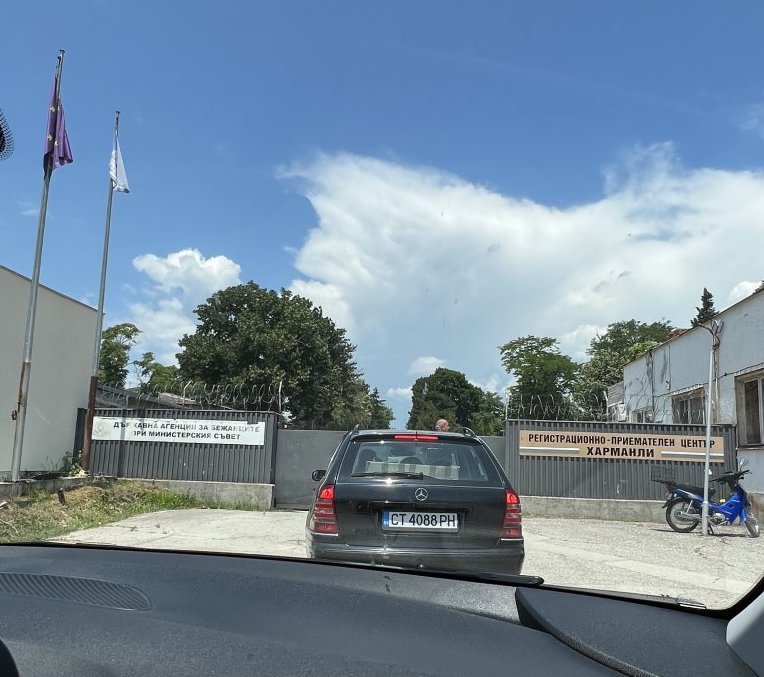
Domestic violence inside refugee camps
Dimova works closely with refugees from the Harmanli reception center, near the Bulgarian-Turkish border. Inside the camp, women are not spared from their abusive partners. Often they seek help from Dimova – whose office is close to the reception center – in the evenings, leaving their baby and personal belongings at the camp in the hope of going unnoticed.
"We have had to repeatedly seek the assistance of the police so that they can take their children and personal belongings," Dimova said. "We provide shelter for a short time in a confidential location so that the woman can calm down. We try together afterwards to find a suitable solution for the future."
Zainab* is a 34-year-old single mother of two from Iraq. After seeking asylum in Bulgaria, she found a new partner from the Kurdish community and fell pregnant again. Shortly after giving birth, her new partner began to beat her, so Dimova placed her in a women's domestic violence shelter in the capital Sofia.
But suitable solutions are not always found for all of the women. Fatima*, a 19-year-old mother from Syria with another child on the way, was repeatedly beaten up by her husband in Harmanli center. She sought help from Mission Wings, which then moved her to its support center for mothers and children. But it wasn't long before her husband tracked them down and abducted the young pregnant mother and child. The NGO managed to contact Fatima, only to discover that she had agreed to go to Germany with her husband because she was too afraid he would continue to hunt her and her children down.
Read more: Exclusive: Corruption and criminal networks permeate Bulgarian migration and asylum
Higher risk of rape inside refugee camps
Krassimir Kanev is a human rights expert and runs the Sofia-based Bulgarian Helsinki Committee. He warns that refugee reception centers in Bulgaria can become places of violence, abuse and neglect. He also says cases of rape against migrant women in Bulgaria are "much more serious in the reception centers" than elsewhere in the country (excluding marital rape).
"The camps are not guarded properly. The ratio of men and women inside [are unequal]. There's violence and rape," Kanev told InfoMigrants.
Rape and sexual violence are usually perpetrated by one migrant against another – often from the same community or ethnic group, but also perpetrators from another ethnic group. Kanev says the Bulgarian government isn't taking serious measures to protect the vulnerable groups.
"We have been raising this issue regarding proper security in the camps for many years and it doesn't improve," Kanev said, adding that the government "would not deny this, but they would claim that this has improved."
Dimova from Mission Wings also recounted the story of a 27-year-old trans woman from Syria who sought help from her because she felt threatened being forced to share a room with men at the Harmanli camp. Soon after, she went missing.
The children migrating to Europe alone
Children migrating to Europe are also met with additional risks throughout their journeys – in particular unaccompanied minors. In some cases, it's their parents who pushed them to travel to Europe through irregular means – sometimes with people smugglers or with relatives or people posing as relatives, according to Hamid Khoshseiar, a social worker and coordinator at Mission Wings in Harmanli.
"Some families send unaccompanied minors because it's the cheapest way to reach a safe country," Khoshseiar told InfoMigrants. "After that, the unaccompanied minor brings the rest of the family."
Some families may also be duped by traffickers who convince them that their children would be protected during the journey or are unaware of the risks involved. Others view refugee family reunification as the most affordable method of migrating – and the quickest, Khoshseiar says.
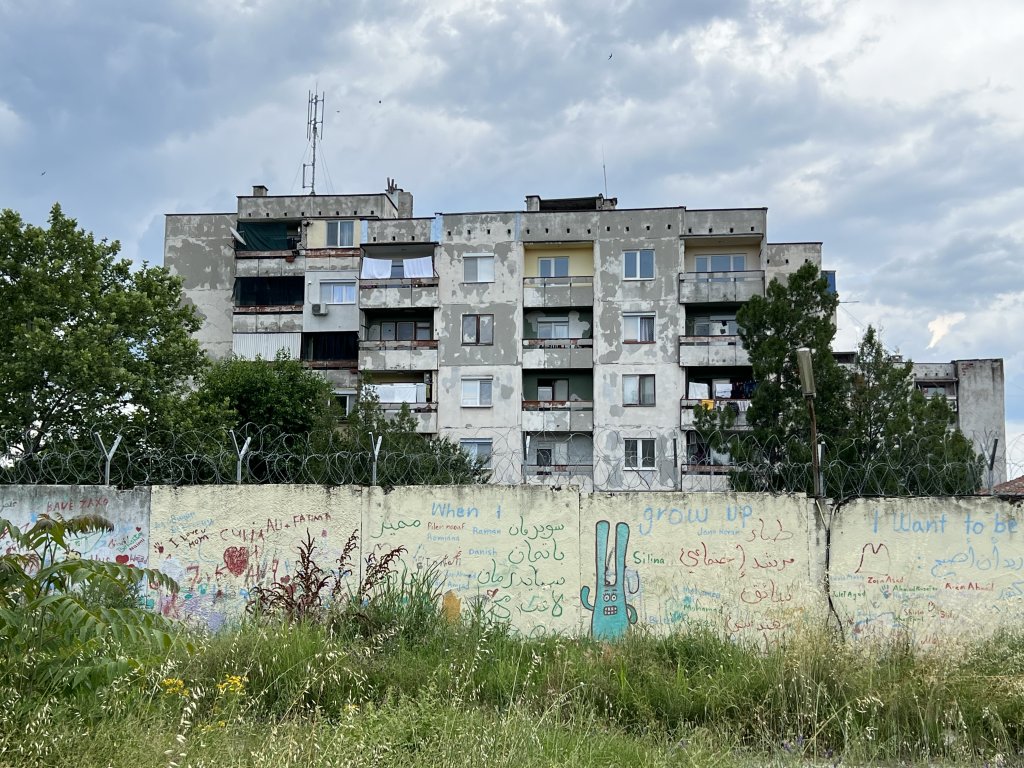
Family reunification processes are faster when the asylum seeker in question is under 18, Khoshseiar explained. But when that child turns 18, submitting a request to allow their parents or a relative to join them and settle in Bulgaria becomes trickier and the process much longer. This incentivizes some families to push for their youngest ones to make the precarious journey to Europe, according to Khoshseiar.
"A family reunification used to take approximately one year, but nowadays it's more," Khoshseiar said. A journey from war-torn Syria for example could take months. The child may also spend months or years in Turkey before managing to cross the border into Bulgaria. If the child turns 18 by the time they arrive Bulgaria or even after – they can be rejected by the state refugee agency more easily. Because of this, the average age of child migrant arrivals in Bulgaria is getting younger and younger, Khoshseiar said.
The social worker's youngest refugee visitors used to be aged around 16 and 17. But in the last two years, children seeking asylum in Bulgaria have typically been aged between 14 and 15, he said.
Khoshseiar visited an 11-year-old Afghan boy in hospital to assist with interpreting when the child suffered a crash along with dozens of other migrants. Their van collided with another vehicle. The small boy was then attacked several times by a police dog.
"He said, 'I'm afraid…'. He didn't want to do it (migrate irregularly from Afghanistan to Europe unaccompanied)," Khoshseiar said. "But he cannot raise his voice in front of the parents. It's actually the parents who made the decision for him."
Young migrant freezes to death in Bulgarian forest
Khoshseiar himself arrived in Bulgaria as a refugee from Iran, where he fled political persecution. He spent 2019-2020 in a refugee camp. It was "very normal" to just wake up sometimes and find all the young boys gone, he said. Unaccompanied male minors in refugee camps often form strong bonds with other boys from the same ethnic group, the social worker recounted, adding that many don't want to waste their youth waiting in a limbo zone for the results of their asylum application, which may ultimately be a rejection. So they run away together – which comes with a myriad of risks, such as falling prey to human trafficking.
Khoshseiar shared his room with five young Afghan boys in a refugee center back when he was appealing for Bulgarian asylum. All five of the boys disappeared one day, with only four of them returning a few days later. One of the boys had frozen to death while they were out hiding from authorities in the forest.
"When I asked them why you didn't make a fire, they said they were afraid the police would catch (them)," Khoshseiar recounted. The four boys had returned to the camp to pack a few things, and left again after forming a new group of boys.
Children at risk of violence and sexual abuse
But for children, staying inside a refugee camp comes with its own dangers. "We heard about sexual abuse (of children) and also about blackmailing…" Khoshseiar told InfoMigrants. By blackmailing he means children are sometimes threatened at knife point by other migrants to hand over the little money they brought with them.
As of June 2023, there are 700 asylum seekers at the Harmanli refugee reception center, 276 of whom are children (81 who are unaccompanied minors), Mariana Tosheva, chair of Bulgaria's State Agency for Refugees, told InfoMigrants. The majority are from Syria.
The biggest threat a child refugee is likely to face in Bulgaria is from his or her own community, according to Khoshseiar. This is also in line with child abuse more broadly, which is usually perpetrated by someone the child knows, according to research by the US-based Child Welfare Information Gateway .
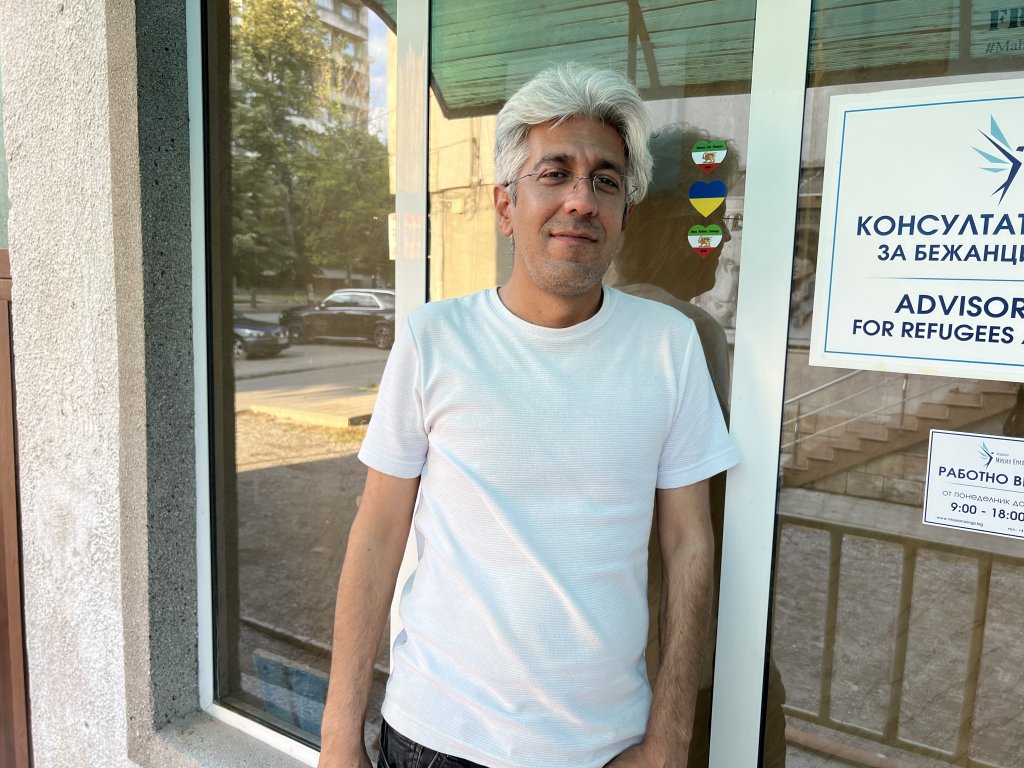
Relatives also "try to hide everything because they don't want it to become a scandal in front of family," said the social worker.
Many asylum seeker children in Bulgaria are boys, and if the parents could not accompany the child, they often send a distant relative such as the father's cousin, Khoshseiar said.
It is less common for girls to travel with an adult male relative, he adds, because families are more concerned that their daughter will be at risk.
Khoshseiar stressed that the boys who are accompanied by a relative often do not want to talk about experiences of abuse or assault, whether it is committed by the relative or by someone else.
"Just imagine if sexual abuse happened to a boy. First, the boy cannot share it with anybody because this is shameful for them. if even they share it with the relatives, relatives don't want to do something about it because, again, it's shameful.. So it will be a fight between a member of a family with another member of another family..." Many victims therefore do not want to open a legal case. In addition, their legal status in Bulgaria is being questioned. No one is going to talk about it."
*Name changed to protect identity
*All research and interviews were conducted between June and August 2023, with field reporting in Bulgaria carried out between June 18 and 24, 2023.
To read more about how women and child migrants are at risk of violence, abuse and rape at the hands of authorities, click here.