
Migrants in northern France have been hard hit by Storm Ciaran and other bad weather which has torn through northern France and the Channel coasts in the last few weeks.
Tents are soaking wet, the earth has turned to mud. Aid groups have been overwhelmed with requests for help from migrants, many of whose camps were destroyed in the storms, and who are trying to find shelter and dry ground for themselves and their children.
People living in northern France on the Channel coast around the Pas-de-Calais region awoke on November 10 to find streets flooded, houses destroyed, rivers overflowing and schools closed after another night of torrential rain. Many migrants – living in tents in the area with the hope of crossing the Channel to the UK – were among them. In the area of Grande Synthe and the municipality of Loon Plage, informal migrant camps have been ripped apart by the storms in the last few days.
'Catastrophic'
"As you can imagine, the situation is catastrophic," said Fabien, a coordinator at the northern branch of the association Utopia 56, which works with migrants. "Since Storm Ciaran ripped through the area, and all the recent rain that followed, we have been constantly receiving calls from people in distress who are looking for shelter."
"There are families and children here and we can do nothing because the emergency shelters are all full to capacity," InfoMigrants' reporter Charlotte Boitiaux quoted Utopia 56 as saying.
Images and videos sent to InfoMigrants in France by Fabien and the team at Utopia 56 show mud everywhere in the informal camps. Tents hidden in the forest or scrubland to try to escape police controls are sinking in mud and stagnant puddles. The wind is still blowing strongly. "The earth is just saturated with water," Fabien tells InfoMigrants.
"Everything is just soaked, nothing is drying out. The tents, the sleeping bags. The people are just living in the wet, they just are unable to dry anything," explains Fabien.
Migrants are 'basically living in swamps'
The associations that work with migrants in the area are finding it difficult to help people. They say there is not enough support from the French state, but more importantly, not enough resources to go around. "We were trying to hand out dry sleeping bags, but we just don't have that many. And worst of all, we know that those covers will last maybe one night and then they will also be soaking wet."
🎧 Also listen: Tales from the Border podcast, Calais --Last crossing to the UK
It is the same with the flimsy material in most of the tents used by the migrants. "They are meant to be waterproof, but it rained so hard that they are just soaking wet all the way through and damp inside as well as out."
Around Calais it is a similar story. "Migrants are basically just living in swamps," says Pierre Roques from the organization l'Auberge des Migrants. "After Storm Ciaran, there were accommodation places opened up for them, but this week, we haven't seen the same kind of response...the prefecture has given out all sorts of warnings for the French population, but migrants have been left on their own once again."
'Unprecedented situation'
Roques says that in the aftermath of Storm Ciaran, which left more than a million French homes without electricity, the authorities in the north and the Pas-de-Calais region opened up temporary accommodation centers for migrants to offer them shelter. But even so, there weren't enough places to go around, and many migrants found themselves left with no other choice but to continue to try and live in the informal camps.
"The prefecture told us to take shelter, but if hundreds of people only have trees to shelter under, what do you do?" says Fabien. "They opened up two gymnasiums but they quickly became full." Pierre Roques is similarly frustrated. "In all the time I have been working in Calais, I don't think I have ever seen so many people needing temporary shelter. The lack of institutional solutions combined with these extreme weather conditions have created an unprecedented situation."
Utopia 56 and Auberge des Migrants estimate that there are dozens of families who are sleeping rough after their tents were destroyed by the storm. "One pregnant woman called us one evening, she was on the point of going into labor, and even in her state, she hadn't been able to find a place in one of the temporary shelters. Luckily the emergency services went to find her and brought her in," explains Fabien.
'The buses that never came'
The prefecture promised to provide buses between the informal camps around Loon Plage and the emergency shelter accommodation they provided. But pictures show queues of migrants waiting for the buses to appear. "In videos you see dozens of people waiting for a bus that just never turned up," explains Fabien.
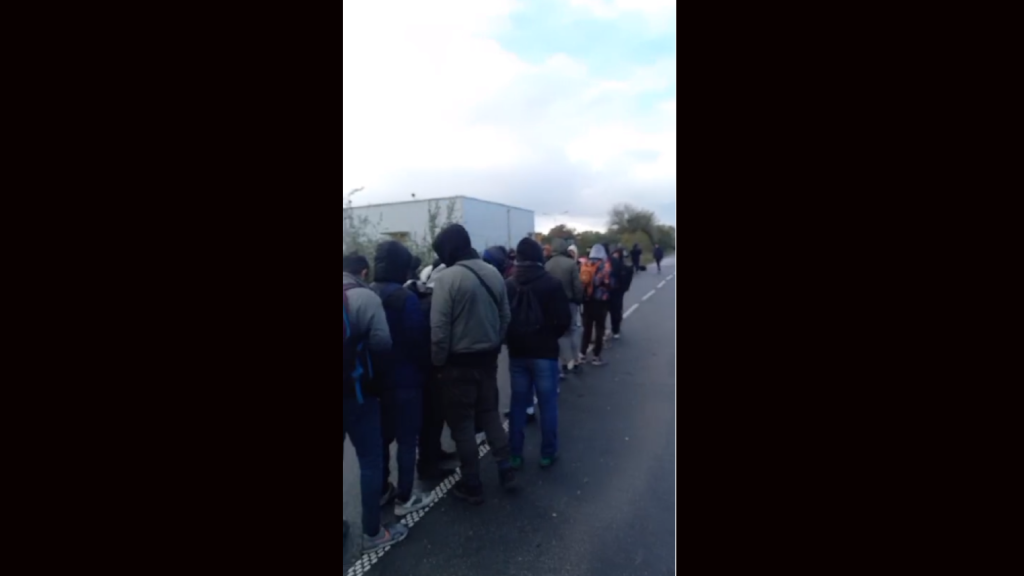
Just over a week after the storm, the gyms that were opened up as emergency shelter are once again shut. The other shelters that provide some form of relief for migrants in the area are all full. "What should we say to migrants who call us trying to find shelter in the dry for themselves and their children?," says Fabien.
The situation doesn't look like it will be resolved any time soon. In the middle of autumn, with even colder temperatures, storms, rain and wind expected at this time of year, the weather conditions are only set to worsen.
Most of the attempts to cross the Channel have also been put on hold recently. "We are entering a period when there are fewer crossings, so people find themselves just waiting. So they will be waiting here, living in the open, and continuing to be affected by these kinds of weather phenomena," says Fabien.
In this difficult situation, the French authorities are continuing to carry out clearances of the tent camps. In mid-October, the authorities cleared a camp at Loon Plage where around 2,000 people were staying. Some of those who had been living in the camp were taken into accommodation provided by CAES (Administrative Reception Centers). Migrants who were not offered a place in a center returned to living on the streets, only without the tents and other belongings that are routinely confiscated during the clearances.