
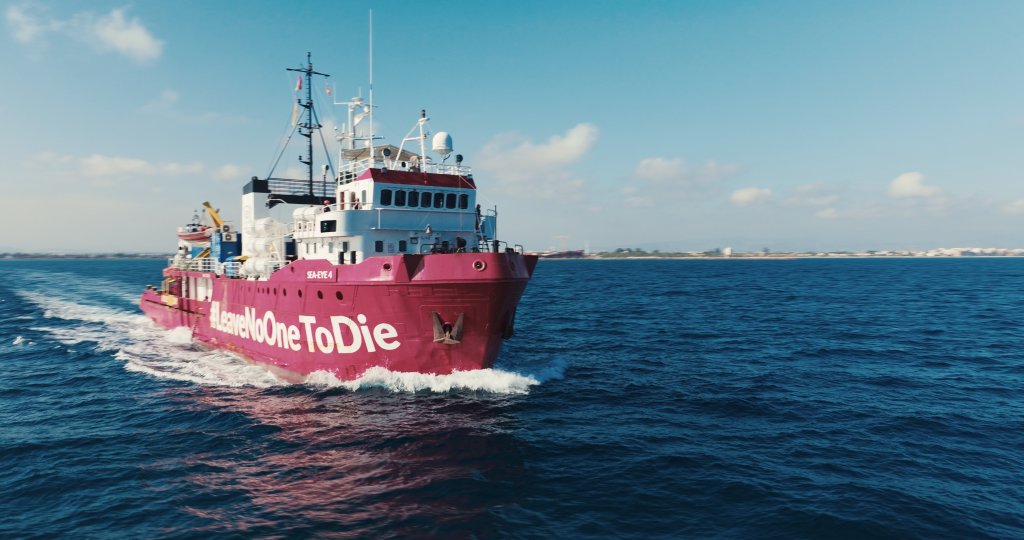
Italian authorities has seized the German migrant rescue ship Sea-Eye 4 for the third time. The action comes after the NGO accused Libya's coast guard of putting migrants' lives at risk during a rescue mission in the Mediterranean in which four people died.
Italian authorities impounded the Sea-Eye 4 migrant rescue ship on Monday (October 30) in the southern Italian port city of Vibo Valentia for 20 days, the German humanitarian organization said in a statement published a day later.
According to the statement, the captain of the Sea-Eye 4 was informed that the ship would be seized for 20 days following a rescue operation in the Central Mediterranean Sea, for allegedly failing to comply with the instructions of Libya's coast guard.
Defending its decision to remain in the area, Sea-Eye said "even more people would have died" without its presence, and "no one would have known about this tragedy."
The organization said it was fined €3,000. The action marks the third time within a five-month period that Italian authorities have impounded the search-and-rescue (SAR) vessel at Italian ports. The Sea-Eye 4 spent a total of around six weeks in "administrative detention".
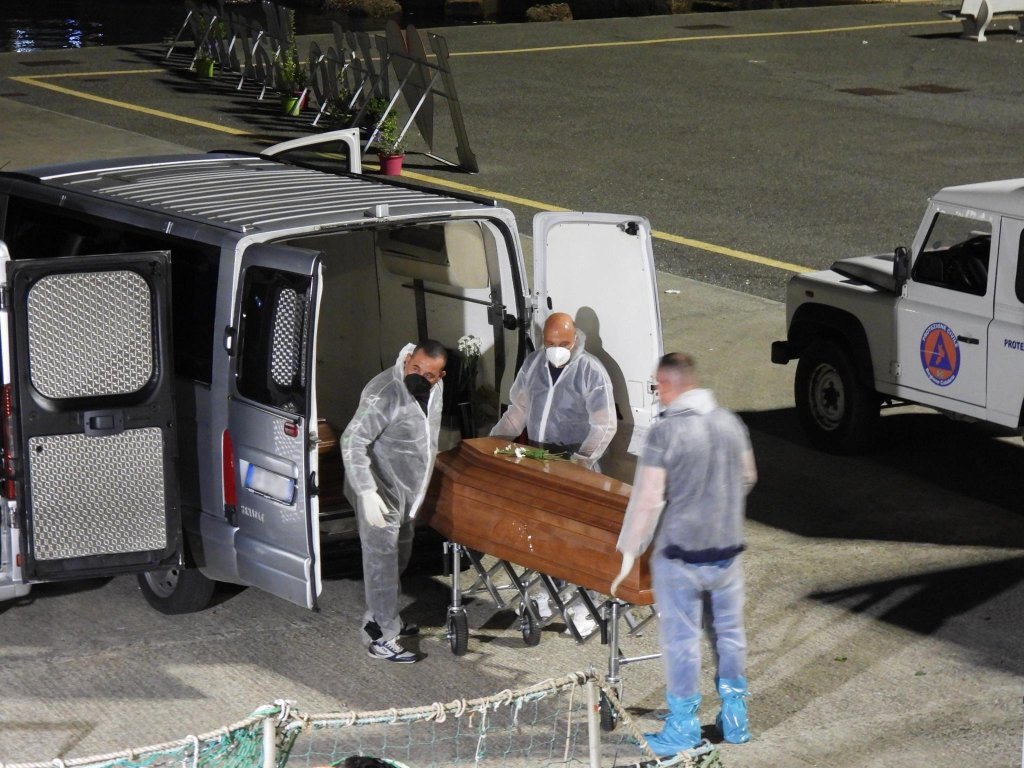
After rescuing 48 migrants from an unseaworthy rubber dinghy in international waters last Friday, according to the charity, the Sea-Eye 4 crew brought the rescued individuals and four bodies to Vibo Valentia on Sunday.
"It must be made clear that Italy is acting contrary to international law if it sanctions a German rescue ship for acting in accordance with the law," Sea-Eye chair Gorden Isler told InfoMigrants, adding that Sea-Eye will not only appeal the detention, but is also examining a criminal complaint over the delays in the medical evacuation of a pregnant woman.
'Dangerous maneuvers' by the Libyan coast guard
According to Sea-Eye, the rescue operation in the Central Mediterranean Sea was dramatic. A pregnant woman from the rubber dinghy was left fighting for her life after Italian authorities told Sea-Eye to seek help from Libya, according to the NGO. Sea-Eye claims authorities there also ignored the calls for medical help.
On Saturday, the pregnant woman was taken off the ship and given medical treatment. According to Italian media reports, she was then taken to the Sicilian city of Palermo to have an induced delivery of her stillborn child.
Following the medical evacuation in Lampedusa, Italian authorities directed the Sea-Eye 4 to proceed to Vibo Valentia to disembark the 48 survivors.
On Saturday, Sea-Eye published a video on the media platform X showing what it said was a Libyan coast guard vessel harassing people on a rubber dinghy with "dangerous maneuvers".
"The so-called Libyan coast guard had harassed the rubber dinghy in such a way that the people tried to flee in panic. Several fell into the water and have been missing since then. In the boat, the crew later discovered four corpses," Sea-Eye wrote on X.
Sea-Eye also claims that the crew of the Libyan coast guard vessel told the Sea-Eye 4 to leave the area and head north "under the threat of violence."
Controversial coast guard
Friday's events weren't the first time an NGO vessel has documented reckless behavior by the Libyan coast guard. In March of this year, Libya's coast guard fired warning shots over the Ocean Viking migrant rescue ship as its crew attempted to rescue a rubber boat carrying migrants off Libya's coast. Another charity published footage of shots fired in the water in an apparent attempt to force migrants on board.
The coast guard of Libya is equipped, financed and trained by different EU countries to help it intercept and return migrants before they can reach European shores.
Since 2015, the European Union has given more than $450 million (about €417 million) to Libya's coast guard to help curb these departures, while also providing assistance through its border agency Frontex with aerial surveillance that the organization Human Rights Watch also says enables the Libyan coast guard to find migrant boats in the first place.
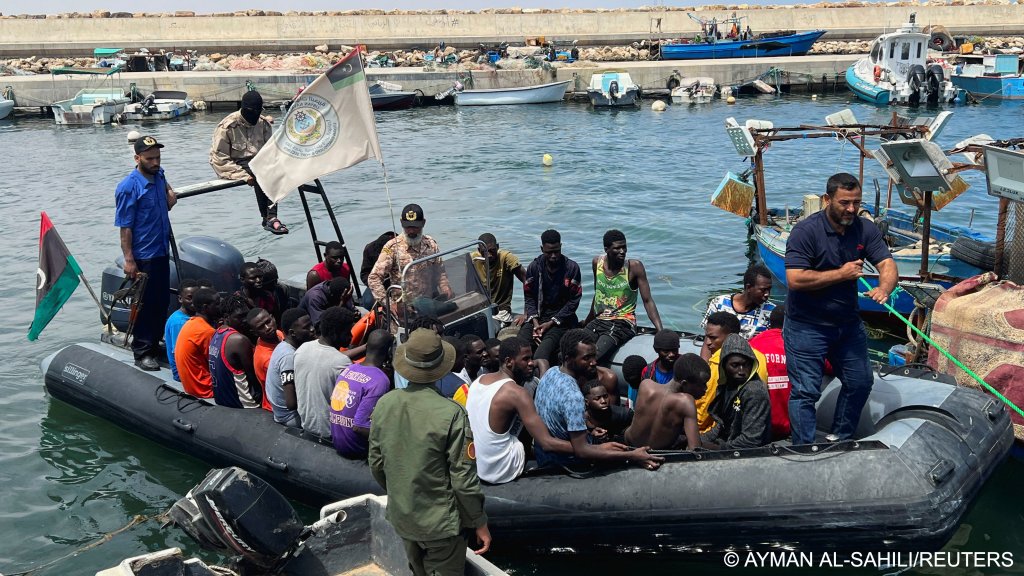
Migrants intercepted by the Libyan coast guard are brought back to Libya, where they are usually placed in detention centers run by the government.
According to the UN and many NGOs, the conditions at these facilities are extremely poor. Over the years, numerous reports have outlined severe hygiene shortcomings and widespread malnourishment.
In addition to official facilities, some Libyan detention centers are also run by smuggling gangs and other criminal organizations. The situation at these facilities is reportedly far worse than at the official facilities, with sexual assault, slavery, extortion, torture and murder recorded across the board.
In April, the UN Human Rights Council declared there are "reasonable grounds to believe that crimes against humanity have been committed against Libyans and migrants throughout Libya since 2016."
"The actions of the so-called Libyan Coast Guard last Friday showed once again that they are not concerned with the protection of life," Isler told InfoMigrants. "We document their ruthlessness and incompetence time and again and again, but nothing changes. The cooperation of the EU states with these violent militias must finally end."
Italy vs NGOs
Civilian rescue organizations like Sea-Eye have been a thorn in the side of Italy's right-wing government of Prime Minister Giorgia Meloni.
Since Meloni and her government were sworn in in October 2022, a series of decrees and laws have made it more difficult for charities to conduct rescue missions in the Central Mediterranean.
One of the new laws requires humanitarian rescue ships to head to port immediately after a rescue mission, even if it means foregoing additional rescue operations of people in the immediate vicinity.
Previously, the migrant rescue ships carried out multiple rescue operations over several days or even weeks.
NGOs argue that the new law restricting their activities leads to more loss of life at sea. They also claim that the Italian authorities detain rescue ships on questionable grounds, in order to hamper search and rescue activities.
Also read: NGO concerned at use of maritime regulations to block search and rescue ships
More than 22,000 migrants have died or gone missing in the Mediterranean Sea over the past ten years, according to the Missing Migrants Project.
Last month, the German government announced that it had provided financial aid to Sea-Eye and two other migrant aid organizations operating in Italy. The financial support for migrant rescue groups has been another source of contention for Italy's government, which accuses the German government of interfering in domestic Italian affairs.
with dpa