
German Chancellor Olaf Scholz and Interior Minister Nancy Faeser are on separate visits in Africa to secure cooperation on migration. Morocco has reportedly agreed to take back asylum seekers and migrants who are rejected by Germany.
Following two days of meetings in Rabat between German Interior Minister Nancy Faeser and Moroccan officials, the Moroccan government has agreed to take back Moroccan citizens who have been refused leave to stay in Germany, according to the Frankfurter Allgemeine Zeitung (FAZ).
There are currently more than 3,000 Moroccans in Germany without permission to remain. About two-thirds of them have a 'tolerated' status, meaning they cannot be deported. That leaves around 900 Moroccans who could be returned.
In recent years, the Moroccan government has shown little interest in taking back its citizens from Germany.
Signing a declaration of intent with her Moroccan counterpart Abdelouafi Laftit on Monday, Faeser expressed confidence about a bilateral migration deal between the two countries. The plan is for an agreement "on an equal footing" that would benefit both sides, she said. She added that both countries had a lot in common, being transit and destination countries for many people.
Under the declaration of intent, Morocco will accept documents needed in order for forced returns to be carried out - such as replacement identity documents - to be issued in Germany.
The process should begin as soon as possible, the declaration of intent said.
Against outsourcing asylum procedures
Faeser on Tuesday said she was opposed to outsourcing asylum procedures to countries in Africa, an idea that had been raised by Hendrik Wüst, a conservative German state premier, and Christian Dürr, leader of the German Liberal Democrats parliamentary group.
The European Convention on Human Rights stipulates that asylum procedures must be handled on European soil, Faeser said. So-called migration agreements, such as those Germany is currently negotiating with Morocco and other states, are "more expedient," she added.
No North African country has indicated a willingness to set up centers on its territory to carry out asylum procedures for the European Union, dpa reported.
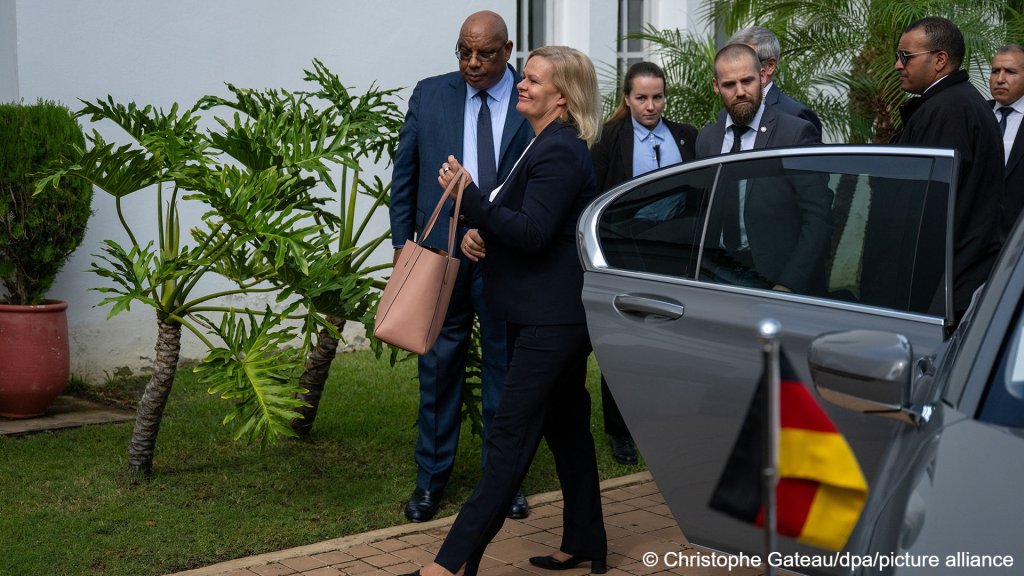
A professional future in Germany
Faeser stressed that her meetings were not only about forced returns. Germany also wants to make legal immigration channels possible for skilled workers and other forms of regular migration, she said.
Although Moroccan officials emphasized that doctors and engineers are also needed in their own country, the Rabat government is generally positive about labor migration to Germany in view of the relatively high youth unemployment rate, the news agency KNA reported.
It also hopes for investment from returnees and more remittances from Moroccans living abroad. According to KNA, the money they sent to their families at home accounted for more than 8% of the kingdom's gross domestic product last year.
Employees of the visa department of the German embassy told Faeser about the increased interest of young Moroccans in a professional future in Germany. Young women and their parents are often well-educated and very motivated, the head of the Goethe-Institut in Morocco said. However, she said, gainful migration is usually perceived in society as "something for young men."
Faeser was accompanied on her two-day trip to Morocco by Joachim Stamp, the special representative appointed to conclude migration agreements, who has been in confidential talks with several countries.
Scholz discusses deportations in Nigeria
German Chancellor Olaf Scholz has also been holding talks in the Western African nations of Nigeria and Ghana, focusing on migration and the economy.
One of the key topics of Scholz' visit to Nigeria, Africa's most populous country, was the return of Nigerian citizens from Germany.
According to German public broadcaster ZDF, just under 14,000 Nigerian asylum seekers currently living in Germany are due to be returned. About 12,500 of them have 'Duldung' (tolerated) status because they have no identity papers.
Unlike his predecessor, President Bola Tinubu said he was open to accepting returnees.
"We are ready to enter into a partnership to improve migration so people can go through the process if they showed good behavior and are of good character," Tinubu said at a joint press conference with Scholz.
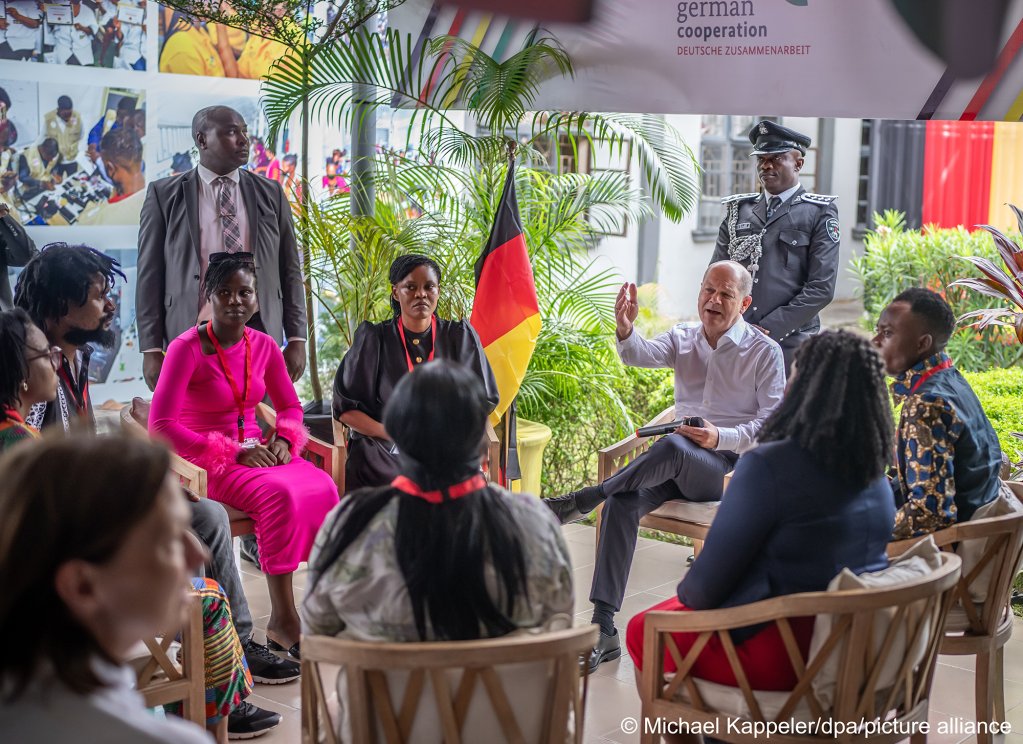
Scholz stressed that reducing irregular migration would only be possible in close cooperation, for example through migration agreements.
In addition, the chancellor advocated the expansion of migration centers, which support returnees from Germany and other countries. In the future, the facilities will also advise professionals who want to emigrate to Germany.
with dpa, KNA, ZDF